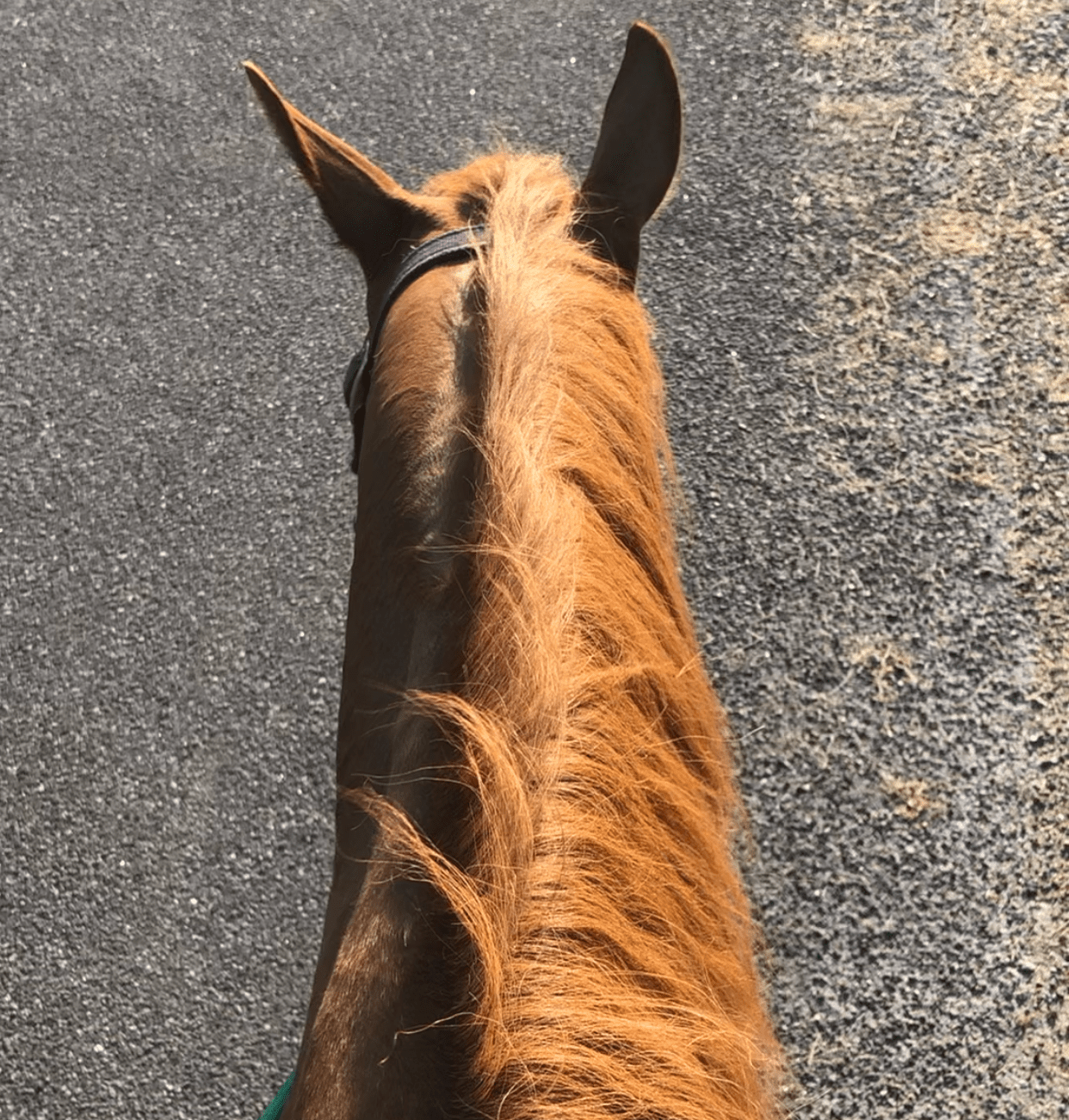
One of the most important topics I think I’ll ever be able to cover is how to safely deal with horses in public spaces as a non-horse person. I always see various headlines of equine related accidents that could have been avoided if well meaning people knew how their actions could quickly turn into disaster.
If you’re reading this, thank you for being an informed member of your community!
Now, check out this list of important things you should and should never do if you see a horse out in public.
What Not To Do (While Driving) ❌
- Absolutely NEVER honk your horn or rev your engine!
- Even the most bombproof horses might spook at a car that thinks it’s being helpful by announcing its presence to the rider. Horns are not as common as other traffic sounds and most horses don’t hear them often. It would be like watching a movie with jumpscares. You know they exist and that they’re not dangerous, but not every movie has them and you may be startled when one happens.
- Chances are, we already know you’re near us. Most cars are pretty loud. The rider will hear you and, if in the way, move to a place where the car can pass. If the rider isn’t in your way, pass them wide and slow.
- NEVER ignore the rider’s hand motions!
- The rider is the only one who knows their horse’s tolerance and capabilities, which means they’re the only ones who can direct the situation into a peaceful outcome.
- If a rider is telling you to slow down, their horse may be getting anxious due to your speed.
- If a rider tells you to stop, this is important. The horse might be getting out of its comfort zone and need a split second to calm down. Any pressure during this point could cause the horse to buck or bolt into traffic.
- If they’re telling you to go ahead, green light! But do so slowly and safely to ensure the situation stays that way.
- The rider is the only one who knows their horse’s tolerance and capabilities, which means they’re the only ones who can direct the situation into a peaceful outcome.
- NEVER be impatient with a nervous horse!
- A jittery horse one minute could be a bolting horse the next, so if they’re getting anxious, it’s safer for everyone if you don’t make the situation worse. No amount of road rage or impatience is worth a totaled car and injured rider, should the horse decide to run into oncoming traffic.
- Remain at a safe distance from the back of the horse. Even the best horses have their moments and riders can’t always control when that happens. You can, however, help the situation and try to keep it contained in a safe manner, which works best if you give the rider some space to do what they need to do. When everything is controlled, the rider will most likely motion you forward to pass or try to move the horse to a different area if that can’t be done.
What To Do (While Driving) ✅
- Make your car as least threatening as possible.
- Keep noises and speed to a minimum and give the horse extra space both while behind them and as the rider motions you to pass.
- Pay close attention to the rider’s hand motions.
- They know what’s best for the horse in each situation and are the key to a safe interaction.
- Give horses extra patience.
- Although we’d like to think our horses are well trained and bombproof, there are things that can still set them off. Whether its a little bit of sensory overload or a bad day all around, horses are living creatures and should be treated as such.
- Pass wide and slow.
- The best scenario is one that doesn’t involve an injured horse and a broken windshield. Don’t risk the safety of yourself and others by accidentally agitating a nervous animal. Keep a safe space between yourself and the rider to keep the situation as safe as possible.
What Not To Do (On Foot) ❌
- NEVER go behind the horse!
- No matter how well meaning you may be, any horse could be surprised at being approached from behind. The area behind the horse holds the most risk of being kicked, especially from a horse you don’t know. The safest places to stand are in the front and sides of the horse, but only if the rider allows you first.
- NEVER feed a horse you don’t know!
- Some horses can’t have certain ingredients so, even though you may have fed your cousin’s-friend’s-brother’s-grandma’s pasture pony a gingerbread cookie one time, that doesn’t mean all horses can have it. There are also a lot of foods that are extremely toxic to horses in general. Since horses can’t throw up, any toxic food either becomes a large vet bill or a death sentence.
- NEVER allow misbehaving children near a horse!
- If the children are acting crazy, chaotic, or seem like they may cause injury to the animal, the horse will likely be sent into a panic. Kids should never be allowed to scream, run around, or throw things at the horse and rider. While some horses may tolerate Karen and her tiny terrors, others will go into fight or flight mode and the outcome will not be pleasant.
What To Do (On Foot) ✅
- Always ASK for permission!
- No matter what your intentions are, you should always ask the rider for permission to approach their horse. If they say yes, then you can ask to pet it. If the rider says no, the horse may be either having a bay day or they’re in a rush, so it’s best to respect that.
- The same goes for treats. Since horses have such sensitive stomachs, it’s best to ask the rider if they would be okay with you giving their horse a treat. The rider will either kindly hand you one, if they carry them during rides, or politely decline.
- Ask for details.
- If the rider allows you to approach and pet the horse, be sure to ask what areas you’re allowed to touch. Some horses are okay with being touched all over, while others dislike strangers’ hands on their more sensitive spots. It varies between horses and the way you interact with one might not be okay with another.
- Keep children quiet and respectful.
- If they’re well behaved and the rider is okay with it, instruct the children to carefully listen to the rider. They should approach the horse and, if allowed, say hello in a calm, kind manner. The rider knows how the horse may react to certain things and is the only person that knows the best way to keep the interaction positive, and any misbehavior on the kids’ part may interfere with that.
Why Should You Care?
If negligence of proper safety occurs around a horse:
- The horse may get hurt
- The rider may get hurt
- You might get hurt
- Your kids might get hurt
- Your neighbor’s kids might get hurt
- Your car might get hurt
- You might feel bad about these other things getting hurt
And none of that is fun for anybody.
So next time you see a horse out and about, please remember to always approach safely, listen to the rider, and do your best to be courteous to other users of the road.
 Hayyy Farms