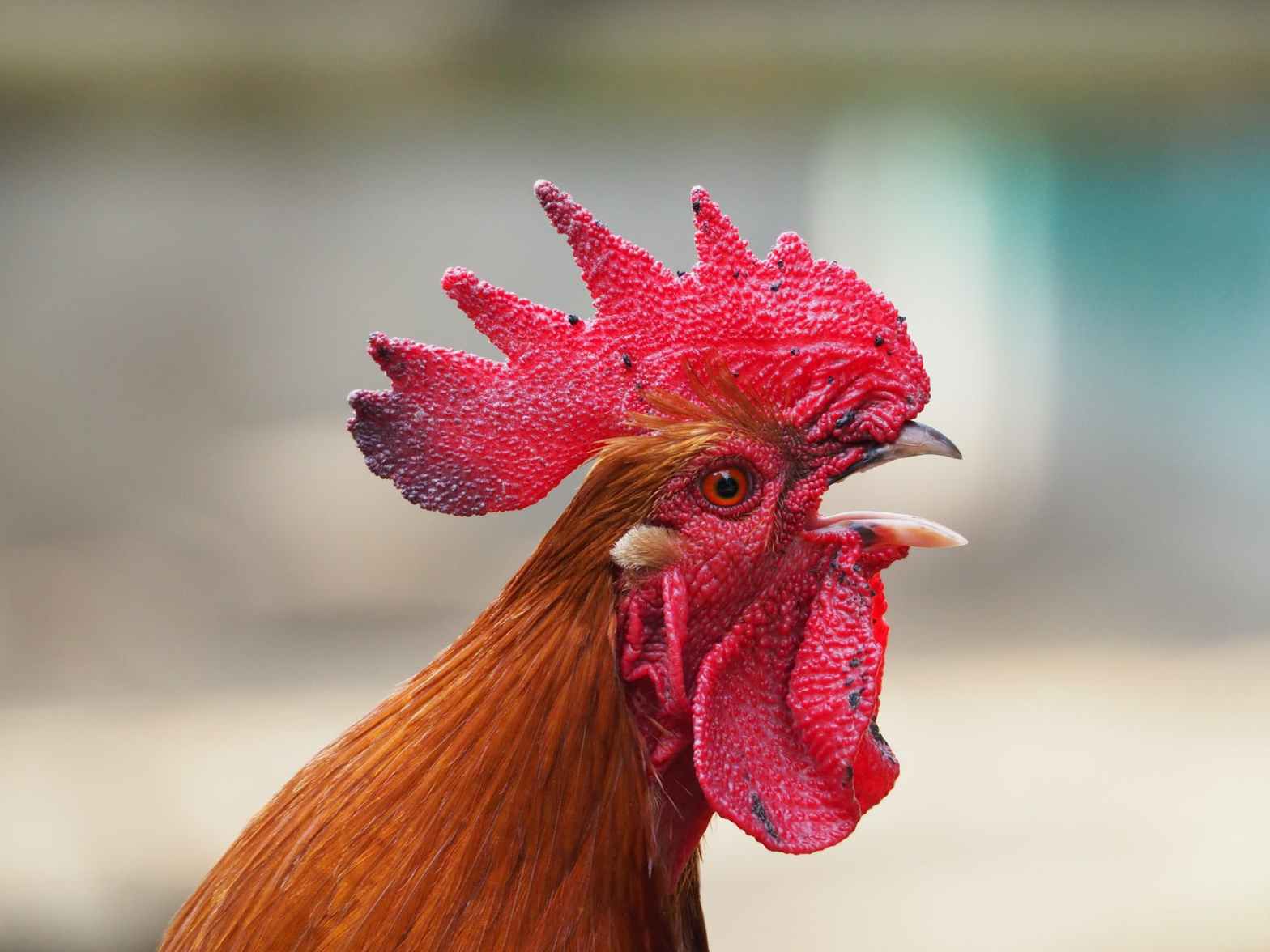
When it comes to proper training and handling, it seems like roosters get the short end of the stick. If they’re too easygoing, some people dislike them over their lack of instinct. However, if they’re too aggressive, others resort to fresh chicken soup. Between a set of instincts to protect their hens and enough decency to not maim their human handlers, it’s a tough line to walk for a lowly bird.
What’s a flock owner to do?
Do you cook your prized rooster? Will you send him next door? Or are you destined to put up with his nonsense for eternity?
Fear not, I can help.
I’ve been working with and training roosters for over 10 years. When I say there’s not a single rooster I haven’t been able to handle, I mean it. I’ve worked with numerous roosters of my own, some purchased and some hatched here on the farm, and have also been hired in the past to help other flock owners with their roosters as well. I’ve transformed birds from aggressive and rowdy to superb citizens of the coop. To prove their polite demeanor, I even hand-select a few trained roosters from my own farm every year to bring to local kids events.
So, what’s my secret?
We’ll get to that shortly, but there’s a few things about animal training in general that you need to know.
Important Things to Know

Firstly, this is not the article for someone who just wants to be told what to do and then go on their merry way. There are a billion other articles on the web for that. I wanted to make something that dives deep into the thought process behind training and not just what works, but why it works. I wanted to expand on how the animal’s behavior is affected by the technique and give the reader an insight into training in general. Instead of saying “do this, that, and this other thing and your problem will be solved,” I wanted to give people the tools to really understand it, apply it, and even potentially use it to create a technique of their own. There are a billion different sites that will tell you cut and dry what to do, but I think you deserve more.
Now, when training, it’s important to realize that every animal is an individual with its own personality. Things that may work with one animal are not always guaranteed to work with another.
That being said, I’m not here to bash anyone else’s techniques or claim that mine are the best. Everyone has their own preferred steps and that’s okay. As long as a technique is humane and shows adequate results, it has just as much credibility as another. As the phrase goes: “there’s more than one way to skin a cat.”
Also worth noting is that training, in general, doesn’t happen overnight. Depending on the severity of the behavior and what you’re attempting to correct, it could take 30 minutes. Or, it could take 3 months. There is no official timeline to training that is going to tell you how fast an animal is going to pick something up. Don’t go into working with animals expecting it to happen right away and get frustrated and defeated when it doesn’t. Keep your expectations realistic, but your hopes high.
Now that we’ve got that out of the way, let’s get into it.
The Concept
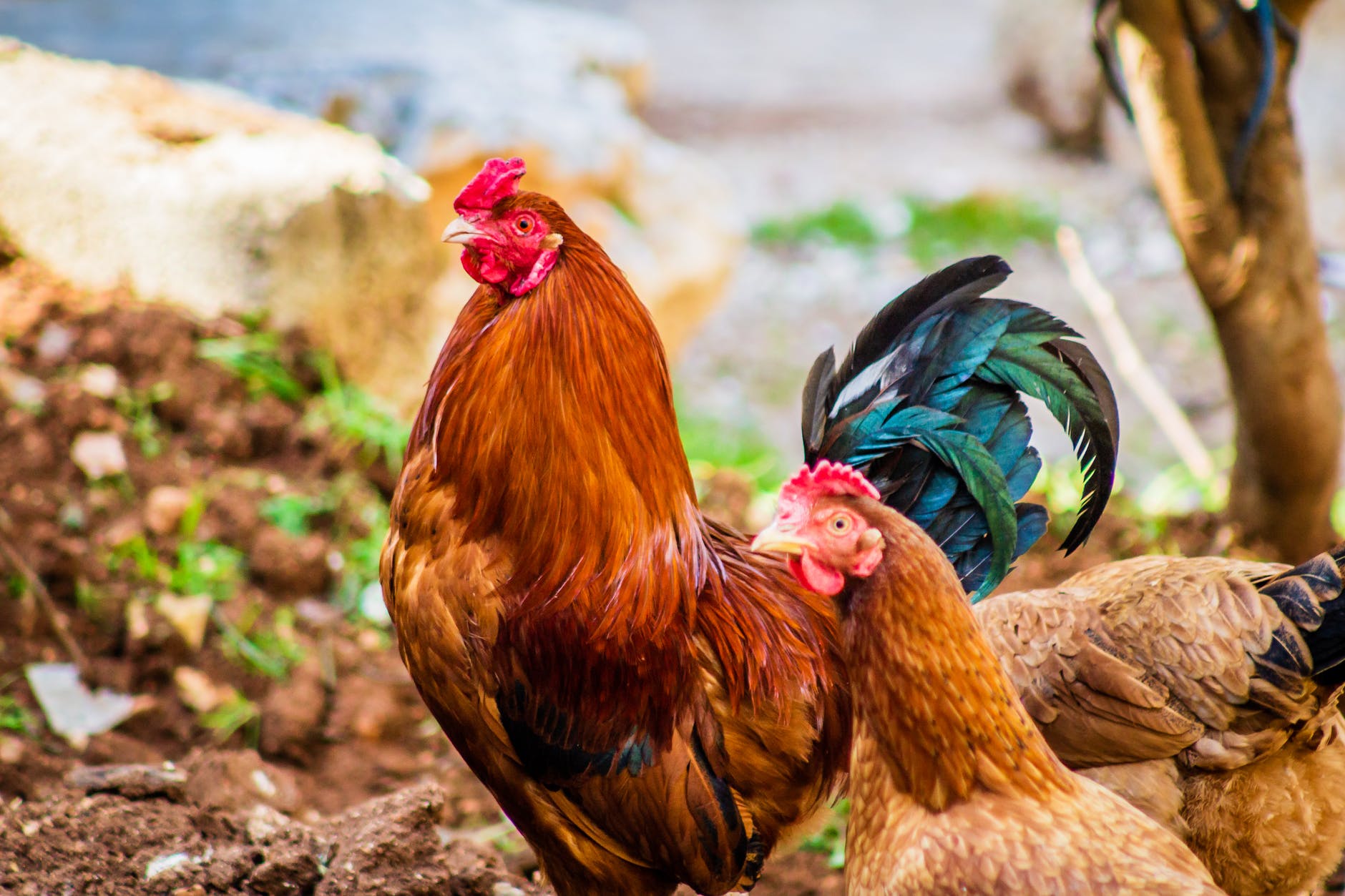
Make the wrong thing hard and the right thing easy.
When training animals, this is the phrase you’ll want to live by. It’s the absolute foundation for training just about any species and tells you exactly how you’re going to get your response.
Overall, animals will always resort to the behaviors in which they get the easiest and most pleasant responses. This can be in the form of a dog doing tricks for treats, a horse being taught to accept haltering through rest, or a deer taking the path of least resistance through the forest brush. It can even be seen in people! For example, a child who knows it’s easier and more pleasant just to listen to their parents and do their chores than it is to get grounded for arguing about it.
This phrase allows you to manipulate that basic behavior. In doing so, the goal is to make the wrong behavior so hard or such an inconvenience that the animal makes the conscious decision to choose to behave how you want them to instead, which they see as the easier option. They will view the negative behavior as unpleasant or too much work and consistently opt for the easier or more pleasant route.
In its simplest form, training an animal is when you give the choice to them and show them the correct decision. You say, “this is the situation, and this is how I want you to respond to it” and they make the conscious decision to make the right choice. By internalizing this phrase into your technique, you’re setting the animal up for success while biasing their choice towards an end behavior that favors you.
In this case, we must apply it to roosters.
Aggression in Roosters: An Overview
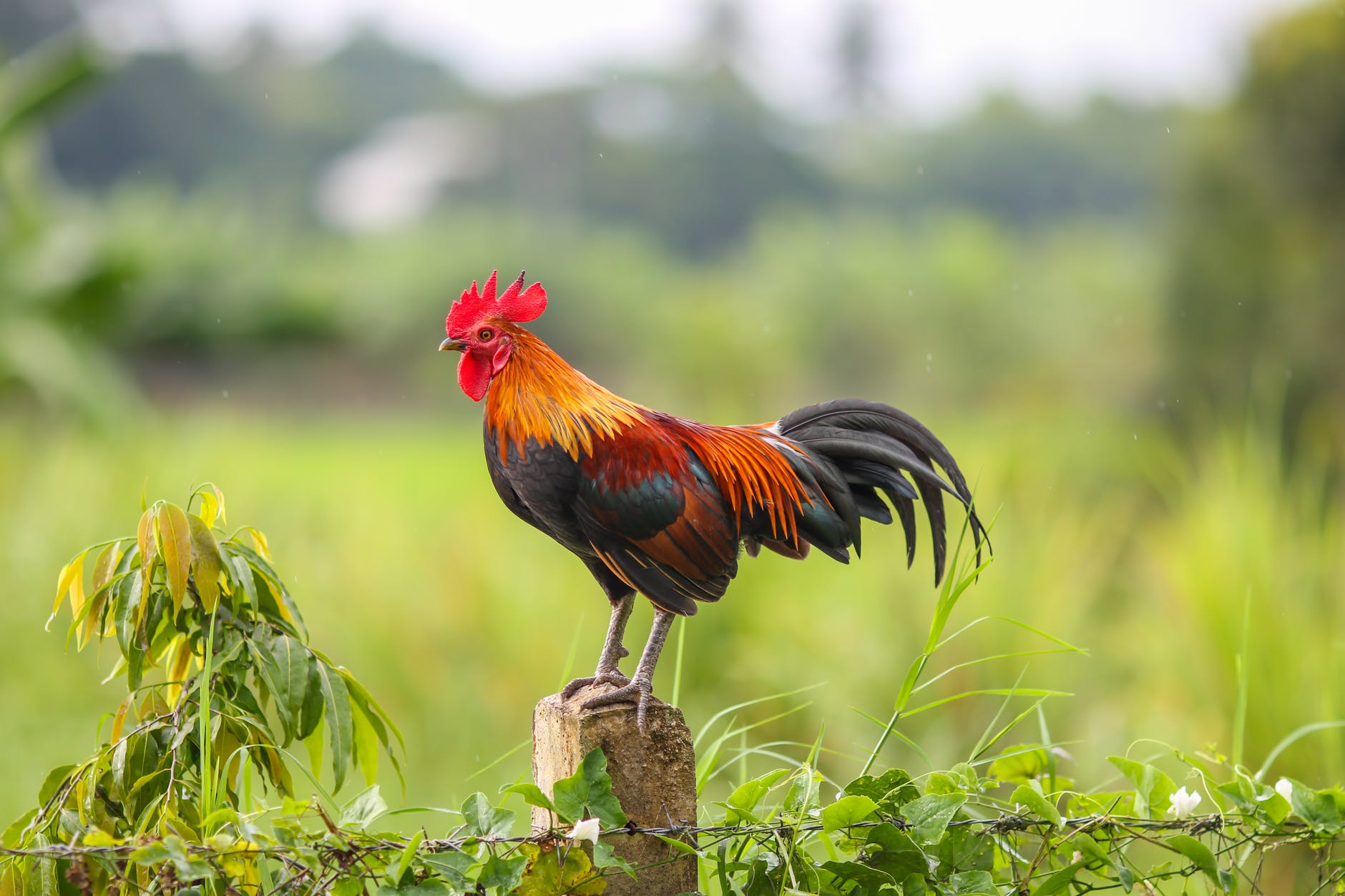
Most roosters are on the aggressive side of the scale. Not all, but most in an untrained state have more aggressive tendencies than not.
You can’t blame them, it’s in their instincts!
This can come in the form of beating their wings to look bigger and more threatening than the flock owner, squaring up to them, showing a lack of response and consideration to their general presence, or even pecking or spurring them. In other words, aggression doesn’t have to present physically to still be considered aggression.
This behavior is typically harder to see in roosters because their non-physical aggressive behaviors aren’t as universally known as other more-common species. For example, everyone knows that a dog that is growling or angrily barking is showing signs of aggression. They may not be actively biting people, but they would still be considered aggressive. It’s the same with roosters. There are many signs of aggression and not all of them are physical.
That being said, roosters still follow the tendency to choose the easiest options, which means this method will work for them.
My Technique

So how do we combat this? We “make the wrong thing hard and the right thing easy.”
Let’s take a look.
Wrong behavior: Aggression (both physical and non-physical)
Right behavior: Submission/Cohabitation/Acceptance of Human Interaction/etc.
The end goal is to make the wrong behavior, aggression, seem like a harder/more unpleasant decision than the right behavior: allowing humans to interact with them peacefully.
Now, it’s important to note that the most important aspect in training is always self confidence. If a person is unsure of what they’re doing, it gives the animal an opportunity to get the upper hand. Always be calm, cool, collected and confident when training any animal.
Observe
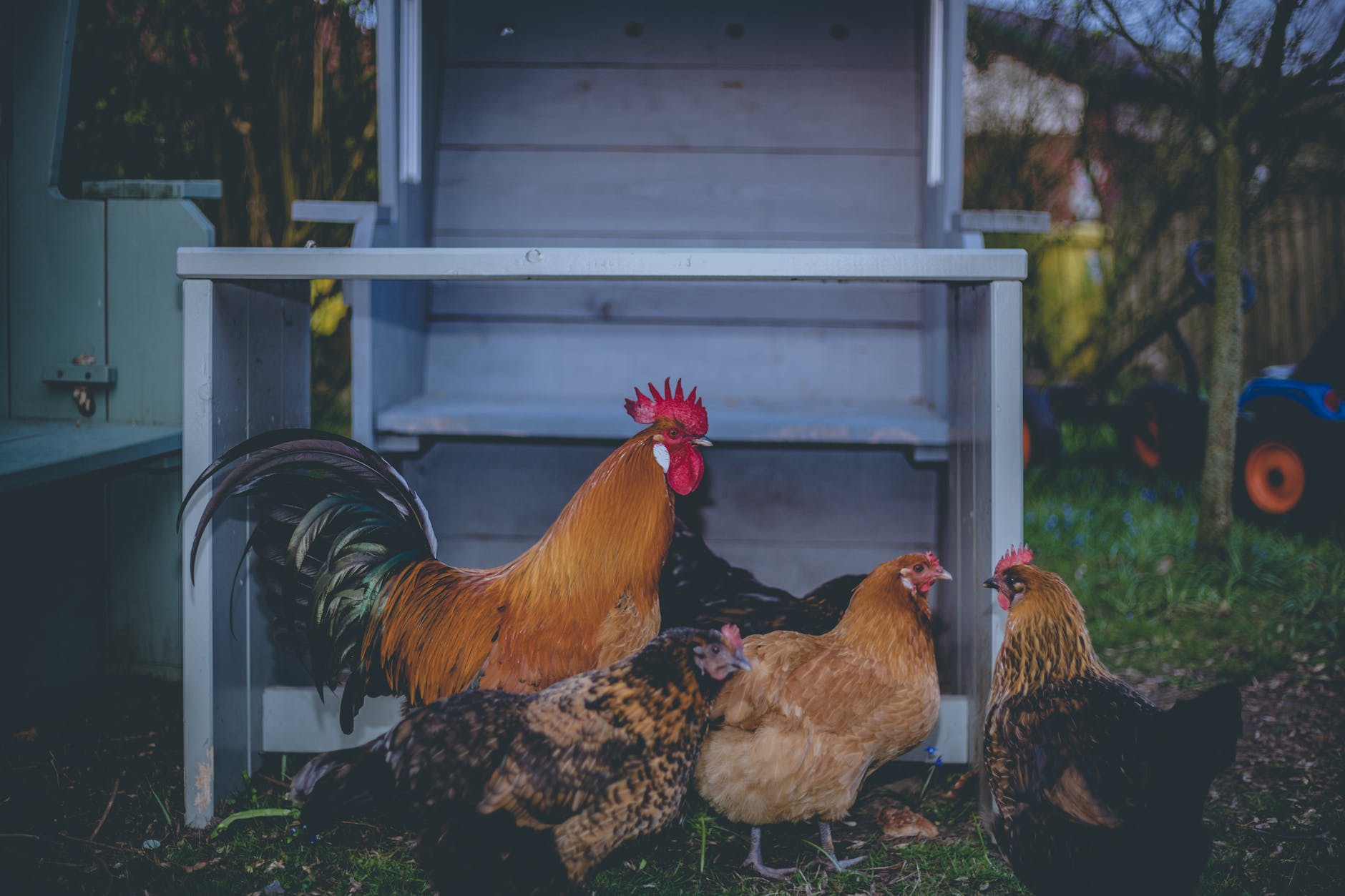
When I’m training a rooster, before doing anything else, I walk into the coop and observe him. I look at where he is, what he’s doing, and determine his overall attitude that day. This gives me an overall idea about how he may act. If he’s acting normal, I feel good about continuing my training plans. However, if he appears sluggish or sick, I back off and choose to train on a day where he may be feeling better. You will never get a true response in an animal that’s not feeling well, so it’s important to quickly observe the situation to rule that out.
Once you’ve determined your rooster is healthy, you can continue with training.
Clean Slate

Take a deep breath and become a clean slate.
When training a rooster, it’s important that you remain a neutral party. You don’t want any emotion or bias leaking into the situation, as much as you may dislike his rude behavior. A “clean slate” mindset will allow the rooster’s actions in that moment to set the tone of the session and keep you from acting more harshly than what is fair. By ignoring any past occurrences you’ve had with the bird, you’re prevented from using previous grudges to influence your current actions.
This also facilitates your training. With emotions in the mix, there’s no guarantee you won’t accidentally act out of spite. If this happens, the rooster won’t be able to clearly distinguish the cause of the training in the first place. You want him to make the connection between what is about to happen and what it was that made it happen. That can’t be done if you’re both angry and annoyed for a multitude of other reasons and your attempts at training will likely not solve the behavior.
Identify the Negative Behavior

I never go into a training session expecting the rooster to behave negatively. Due to my “clean slate” mindset, I aways give him the benefit of the doubt and allow him to choose his course of action. I remain a neutral party and see which behavior he will display. You want him to act so you can decide how you’ll react.
Never make the first move.
In most scenarios, aggressive roosters will be the first to take action and show signs of aggression. They may come up to you and threaten to fight or start showing signs of irritation from a distance. Either way, this is good. He’s opening up the behavior for you to be able to correct it. If the rooster doesn’t immediately offer signs of aggression, you may gently prompt him to do so by walking closer or repeating an action that has caused him to become aggressive in the past. Either way, you want to catch him while he’s displaying the type of behavior that you don’t want.
This is the part that teaches him which behavior is wrong. By identifying a negative behavior and immediately reacting with a consequence (in this case, training), the rooster will view it negatively in his mind.
Gotcha!

Immediately after the rooster’s display of unwanted behavior, I always grab and pick him up with confidence. No hesitation, no fear of him pecking or attacking, nothing. I act like this is the most ordinary occurrence ever.
This is a hard step for some flock owners, especially if they’ve been heavily harassed by the bird in the past. However, confidence is so essential to the process. Remember your “clean slate” mindset and fake it until you make it. If you show any fear or hesitation, the rooster might believe they can bully you into stopping, sending you right back to the situation you were in before.
Cuddle O’Clock
Now, for the next part there’s a little bit of pretending.
I pretend, in my mind, that he’s the cutest little puppy/kitten/bunny ever and I make sure to let him know it. I cuddle him, ruffle his feathers, rub my hands all over his face, talk in high-pitched tones, and just try my best to be an absolute nuisance.
Have you ever seen grandmothers or relatives get up in kids’ faces, pinch their cheeks, and tell them how cute they are? And the kids are all like “stop it, grandma, you’re embarrassing me”? Well, you’re going to do the animal version of that.
You may be thinking, “isn’t that a little weird?” Yes, it is indeed. However, he will think it’s just as weird as you do and that’s exactly what you want.
This is going to be such a contrast from your usual interactions that the rooster is going to absolutely hate it. In his eyes, he’s going from chasing you away and out of his coop to having you right in his personal bubble, and he won’t like that one bit.
Plus, unlike some other techniques, this will also get him used to being held and submitting to physical contact. Often times when a person uses more aggressive or hands-off techniques, the rooster not only wants to avoid the situation, but they become fearful. That’s not what we want. If you still want an amicable relationship with your roo, you have to train in a way that sets a boundary in a more peaceful manner.
The more obsessively you can act, the better. You want him to believe you’ve lost your marbles and, I mean, putting up with his behavior… will you really have to pretend?
The Release
I always continue cuddling and fawning over the rooster until he calms down and stops resisting. Once he’s calm and cooperative, I gently set him down and walk away. Calm behavior gets a release from the uncomfortable situation, while being frantic or aggressive does not.
This is the part that teaches him the preferred behavior. It’s not about how much pressure you can put on an animal, it’s what behavior gets the release. That’s the behavior that he will remember and view positively, because, in his mind, it “saved” him from the uncomfortable situation.
If he stops immediately offering aggression after doing this a few times, you may then resort to gentle prompting to see if you can kind of tempt him into trying again.
If he shows signs, repeat the process. If not, he’s allowed to be left alone.
Squaring up to other chickens? Whatever.
Squaring up to you? It’s cuddle o’clock, buddy.
This is the “make the wrong thing hard and the right thing easy” part of the process. The wrong behavior (aggression) repeats the unpleasant process that he doesn’t like. The right behavior (submission, allowing your presence, etc.) allows him to be left alone.
Over time, the rooster will begin to realize that picking a fight with you is not worth the uncomfortable situation that it creates. He has control of his own fate and, when given the choice, being a peaceful member of the flock will be a far more pleasant option.
How Long Does This Take?
Now, this might not work in one day if his aggression has been an ongoing issue. He’s used to feeling in control of you, so it may take a while for him to realize that he’s not “top dog” anymore. This is why you must be consistent and do this every single time he shows any aggressive behavior.
If there’s other people in the household that interact with him, have them participate too. The training must be consistent during all interactions with him (when needed) in order to have the greatest effect. If not, he may end up perceiving the situation as person-specific and cease attacking you, while still acting aggressive towards others. The more you instill in his mind that aggressive actions have negative consequences, towards all humans, the more effective the training will be.
I’m extremely biased towards this technique (obviously, because I made it… just kidding) because, unlike some others, it’s not doing any harm to the bird. The only thing you’re doing is strategically irritating him. Many flock owners, especially old-school ones, will often suggest things that could potentially do physical harm to the rooster while trying to “teach it a lesson”… that may not even end up working. While it may do something for them, that’s just not my style. I just think it’s a bit unnecessary, especially since this technique has proven to be such a success.
Personally, I can get a basic training done on roosters on other farms in about 10 minutes, with 10 additional minutes explaining the process to the owners and 10 more doing a follow-up. My personal roosters and those donated to me usually take one-to-two sessions of 5 minutes each. If they’re super aggressive, I can usually do them in two-to-three sessions of 10 minutes each.
However, do not make those times your expectation and get frustrated if your rooster may be taking a little longer. No individual bird is the same and I’ve had a vast amount of experience using this method. Everyone must start somewhere. My main point in sharing these times is to prove that it can end up being a quick and easy technique the more you practice.
If you’re comparing that to your peace of mind, training is a no-brainer.
Additional Techniques
It’s worth noting that there are other techniques that can be built off of this one, two notable ones being the lay down trick and no-peck training. This bare basic anti-aggression training can be expanded in many ways depending on what else you wish to teach the rooster. However, to keep this a reasonable length, I will not be going into them here.
Just know that this training is the foundation for a gateway of other training opportunities.
Rudy’s Story
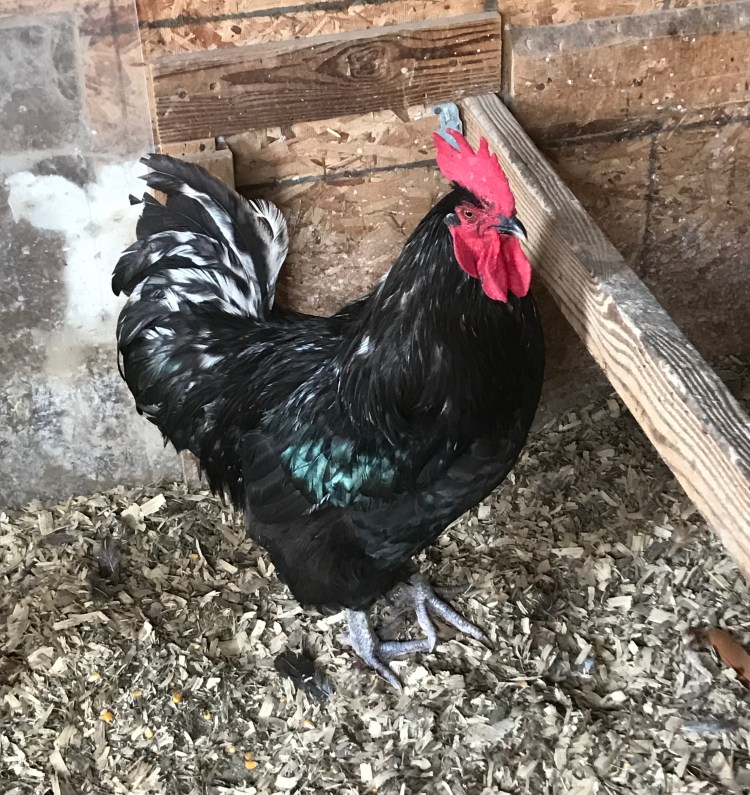
One of the most memorable roosters I’ve had was Rudy.
Rudy was given to me late one summer because he was extremely nasty to the previous owner’s husband and terrorized the construction workers in their company. He was known to hop fences, chase his victims (large, muscular men) relentlessly, and corner them, before spurring and attacking them repeatedly for so much as looking at him. In fact, he was so aggressive that when I arrived to pick him up, he violently attacked my hands and removed small patches of skin.
Nevertheless, I knew I could help him.
I took Rudy home and immediately started working with him. He obviously hated it, as they all do, so he offered quite a bit of resistance. That’s fine, it was expected.
I don’t remember exactly how long it took for Rudy to realize that being aggressive was too much work, but it was at least a few sessions. However, when he did have a breakthrough, he was a complete different bird.
Rudy eventually ceased all aggressive tendencies and became a model citizen. He didn’t chase people, didn’t spur anyone, and most of all allowed me to hold him without a struggle. He did so well, in fact, that he became one of the birds I brought to that year’s local kids event. The event was only a few months after I had picked him up, which to me was an amazing turn-around.
The old owners thought so too! I took plenty of videos of kids cuddling with him and passing him around, which floored them when they saw it. They couldn’t believe it was the same bird!
Roosters like Rudy are the reason I’m so outspoken about the drastic effect of good training. Many people will condemn a bird for just doing what they’ve been allowed to do, but won’t look at how they can flourish in the right environment. I think it’s unfair to label every rooster as hopeless just because a person hasn’t tried.
Who knows? You might have a Rudy.
Overall, I feel like roosters get the short end of the stick. Not many people invest in the knowledge to properly train them, all the while expecting them to ignore their instincts. When they fail to walk that fragile line? They blame it on the bird.
I hope this article was at least a little bit informative on one of the ways to humanely and efficiently train aggressive roosters and the thought process behind it. My goal is that, by writing this, I’m able to help at least one person out there turn their rowdy jailbird into a productive member of the coop.
Disclaimer: I am not against eating roosters that aren’t up to standards, if that’s what you choose to do. I am also not against people admitting they simply don’t want to train their roosters. It’s a personal choice. However, I am against those who insist that it’s impossible to train a rooster just because they can’t be bothered and taking that hope away from someone else who doesn’t want to have to make the hard choice. For those who want to keep their rooster without all of their aggressive tendencies, those who can’t stand to cull one of their birds, and those who are tired of being told to give up and deal with it… this is for you.
 Hayyy Farms