Gone are the days where a farmer can grow his own grain, bale his own hay, and feed his animals completely off of the land that he owns. Sure, someone may still be able to do that somewhere, but the population is rising and the land that was available for farming in the 80’s and 90’s has drastically dwindled now coming into 2022. That being said, many farmers now need outside support in feeding their livestock in addition to what they may still be able to grow themselves.
As we all know, this can be expensive!
For established family farms, these pricey statistics, significantly worsened by current inflation, can jeopardize the livelihood of entire generations. And for beginners? Many rethink raising livestock at all.
It’s time to get crafty.
Here’s a list of 10 genius ways you can cut costs on your family farm or homestead – without sacrificing quality!
1. Select Animals to Fit Your Farm
The utmost important way to reduce feed costs is to choose species and breeds that best fit your farm.
Somehow, this bit of information gets pushed to the back of people’s minds when purchasing livestock. Many buy the biggest, best breed they can find without considering the intake of that breed to be able to get those desired results.
For example, in the realm of meat chickens, many farmers choose the Cornish Cross for their rapid weight gain. However, the Cornish Cross also eats significantly more during that time than any other breed and supporting most of their diet with grain is a requirement. For someone with a smaller feed budget and less access to grain, Cornish Cross would be a difficult bird to raise. To that individual, a breed like a Red Ranger might be much more appealing. Although Red Rangers grow slower than Cornish Crosses, they forage better and therefore need less grain. Having a smaller feed budget, but ample foraging space would make Red Rangers the better choice for that particular farm.
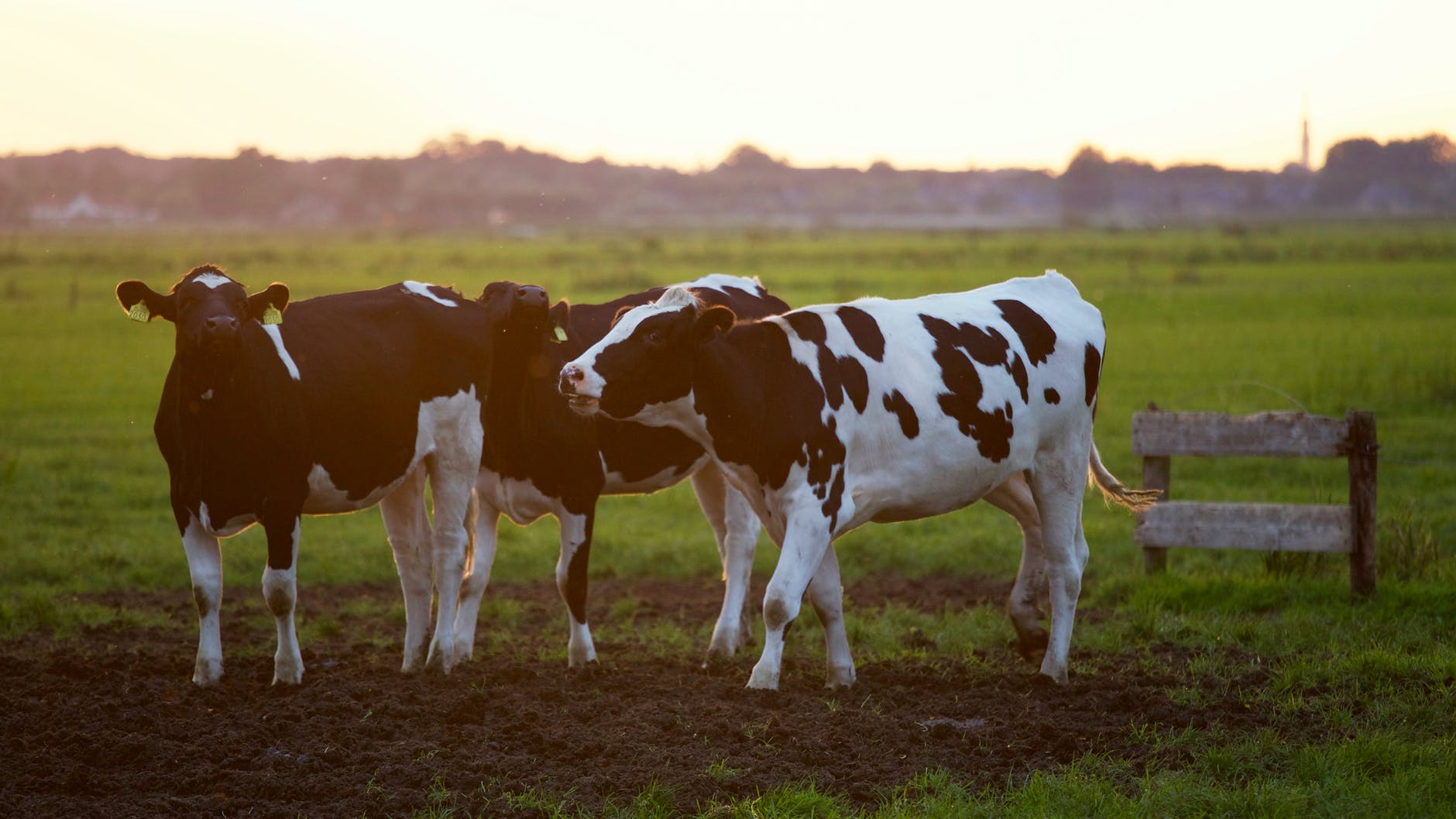
Or take cows, for example. The average holstein cow produces 9 gallons of milk per day. For a commercial dairy, that’s perfect! However, for a small farm or homestead with no usage other than direct consumption, it would be nearly impossible to go through enough milk to outweigh the cost to feed that cow. In their situation, it might be more economical to choose a breed that produces less milk, but requires less feed to do it. They might consider a breed like the Dexter, that is better able to thrive on pasture and produces around 2 gallons of milk per day.
In all aspects of livestock rearing, there will always be a breed that leads in production, whether it be meat, milk, eggs, etc. However, that doesn’t always mean it’s the most economical breed for every farm. Sure, they might produce more, but if the breed needs a number of resources that you aren’t able to provide, it’s going to be a far more costly decision than choosing one that’s more suited to your needs.
When determining the breeds you want to raise, it’s extremely important that you look at the individual needs and stipulations of each breed and decide which will add the most value for your effort. Take into consideration their dietary requirements, whether or not supplemental feed is needed, how well they forage on pasture, what the yield might look like, and if they fit with your farm’s production overall.
In the grand scheme of things, more isn’t always better!
2. Work to Your Livestock’s Strengths

Each species of livestock has what I like to call “hidden talents”. These talents are potentially useful actions that the animals may do naturally, that we normally may ignore or discourage. However, these behaviors can be turned into huge time and money-savers with a little bit of ingenuity!
For example, pigs love to root through the dirt! This is something that is normally prevented and discouraged in many operations, and for good reason. Farmers don’t want to tear up their barn floors! However, these same farmers also break out their tiller come spring and spend money and labor prepping their fields for the season. If you’re in the business of saving money (aren’t we all?), you might realize that you have the perfect tilling machine sitting on the sidelines, one that saves a large amount of time and labor. Instead of spending time and money on equipment and labor to till the fields yourself, you can utilize a natural skill that your pigs already have… for no higher cost than the money you’ve invested in them anyways!
Now, that’s not to say that you should get pigs just to till up your gardens and fields. Every species has its own talents, which means that you can take any livestock you already own and find ways to utilize them to increase your farm’s efficiency.
Let’s talk about the farm staple: chickens. Chickens love to scratch and dig in the dirt while looking for bugs and worms to snack on. While this might not be useful in most locations, this can be extremely beneficial in areas like compost and manure piles. With the right setup, you can persuade the chickens to turn your piles for you in lieu of having to do it yourself, giving you more time to do other things that add value to your farm. After all, time is money! All it takes is easy access to the compost pile, either free-ranging or inside a run, and you’ll have compost in the works without lifting a finger!
When working with your livestock’s strengths, ask yourself: “What do my animals do on a daily basis? What are they good at? What behaviors do they show naturally?”
If you can figure out what your livestock are good at, it’ll be easy to manage them in a way that best contributes to your farm or homestead. All it takes is some creativity!
3. Source Local Byproducts

Livestock are amazing upcyclers! Because they can eat digest foods that humans normally don’t eat, they’re able to consume things that would normally be considered “waste” in other industries, such as spoiled vegetables, expired milk, and other edible waste.
Due to the fact that these nutrients are considered waste, many businesses and organizations are more than willing to give them to farmers in lieu of paying to take them to the dump. All it takes is a polite inquiry and you might find yourself with large amounts of livestock feed… for free!
Here at Hayyy Farms, we do a lot of upcycling! We run after-Halloween campaigns within the local community to upcycle undecorated pumpkins to feed our animals and receive vegetable scraps and spoiled produce from some of our lovely customers on a semi-regular basis. However, our biggest help so far has been our contact with a local brewery! The brewery employees notify us when they’re planning a brew and we show up to collect the grains after they’re done with them. The amount we have access to ranges anywhere from 250-750 lbs per brew, but we only pick up what we can use within a reasonable amount of time. For them, the hundreds of lbs of spent grains are a nuisance to get rid of, but, for us, they’re a wonderful source of fiber and protein! It’s a win-win and the benefits are completely free for both parties!
The most important aspect of using byproducts, though, is to make sure you’re feeding them in safe quantities. They should never completely replace the animals’ diet, but instead used as a supplement alongside their normal food. If done right, the animal will consume just as many nutrients as before while eating less of their regular, expensive feed.
Not sure what to look for? Here’s a quick list to give you some ideas:
- Baked Goods
- Bran
- Brewery Grains
- Chaff
- Cut Flowers (safe varieties only)
- Eggs
- Expired Bread
- Liquid Whey
- Milk
- Nuts
- Spoiled Produce
- Table Scraps
- Wheat Middlings
- And More!
This list is not species specific! Please take into consideration which of these byproducts would best fit the livestock that you raise before attempting to feed them.
These aren’t the only byproducts available, but it’s a great place to start looking. The opportunities are endless! Be sure to ask around politely and, before you know it, you’ll be cutting down your feed costs in no time.
4. Utilize Fillers

What is a filler?
A filler is a food component that’s used to help keep an animal full by providing dietary fiber and creating bulk in the feed. It’s meant to decrease consumption of the more nutritious feed components, which are more expensive than the filler. In general, a filler can be anything added to the feed that doesn’t contribute much to the nutritional value.
I know what you’re thinking, “wouldn’t the byproducts in the previous point be considered a filler?” Some of them, yes. The brewery grains are a good example of both a byproduct and a filler. Since spent grains are roughly 80% water and only 20% fiber and protein (by weight), they provide the substance needed to help satisfy the animal’s appetite, but not enough nutrients to really be an active part of the diet.
However, I wanted to emphasize that not every component in livestock feed, or any feed for that matter, has to be nutritional.
One very popular example is straw. Cattle farmers will often mix straw with higher quality forages to fill their animals’ guts and keep the ration from getting too dense. Since straw is often much cheaper than higher quality forages, it’s extremely beneficial for lessening the cost of the feed, while physically giving the cattle the same amount of food. Straw doesn’t really have much nutritional value (apart from fiber and a small amount of protein), however it can still benefit the diet by adding in bulk.
Keep in mind that fillers should be used responsibly and measured to ensure that the animal still gets the required nutrients for proper growth. You can never completely replace nutritious feed, but fillers used in appropriate amounts can help make that feed last a bit longer.
There are many different fillers you can use for each species of livestock, so it’s best to research the best and most effective fillers for the animals that you raise.
5. Outsource Feed and Grain

Often times, people will look to chain stores for their feed and grain needs. To be fair, it’s not a terrible decision! Chain stores are well stocked and very publicly known, making it convenient to stop in and shop for what you need. However, this is not going to spare you any pennies!
If you’re looking to cut down on feed costs, you’re going to want to find somewhere that sells feed for less than chain retail prices. Your local feed mill can help!
Local mills are often times much cheaper than chain stores with a greater variety of product. Not only do they have local mixes for lower costs per lb, but they often have the ability to custom-mix exactly what you need for a fraction of the price. This can be extremely cost-effective if you have livestock with specific nutrient needs or need to purchase your feed in bulk. Since they’re often family owned and operated, their grain is also usually more locally-sourced, with better deals than you’d find at a chain store.
By doing business with your local feed mill, you can cut costs while supporting local families!
6. Avoid “Pretty” Products
It’s no secret that people will pay premium for “pretty”.
Whether it’s a red painted mini-coop with white trim, a decorative herb planter, or the cozy-looking nesting boxes with the tiny windows, it’s all designed to be so ”pretty” that you ignore how much of an upcharge there is on it.
Don’t get me wrong, I would love a coop door in the shape of an egg. However, expensive visual satisfaction is not what’s going to help my growing farm survive.
When deciding if a product is actually economical or merely “pretty,” ask yourself these three questions:
- Do the materials used justify the price?
- How does it function in real life?
- If it was undecorated, would I still pay this price for it?
If the product is cheaply made and inconvenient to use, you can be positive that they’re attempting to sell it based on appearance alone.
One major example is those tiny coops they’re always selling at feed stores. They’re cute, right? They have the fancy latched doors and the fold-down ramp, complete with an immaculate paint job and fancy trim, and, oh how tiny! That’s where they get you.
If you look past the fancy appearance, you’ll see that they’re actually terrible to use in real life and only really work for a small percentage of people. Those coops are never insulated, which in most states is a huge problem if you’re running anything other than a small frozen chicken factory. They’re too small to comfortably clean and concentrate a large percentage of droppings in a small area, which, if left alone, is just begging for disease. In addition, most of them only hold about 6 birds, at best, or even less if you chose a larger breed. If the owner decided to expand their flock, they would quite literally have to get rid of or repurpose their coop and purchase another larger one instead. When these coops range anywhere from a few hundred dollars to a few thousand, this route is nothing but money down the drain.
However, there are a ton of other resources and products available that are far more focused on functionality!
By avoiding the “pretty” products, you’ll be able to spend far less money for products that work just as well, if not better, than the more expensive ones.
7. Reduce, Reuse, and Recycle!
“One man’s trash is another man’s treasure” – Anonymous (…but probably your Uncle Richard after finding the latest “fixer-upper” on the curb)
Let’s be real, what better way to cut costs than not buying things in the first place? If you can turn an unwanted item into something useful, you save 100% of what you would have spent on that item in the store!
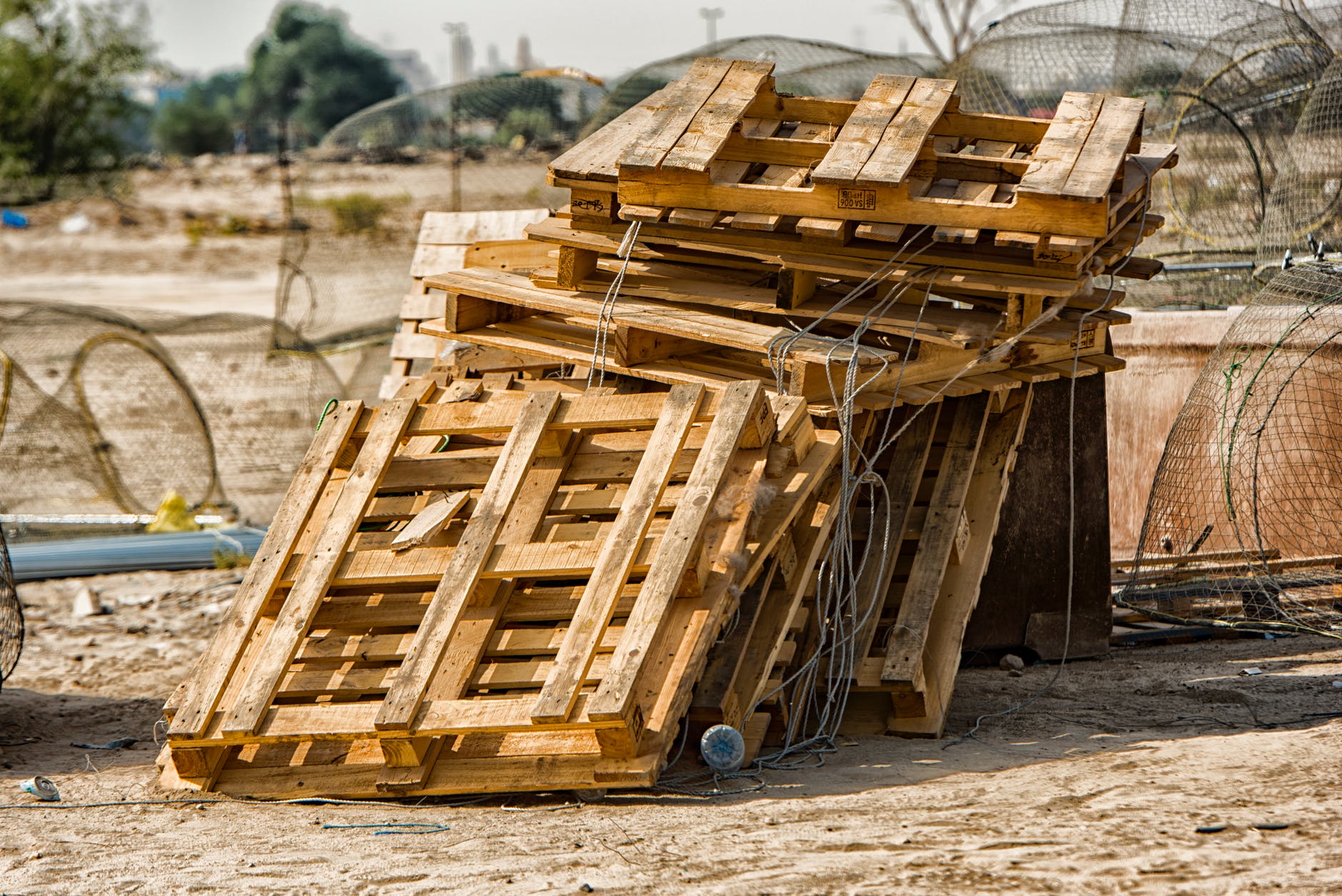
That scrap lumber sitting in a pile? Make a raised bed for gardening! Need a sturdy enclosure? Try sourcing free pallets and building it that way! You found old rain barrels? Turn them into feed containers!
The possibilities are endless, and you’ll save money every time!
8. Use Multi-Purpose Items

Have you ever thought about just how many items in our daily lives are single use? I’m not necessarily talking about packaging plastic or paper cups (although, those are a hot topic as well), but products you’ve purchased that only perform one function?
Housing is a big one that I’ve noticed over the years. Many people seem to think that livestock need very specific enclosures in order for their farm to “do it right”. However, that couldn’t be more false!
Let’s take chicken coops again, for example. Imagine that you purchase one of those extremely tiny coops for your hens and a few years later decide to stop raising chickens. What are you going to do with your coop? It’s too small and specifically built to house big livestock and you can’t really use it as storage. If you no longer raise poultry at all, the only valuable second-life for it would be firewood, expensive firewood, at that.
However, if you had raised your chickens in a multi-purpose building/enclosure, you would simply be able to turn it into something else and give it another useful purpose that would better suit your farm.
“Well, how do I do that?”
On the topic of enclosures, one huge piece of advice I like to give farmers is to find themselves a shed. Why a shed, you ask? In my opinion, a shed is the most versatile thing you could have on your farm. Let me explain.
Picture this: You start out with an empty shed. Then, you decide to raise chickens, so you add nesting boxes, perches, and a ramp, converting your shed into a chicken coop. However, you get bored of the chickens and want to raise goats instead. Now that the chickens are gone, you take out the boxes, perches, and ramp, then add in a trough and house the goats inside. Well, it turns out goats aren’t your thing either. That’s okay! Luckily, your new feeder pigs don’t mind the setup and quickly find themselves at home. Months go by, you send them to butcher, and now you’re back to an empty shed, ready to house the next batch of animals or keep your items safe in storage.
A good shed can be used for absolutely anything. It’s the farmer’s gift that keeps on giving! Not only can it house animals, store equipment, secure feed and grain, and become a tack room, but you can also take it apart for the raw materials to build other structures, if you no longer have a use for it. In addition, you can often find them inexpensively if you know where to look. Many people sell their used sheds for extremely low prices, which, funnily enough, often makes them cheaper than species-specific structures for the initial purchase, not to mention the value every time it gets repurposed.
Sheds are obviously not the only multi-purpose item you can incorporate into your farm, but they’re definitely one of the most cost-effective! With the vast amount of options out there, I heavily encourage you to look into your own operation and find areas where you could incorporate a multi-purpose item or structure.
9. Learn Basic Care Skills

As a fellow farmer, I know just how costly it is to have professionals out on the farm. Between hoof care, wound care, and regular veterinary work, the prices add up quick! However, with much research and practice, you can learn to do some of these things yourself.
One of the first things I learned upon starting my farm was giving injections. I knew that I didn’t want to have to depend on a veterinarian for something so little that I knew I could do myself. Therefore, I spent vast amounts of time researching different types of vaccines and medications, proper protocols for each type of injection, and listening to professionals speak on the appropriate ways to administer each method of injection to each of the species that I owned. I well prepared myself and have been successfully giving my own injections ever since.
If injections aren’t your forte, there’s always other skills you can learn such as shearing, hoof care, wound care, basic reproductive care, and emergency procedures like how to remedy certain birthing complications.
None of this is to say that you can just wake up one morning and do any of these skills with zero preparation. Never attempt something if you aren’t confident in your ability to do it safely! You have to take the time to educate yourself, and it might not be easy, but it’s cheaper in the long run to practice proper safety than it is to under-prepare and cause larger problems.
“Where can I learn?”
The best resources you have available are the professionals that see your animals on a regular basis. They’re going to be familiar with your situation and should be able to guide you on any questions you may have, especially since they already have a professional relationship with your livestock.
However, for the sake of general knowledge, I would also heavily suggest looking to credible medical websites and watching videos produced by experts to really understand the underlying mechanics of each topic. It may seem like overkill, but the best way to do a proper job is to learn why the job must be done that way in the first place.
There are always going to be skills that you won’t be able to do yourself (not without a fair amount of classes at least), but that doesn’t mean that you can’t take a few small things onto your plate – and off your budget!
10. Avoid Compounding Costs

Have you ever purchased something of lesser quality because the better quality option was too expensive? Or settled for a product that doesn’t work as well to try to save money? If you said yes, this tip is for you.
Compounding costs are one of the most detrimental costs to your operation that you might not even realize.
Compounding costs are costs that occur on a regular or semi-regular basis that initially seem small, but add up over time. They can go undetected for long periods of time because they’re small enough to avoid major concern, but increase over time to put a massive, invisible strain on your finances.
Let me give you an example.
Imagine going to the store for new work boots. There’s two pairs of boots in your size, one is a high quality, brand-name boot for $100 and the other is a mediocre quality, generic brand for $20. Now, your first reaction, and mine as well, would likely be to save $80 and settle for the generic boots. However, this is not always the cheaper option.
You see, generic boots are often much less durable than the more pricey brands, meaning they wear out much quicker than boots made of higher quality materials. Because they don’t last as long, you will most likely be purchasing multiple pairs of generic boots over a long period of time as opposed to purchasing only one durable pair. Therefore, you can’t compare the prices as they are ($20 and $100). You have to compare the prices as they’ll look over time.
I find that generic boots generally last me about a year before they start ripping at the seam and my high quality boots usually last me 5 years or more. I’m not too rough on my boots, but I do wear them for extended periods of time every day, so I feel comfortable using those numbers as an example.
So, say my high quality boots last me 5 years. I will have either spent $100 on a single pair of high quality boots, or $20 on generic boots 5 times… which is also $100. In this case, it costs the same to have better boots as it does to settle for ones I don’t particularly like as much. Now, if my high quality boots last me 6 years, I will have either spent $100 on better boots or $120 to settle for less.
In other words, my first impression would be that I’m saving $80… but I might not actually be saving that much.
This isn’t only an issue with attire, but a huge problem with equipment, livestock products, and especially in fencing decisions, where high prices leave farmers choosing inferior fencing materials… which they end up having to pay to replace over and over again.
Don’t let the price tag fool you, compounding costs will leave you paying a premium for the mere impression of saving money.
“How do I avoid them?”
The best way to avoid compounding costs is to take each price tag and figure out how often you’ll be paying it over a set period of time. Figure out the exact equilibrium where the products will cost the same. Is it a year? Is it two years? If the more expensive product will last longer and cost less over time than the cheaper one, you know it’s going to be the more economical option.
Remember, the price tag only shows what you spend on one purchase, not what you might be spending overall.
Today’s farmers have it tough. Not only do we undertake the same labor-intensive tasks as the previous generations, but now our resources to do them are dwindling.
Luckily, there are many ways you can help cushion those uncomfortable costs.
These money-saving tips are a culmination of everything I’ve learned in my agricultural journey thus far. I implement each and every one of them here at Hayyy Farms to keep my costs as low as I can, without sacrificing the care of my livestock. They work amazingly on my farm, and they can help yours too!
I hope that, by reading this, you’re inspired to use at least one of these creative tips to keep your farming dreams a reality.
“Start where you are.
Use what you have.
Do what you can.”
– Arthur Ashe
 Hayyy Farms
Well written Hayley.
LikeLike