
“Yep, it’s a goat”, you sigh, scrolling past photo upon photo of advertisements online.
“This one’s brown, this one has floppy ears… does any of this even matter?” If you’re looking to start your dairy goat journey, chances are you’re riddled with questions over which goat breed is best for your farm or homestead.
And you should be!
Goats come in a wide variety of shapes and sizes. Some breeds are better suited for high volume milk production, whereas others are kept for their high milk fat and affinity towards making cream-based products. Choosing the right dairy breed is often the difference between surpassing your goals… and udder disappointment.
So which one do you choose?
Of course, every goat owner you ask is going to insist on their favorite breed, but let’s take a look at what the numbers really say!
Here’s a list of some of the most common dairy breeds – complete with breed characteristics, physical attributes, and their actual recorded production values!
Popular Dairy Breeds
Alpine
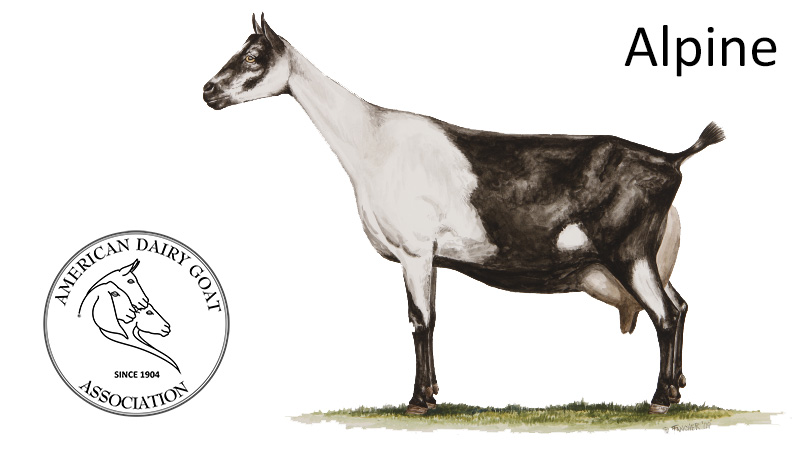
Average Milk Production per Lactation: 2,715 lbs (339.375 gallons)
Lactation Range: 750 – 5,720 lbs
Milk Fat: 3.3%
Milk Protein: 2.9%
First up on the list: Alpines!
Alpines are large, very hardy, and known to be good homestead milkers. They’re one of the larger dairy breeds with adult does typically ranging in size between 135-170 lbs. However, they may be larger, depending on the breeder.
Out of all of the dairy breeds, Alpines are known to produce the most milk by volume, reaching an incredible average of 2,715 lbs (339.375 gallons) of milk in a single lactation. Higher-producing Alpines can even reach a potential 5,720lbs (715 gallons)!
However, while they’re the queens of milk production, they are often beaten by other goat breeds in milk fat percentage, such as the Nubian and Lamancha, so they’re typically not the top choice for making other dairy products, like cheese and butter.
Breed Characteristics: Alpines originate from the French Alps, with all goats with papers or other traceable lineage referred to as “French Alpines”. They’re known to be extremely hardy and adaptable to a wide variety of climates, making them the ultimate dairy goat for even the most unsavory weather conditions.
Color: Alpines come in a wide variety of colors and markings, some of the recognized ones being: Cou Blanc, Cou Clair, Cou Noir, Sundgau, Pied, Chamoisée, Two-Tone Chamoisée, and Broken Chamoisée.
Best for people who:
- Regularly need extremely large amounts of milk
- Live in climate that may be undesirable for other breeds
- Have a small or medium interest in making other dairy products, such as cream and cheese
Saanen
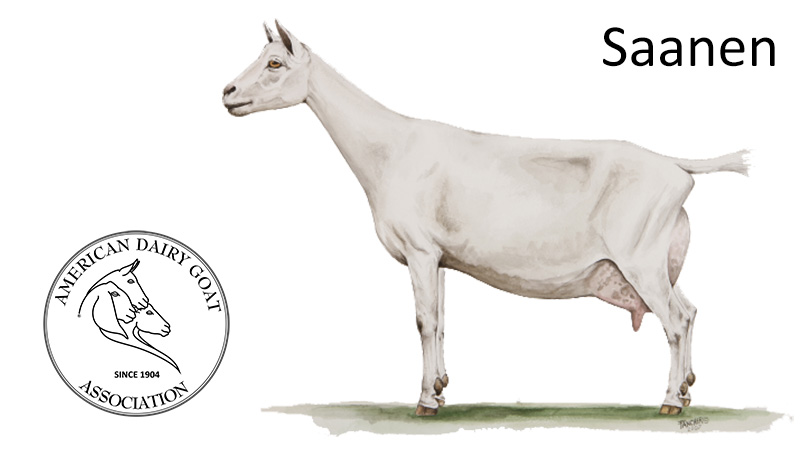
Average Milk Production per Lactation: 2,702 lbs (337.75 gallons)
Lactation Range: 920 – 4,870 lbs
Milk Fat: 3.3%
Milk Protein: 2.9%
Next on the list is Saanens!
Like Alpines, Saanens are a larger breed, with adult does typically weighing in between 135-170 lbs. However, they can also be larger, depending on the breeder.
Saanens produce the second-most milk by volume – just shy of the average Alpine – with an average of 2,702 lbs (337.75 gallons) of milk per lactation. Due to this heavy production, their success as dairy animals is widely known, with many commercial dairies favoring Saanens over other breeds.
However, like Alpines, their milk fat percentage is only 3.3%. Because of this, they’re often not the top choice for anyone with a strong interest in making other dairy products, like cream and cheese.
Breed Characteristics: Saanens come from the Swiss Alps, so they’re much less adaptable to hot, humid climates. This may impact their milk production during the summer months. For peak productivity, it’s recommended to raise them in cool, dry environments and avoid large amounts of harsh sunlight that may burn their pale skin.
Color: Saanens only come in shades of white to light cream.
Best for people who:
- Regularly need extremely large amounts of milk
- Have a small or medium interest in making other dairy products, such as cream and cheese
- Live in a cooler, dry climate
Sable
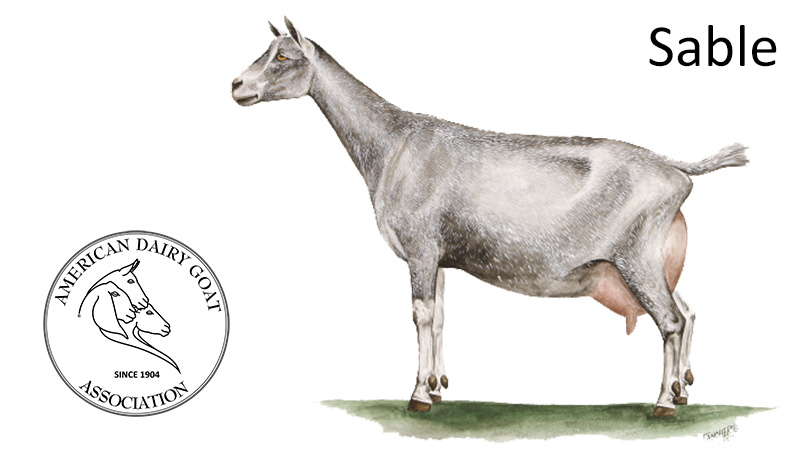
Average Milk Production per Lactation: 2,385 lbs (298.125 gallons)
Lactation Range: 1,540 – 3,120 lbs
Milk Fat: 3.3%
Milk Protein: 2.9%
Sables are essentially the “outcasts” of the Saanen breed.
Virtually the same in body type and appearance, the only differences between the Saanen and Sable are their lineage and color pattern. While Saanens must be white or cream, Sables may be any other color, solid or patterned, except white and cream. This means they can be brown, black, buckskin, pied, or literally any other color that isn’t allowed in the Saanen breed registry.
In addition, all Sables, whether purebred or American, must be an offspring of purebred or American Saanens or Sables. This includes “experimental” lines from Saanen or Sable foundations. Overall, Sables often have a larger genetic pool for potential breedings, but lack the overall characteristics needed to qualify as a Saanen.
Because of this, their average milk production is slightly lower than that of a Saanen, at 2,385 lbs (298.125 gallons) of milk. However, all other production characteristics are generally the same.
Breed Characteristics: Sables derive from Saanens – which come from the Swiss Alps – so they’re much less adaptable to hot, humid climates. This may impact their milk production during the summer months. For peak productivity, it’s recommended to raise them in cool, dry environments.
Color: Sables can be any color, solid or patterned, except white and cream.
Best for people who:
- Regularly need large amounts of milk
- Have a small or medium interest in making other dairy products, such as cream and cheese
- Live in a cooler, dry climate
La Mancha

Average Milk Production per Lactation: 2,298 lbs (287.25 gallons)
Lactation Range: 830 – 4,120 lbs
Milk Fat: 3.7%
Milk Protein: 3.2%
La Manchas, easily recognized by their unique appearance, are typically considered to be moderate on the milk production scale.
Does are relatively large, weighing in around 130-165 lbs, and produce an average of 2,298 lbs (287.25 gallons) of milk in a single lactation. This falls below the previous breeds on this list, but that’s not where these goats truly shine.
La Manchas are most popular for their dual purpose qualities, being one of the only moderate-producing breeds to have higher milk fat and protein percentages (besides the Nubian, but we haven’t gotten to that section yet!). This means that, while they wouldn’t be the best breed available for someone looking to make other dairy products, they certainly wouldn’t be a bad choice either.
However, this breed definitely faces a bit of criticism where the others don’t – in appearance. They have no ears! (I’m kidding! Well, sort of. I just had to make sure you were still paying attention.) La Manchas have extremely short ears that come in two very distinct shapes: the “gopher” ear and the “elf” ear. Gopher ears are 0-1 inches in length with little to no cartilage, making them appear almost nonexistent. Elf ears are 1-2 inches in length with some amount of cartilage shaping the ear. This unique trait really doesn’t have anything to do with their productiveness, but it does scare some goat owners away from considering them for their herd.
Breed Characteristics: The La Mancha is one of the only popular dairy goats to be developed in the United States, by combining genetics from Nubians, French Alpines, Toggenburgs, Oberhaslis, and an imported Spanish breed: the Murcian. It’s considered a sturdy breed that can withstand a good deal of hardship, while still managing to produce. However, their unique ears make using ID tags nearly impossible and greatly increase the risk of ear infections, so they may require additional maintenance to stay healthy. It’s also said that their smaller ears affect heat dissipation and make them more prone to heat stress, but research on this topic varies.
Color: La Manchas can be any color, solid or patterned.
Best for people who:
- Regularly need moderate amounts of milk
- Have a medium or large interest in making other dairy products, such as cream and cheese
- Live in a climate that may be undesirable for other breeds
Toggenburg
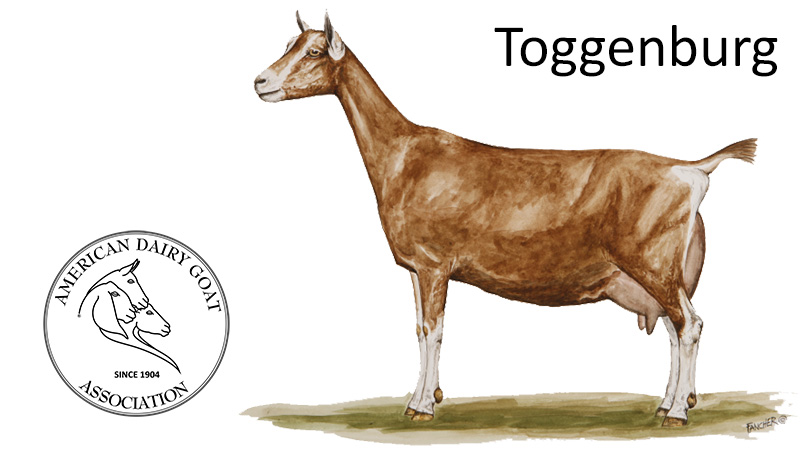
Average Milk Production per Lactation: 2,237 lbs (279.625 gallons)
Lactation Range: 1,090 – 3,840 lbs
Milk Fat: 3.1%
Milk Protein: 2.9%
Toggenburgs are widely considered the oldest-known dairy breed.
They’re medium in size, with does typically weighing in at around 120-150lbs, and produce an average of 2,237 lbs (279.625 gallons) of milk in a single lactation. In terms of milk volume, they fall in the middle of the productivity scale.
While their milk production is still fairly high, they’re beaten by most other dairy breeds in milk fat percentage, at a mere 3.1%. However, they’re often more desirable to farmers for another reason: their overall thriftiness and body strength.
Well-bred Toggenburgs typically have strong, sturdy legs on a very solid frame, with well-attached udders. They have an aptitude for living in outdoor settings and do well on open pasture where they can graze on large, grassy areas. Because of this, they’re considered to be very thrifty and able to be raised in a variety of sub-optimal conditions.
Breed Characteristics: Toggenburgs, originating from the Swiss Alps, are a very adaptable breed. They can be long or short-haired – with short hair being more common in the US – and can be horned or naturally polled. Wattles are common, but not required. They can be raised in a multitude of climates, but prefer colder weather.
Color: Toggenburgs come in shades from light fawn to dark chocolate brown, with cream or white markings on their legs, tail-base, and face.
Best for people who:
- Regularly need moderate amounts of milk
- Have a small interest in making other dairy products, such as cream and cheese
- Live in a climate that may be undesirable for other breeds
Nubian
Average Milk Production per Lactation: 2,018 lbs (252.25 gallons)
Lactation Range: 510 – 3,840 lbs
Milk Fat: 4.9%
Milk Protein: 3.8%
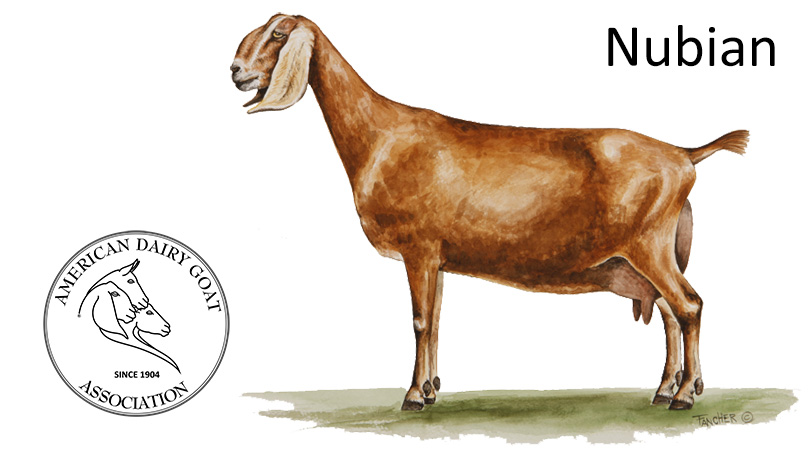
Nubians are one of the most popular dairy breeds, farm-favorites for homesteaders and large farms alike.
They’re medium to large in size, with does weighing in from 135-170 lbs, and produce an average of 2,018 lbs (252.25 gallons) of milk in a single lactation. This is below the average production of many of the Swiss breeds, however, their strength lies in their milk components.
Nubians are one of the top dairy breeds for milk fat and protein percentage, second only to the Nigerian Dwarf. With a milk fat of 4.9% and protein of 3.8%, they’re the top choice for serious cheesemakers who need large volumes of milk to make substantial quantities of dairy products.
However, a potential drawback for many homesteaders is their “vocalness”. Nubians are often coined the “drama queens” of the goat world, due to their readiness to yell and vocalise in any situation, at any time – and any volume. This makes raising them in smaller areas difficult, especially when neighboring houses are not distant.
Breed Characteristics: Nubians originated in Britain, where they were cross-bred with imported goats from India, North Africa, and the Eastern Mediterranean (initially referred to as Anglo-Nubians) to make the Nubians we know and love today. They have roman noses, large, drooping ears, tall frames, and short-haired coats that make them best-suited for hot climates.
Color: Nubians come in a variety of colors and patterns, with tan, black, and chestnut being most common.
Best for people who:
- Regularly need moderate amounts of milk
- Have a high interest in making other dairy products, such and cream and cheese
- Live in a warm or hot climate
Oberhasli
Average Milk Production per Lactation: 1,995 lbs (249.375 gallons)
Lactation Range: 1,120 – 3,050 lbs
Milk Fat: 3.7%
Milk Protein: 3.0%
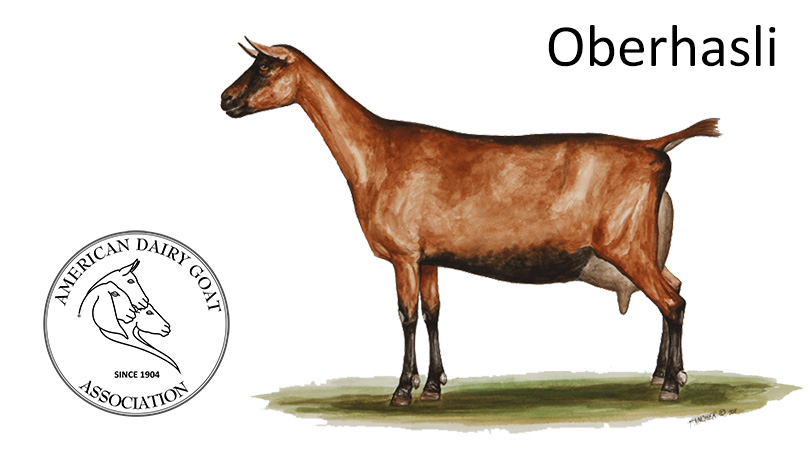
The Oberhasli, previously scarce in numbers, is quickly becoming another popular dairy breed for many homesteaders.
Does are medium in size, weighing between 120-150 lbs, and produce an average of 1,995 lbs (249.375 gallons) of milk in a single lactation. In terms of productivity, Oberhaslis typically fall behind the other Swiss breeds – and most of the other breeds on this list as well.
However, what they lack in milk volume, they make up for in milk fat: with an average percentage of 3.7%. Their milk generally contains a higher percentage of fat than the higher-producing breeds, only beaten by the Nubian and Nigerian Dwarf and tying with the La Mancha.
Breed Characteristics: Oberhaslis, another breed of Swiss origin, are more susceptible to parasites brought on by wet, humid climates and better-suited for places with dry weather. While their thriftiness continues to improve as they gain popularity in the United States, they are still notably susceptible to illness brought on by damp conditions. They have strong bodies, sturdy legs, erect ears, and short, wide faces. Depending on the lineage, some Oberhasli goats have horns, while others may be naturally polled. Wattles are also possible, but not required.
Color: Oberhaslis have a very short list of acceptable colors. Does must be either Chamoisée (tan to deep red/bay with black markings on the forehead, stomach, legs, and dorsal stripes) or solid black. Bucks must be Chamoisée with a black beard, black face, and black markings on their shoulders, chest, and back.
Best for people who:
- Regularly need low-moderate amounts of milk
- Have a medium or high interest in making other dairy products, such as cream and cheese
- Live in a dry, arid climate
Nigerian Dwarf
Average Milk Production per Lactation: 795 lbs (99.375 gallons)
Lactation Range: 220 – 2,110 lbs
Milk Fat: 6.4%
Milk Protein: 4.4%
Lastly, we have Nigerian Dwarfs!
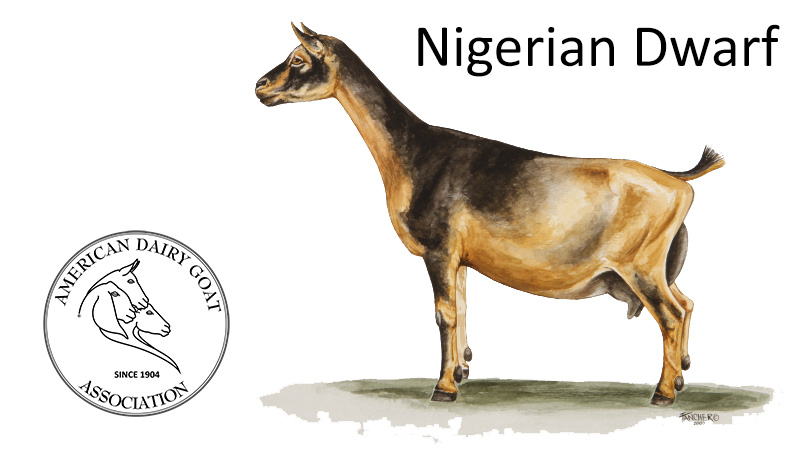
Nigerian Dwarfs are the smallest of the dairy breeds, their maximum adult weight being just 40-60lbs! Their petite size makes them easier to handle than larger breeds and, since they consume less food overall, increases the number of goats that can be easily sustained in a pen/pasture.
One of the most popular perks of raising Nigerian Dwarfs is their high milk fat percentage. At just about double the milk fat of the other dairy breeds, their milk is known to be more rich and creamy when compared to milk from any of the larger breeds. This makes them an ideal choice for producing other dairy products, such as cream and cheese.
However, this also comes with a few drawbacks. Since Nigerian Dwarfs are so much smaller than other breeds, they also produce much less milk. The average doe only produces 795lbs (99.375 gallons) of milk per lactation, which is less than 1/3 of the amount of milk produced by the average Alpine or Saanen. Because of this, you would need three Nigerian Dwarf does to produce the same amount of milk as one large breed doe.
Breed Characteristics: Nigerian Dwarfs originated from West African Dwarf goats in West Africa, but the breed was officially developed in the United States. They have short, fine hair and resemble the larger dairy breeds in body shape, albeit having a much smaller stature. Nigerian Dwarf goats are frequently confused with Pygmies, so a little extra caution must be taken when purchasing to ensure each goat is the correct breed.
Color: Nigerian Dwarfs come in a wide variety of colors and markings, including: Black, Brown, Gold, White, Buckskin, Chamoisée, Schwartzal, Roan, and Pinto. Common markings include: Moonspots, Frosted Ears and Nose, and Facial and Dorsal Stripes.
Best for people who:
- Prefer smaller goats that are easier to handle
- Have less land/smaller pastures
- Don’t go through much milk on a regular basis
- Have a high interest in making other dairy products, such as cream and cheese
As you can see, each dairy breed varies widely in the type of production they’re most suitable for. Breeds like the Alpine and Saanen are known to put the most milk in the pail, whereas breeds like the Nubian and Nigerian Dwarf will help you turn more of that milk into butter.
This is why it’s crucial to choose a breed that will set you up for success!
By starting your dairy goat journey off on the right foot, you can ensure you’re working with the best goats to meet your goals, rather than spending your time and hard-earned money just to find out they’d be better suited elsewhere.
I spent a lot of time gathering these statistics, so I hope this dairy goat guide makes your planning a breeze! Please note that, while these are the average production traits and values for each breed, the quality of the goats themselves will determine how well they perform and how true they adhere to those amazing qualities.
*All data regarding the average volume per lactation, milk fat, and milk protein comes from data collected by Penn State College of Agricultural Sciences and the American Dairy Goat Association (ADGA)
**1 gallon of milk is approximately equal to 8 lbs
 Hayyy Farms
Nice! Do you show or attend shows? Where you at NEODGA this year?
LikeLike
I used to show horses, but am currently working on my breeding stock before jumping into any dairy shows! I just got into a line of ADGA French Alpines that I really like. Both goat and rabbit shows are likely in the near future!
LikeLike
How fun! Same! I think NEODGA is close to you. WRDGA show isn’t to far either! Feel free to come out next year! It be great to meet you!
LikeLike
Great introduction to the dairy goat breeds.
LikeLike