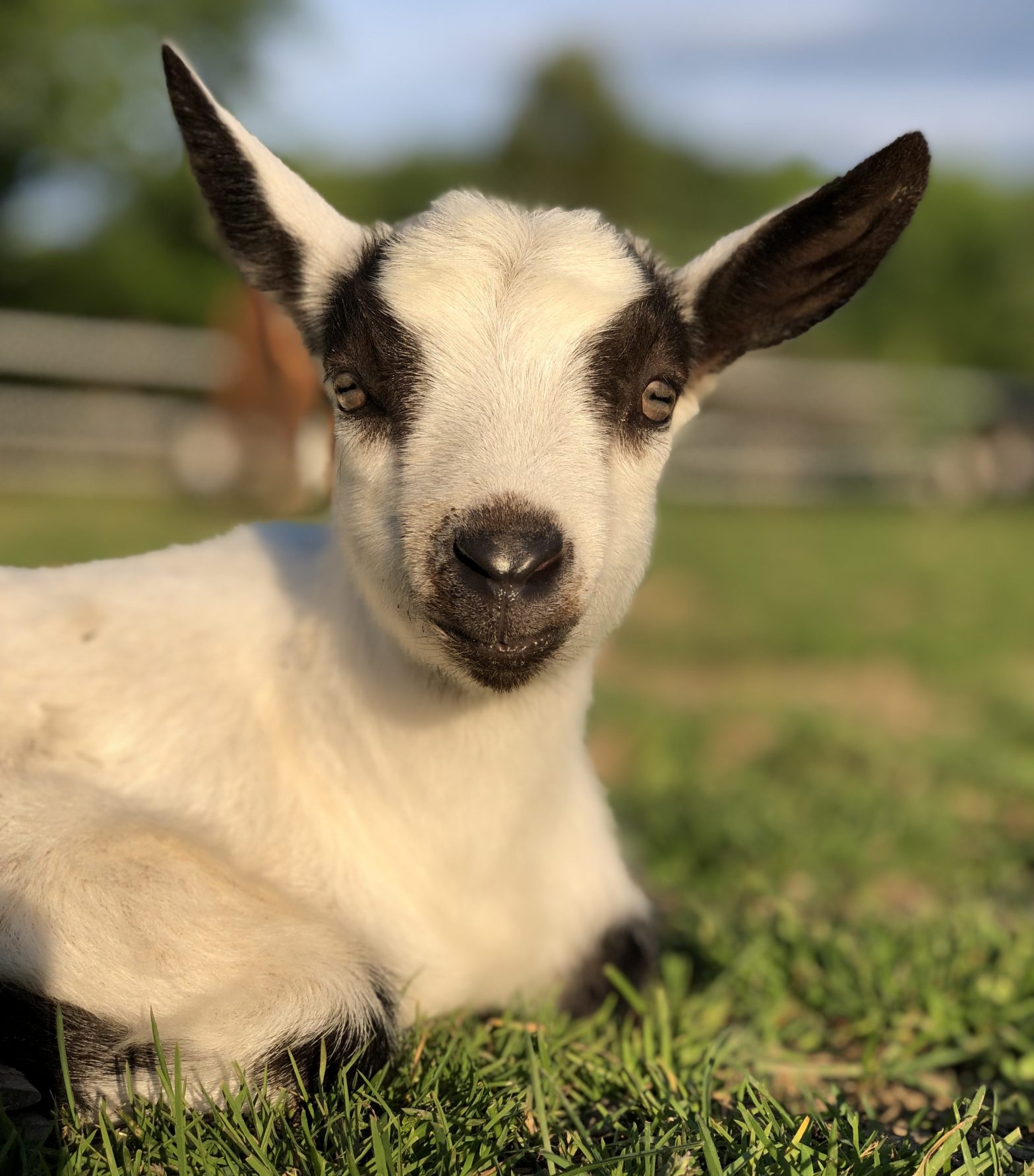
If you’re considering a new addition to the farm, chances are you’ve thought about goats.
Goats are amazing, multi-purpose animals that can lend a lot of versatility to your homesteading plans. Not only are they magnificent pets, but they can also be amazing milkers, highly efficient meat-producers, and help you dip into fiber production as well.
They’re essentially the small farmer’s mini-cow.
And luckily, goats are actually very durable and easy to care for!
They’re resilient, thrifty, and relatively low-maintenance… as long as their needs are met.
If basic care is neglected, things can get difficult very quickly, so it’s best to keep up on the basics if you want your goat-tending dreams to survive!
Shelter
First things first, you’re going to need a solid, secure shelter.
Structure
A quality shelter:
- Minimizes exposure to the elements
- Has at least three sides closed-off to the outdoors
- Has a sturdy roof with no leaks
- Faces away from the direction of incoming weather
- Has good ventilation
- Prevents a build up of ammonia
- Allows adequate air flow through windows, doors, or vents
- Is always dry, with no risk of flooding
- Has a floor built above the flood level
- Is built in a way that prevents rain from pooling inside
Commonly-used shelters include barns, sheds, enclosed lean-to’s, and other secure structures. Unstable structures or those that are open at two or more sides are not recommended.
However, take care to ensure that your structure follows the above recommendations!
“Is it interior blocked from the wind? Does the roof keep the rain out? If it snows, will it drift inside?”
The quality of your shelter will make or break your goat’s ability to stay healthy in a variety of weather conditions. Too drafty and your goats may be more at risk of pneumonia, but too little ventilation and you also risk a variety of other respiratory illnesses. Wet or moist environments are also extremely detrimental, since they greatly increase cases of hoof rot.
No matter which style of housing you choose, building a quality shelter is an essential first step in successful goat rearing.
Bedding
Once you’re certain that your shelter is in good condition, you’ll then have to add in some bedding.
Bedding is what keeps your goats from laying in their own excrement, helps them stay clean, and allows any urine to be soaked up and cleaned away. In the winter, it also provides a large amount of insulation to help them retain heat.
Two of the most popular bedding choices are pine shavings and straw.
Pine Shavings
Pine shavings are small, absorbent, wooden flakes that can often be found at your local feed store or livestock supplier.
Benefits:
- Good for absorbing moisture
- Easy to clean
- Less prone to dust
Drawbacks:
- Not very insulating during cold months
- Take more time to compost
- May be harder to store in large quantities
Straw
Straw bales are made from the compressed, dried stalks of various grain plants. They can often be found at local feed stores, agricultural suppliers, and local farmers that grow and bale them independently.
Benefits:
- Thicker density provides more cushion for the animals
- High insulation keeps goats warm during cold weather
- Easily stacked in large quantities
- Quicker to compost
Drawbacks:
- Not as absorbent
- Becomes heavy when wet, making cleaning more labor-intensive
- Can be dusty, depending on the source
My Recommendation: Bed your shelters with pine shavings during the spring, summer, and fall. As the weather gets cold, use a thick layer of pine shavings on the bottom with another layer of straw on top. You will have both the absorbency of the pine shavings, plus the heat insulation of the straw. For dirt floors, add bedding as needed and clean out in the spring. For wooden floors, clean out frequently – as needed.
Equipment
Now that you’ve got your shelter bedded, it’s time to add a few things.
Hay Feeder
Having a place to keep your hay off the ground will not only prevent waste, but also minimize parasite issues as well.
When goats are allowed to step all over their hay, any fecal matter and pasture contaminants they have on their hooves will transfer to it. This poses a big issue to your herd’s health! If the goats happen to eat the now-soiled hay, they will continuously infect themselves with the parasites and bacteria in your area.
Make sure you fit your stall with a secure, elevated hay rack to keep both waste and contaminants to a minimum!
Hay feeders should be:
- Fitted to a wall OR secured enough that goats can’t get on top or inside
- Narrow enough in the bars that goats can’t get their heads stuck
Grain Feeder
For these same reasons of preventing illness and reducing waste, you will also need to purchase a grain feeder.
Grain feeders come in all different styles, the most common two being small hook-over buckets and larger fence/gate troughs.
Small, hook-over buckets are typically used for smaller herds or individual pens, where only one or two goats are eating from them at a time. They hold smaller amounts of food and goats must often cram together or take turns eating out of them during feed times.
Larger fence/gate troughs are more suitable for larger herds, since they cover a much larger surface area. Many goats can use one trough at the same time and more grain can be placed inside as well, effectively feeding more animals.
No matter which style you choose, there are a few suggestions to follow:
- Secure feeders tightly to their intended location. Goats will play rough with things they’re not supposed to!
- Place feeders away from the pasture opening, in a place they will not get wet.
- If you can, place your feeder away from your hay rack. In case one of your goats is a bully, this makes the food harder to guard from the weaker goats.
- Ensure your feeders are in positions where goats will not jump or step in them.
The best places include mounted in an elevated position in a place that requires goats to step up on a gate to reach it, the opposite side of fencing/gates where they must eat from the other side, and through specialized feeder attachments that prevent anything more than the goats’ head and neck from entering.
Loose Mineral Holder
Minerals are extremely important to your goats’ health, so you’re also going to need a separate holder for them.
Small hook-over buckets and wall-mounted feeders are two options that are most commonly repurposed for loose minerals. Since goats only consume a very small amount at a time, these smaller feeders are perfect for displaying enough for a large group of goats.
However, you can use any mineral holder of your choosing, as long as it keeps the minerals well secured and out of hoof’s-reach.
Follow the placement recommendations in the previous section and be sure to keep them clean and dry!
Water Buckets
Hydration is crucial to keeping your goats happy and healthy, so they’ll need access to clean water at all times! If they won’t have full access to water out in pasture, you’ll need to include this in their shelter.
Water should be kept clean and checked daily. Any hay, feed, or bedding dropped inside should be removed as-needed and water should be replaced.
During any freezing weather, you will either need to purchase heated buckets, install de-icers, or manually provide warm water throughout the day.
For the best water bucket placement:
- Avoid putting the water bucket directly under or next to the hay rack. This will keep wet hay clumps to a minimum and reduce the need to refresh the water.
- If possible, station the bucket next to an outlet or extension cord. This will make it easier to swap out for a heated one during the winter months.
- For young or baby goats, avoid putting the bucket on the ground or near anything they could use to jump into it. Young kids can and will drown themselves, so take caution to ensure they can’t jump into the water.
I don’t think I need to go into specifics on the exact types of water buckets, but basically – if it holds water, it’ll do!
Pro Tip: Purchase bucket straps to move hanging buckets between locations easily!
Fencing
This is where most goat owners struggle.
Goats are very crafty animals with an intuitive ability to escape a variety of fencing attempts. They do so by climbing, pushing through, eating their way around, jumping over, and crawling underneath most common fence options.
The saying “if it won’t hold water, it won’t hold a goat” is a saying for a reason!
Luckily, pairing the right materials together will make escapees think twice!
Metal Fencing
When purchasing metal fencing, consider a few things:
- Predator load and wildlife risks in your area
- Size of the biggest and smallest goats needing to be contained
Predator-Proofing
Predators are one of the major causes of death in domestic goats, with coyotes, bobcats, and bears being very common offenders. Considering their ability to take out multiple members of your herd in one attack, predator-proofing is imperative in most locations.
Small breeds are more at risk of predator attack than standards, with kids of any breed being the most susceptible.
For this reason, it’s important to secure and fortify all perimeter fences to the best of your ability. Choose fencing with small gaps, ensure it reaches the height recommendations against the predators in your area, and make sure it’s installed tightly and securely.
Goat Size
This also applies to your goats!
Large breeds are harder on fencing. They have a habit of standing on it, crushing it, stretching it out, and have more force per goat to manipulate it than the smaller breeds. They’re also taller with increased ability to jump and climb out, so taller fencing is required. That being said, they are less likely to get out of small spaces in the fencing, so small gaps in the fencing are often less important. In general, large breeds are more likely to “brute force” their way out of a pen.
Small breeds are generally easier on fencing. Due to their size, they have very limited ability to move and manipulate the fencing like the larger breeds and cannot easily jump out. However, their ability to squeeze through small spaces makes it extremely important to remove and repair any small gaps in their pen or enclosure. In general, small breeds are more likely to “Houdini” their way out of a pen.
It’s not “if” your goats will test your fencing, but “when”, so it’s crucial to build a pen that will stand up to whatever they may throw at it!
Electric
Electric is another very popular fencing method, which tends to be very effective!
The components needed to set up an electric fence include:
- Electric Fence Box
- Electric Polytape or Metal Wire
- Copper Grounding Rods
- Insulated Fence Post Clips
- Insulated Wire
The idea of using an electric fence is that it makes goats unable to wreak havoc on the fencing itself. Since they are unable to touch it without getting a quick zap, the rest of your fencing and fence posts will be protected against any damage they could cause.
It’s not that they can’t go through the fence, it’s that the electricity makes them not want to, which is extremely helpful for any pesky troublemakers that don’t respect regular fencing.
Pro Tips!
For goats, electric strands should be placed in groupings of 4-5 strands per section, with one near the ground (but not touching it), one at nose height, one between the first two at equal distance, and at least one above them towards the top to prevent jumping over. This can be modified based on the size of your goats, but is a good, basic starting point.
Choose an electric box that’s strong enough to service your fenced-in area. It’s better to go stronger than weaker, since goats will still happily take the zap from a weak fence if it means they can get to the grass on the other side. If in doubt, the one I use for my standards is rated for bears!
Put in multiple grounding rods! The vast majority of the time, using a singular grounding rod leads to weak and inconsistent fence output. Use at least two or three (or more, if the space requires it) for the best operating fence.
Prevent the electric strands from touching field debris. Each non-insulated contact point drastically reduces your fence’s strength by removing electricity from the circuit. Trim any close weeds, remove vines, and check your fence frequently!
I highly recommend using electric fencing either in place of (if predator risk is low) or in conjunction with metal fencing!
Feed
The next step to successful goat rearing is choosing your feed. Everyone’s feed plans are going to be different due to their management style, so it’s crucial to determine which plan is going to be the most beneficial to your individual goals.
Hay/Pasture
Hay and/or pasture should be available at all times.
Goats are ruminants, meaning their digestive system is made to receive most of their nutrients through long-stem roughage, forage, and pasture grass. They’re naturally made to digest fiber throughout the day, so limiting or restricting hay and pasture can have negative effects on their health.
Unless your goats have full access to sufficient pasture, you should continuously provide plenty of hay at all times.
How to Choose Your Hay:
- Cuttings
- 1st Cutting: Hay is more stemmy with little to no seed heads or leaves. It provides a basic amount of nutrients and is better suited for non-breeding, non-producing animals.
- 2nd Cutting: Hay is softer and more leafy. It provides more nutrients than 1st cutting and is better suited for animals that are breeding, producing, or otherwise have higher energy requirements. This is the most common hay quality for the average herd.
- 3rd Cutting: Hay is the most soft and leafy, with plenty of seed heads. It provides a very dense amount of nutrients and is better suited for animals that are breeding, high-producing, or otherwise have higher energy requirements.
- Grasses
- The available forage options will largely depend on your general location.
- Common blends include general field grass hay, orchard grass, and coastal hay, although these are all very regional. Alfalfa is commonly used as a high-protein hay additive.
- For the best result, shop around to see which hays are available in your location and determine what other goat owners are using. If in doubt, hay advertised as “horse hay” will almost always be the quality that you’re looking for.
My Recommendation:
For non-breeding goats and pets: choose bales of high quality from either 1st or 2nd cutting.
For breeding stock and lactating does: choose bales of high quality from 2nd or 3rd cutting.
Grain
If you’ll be doing anything more than keeping your goats as pets, you’ll almost certainly need to purchase grain.
Breeding, producing, and working animals need a lot of calories to sustain a healthy body condition. Production takes a huge toll on them, so it’s important to replace the nutrients they’re using up in the process.
While hay is important for rumen health, most goats can’t grow and produce to their full potential on it alone and rely on a proper grain blend to provide additional nutrients.
Who Needs Grain:
- Pregnant and lactating does
- Breeding bucks
- Young or adolescent goats that are still growing – (optional)
- Goats having a hard time keeping weight on forage alone
When choosing your grain, take a look at your locally available options and choose one that seems closest to fitting your needs.
Generic goat feeds or blends labeled “all lifestage” are typically good for a variety of goats in the herd. They have a baseline level of nutrition and can be fed to goats from kids to adult does, and even bucks. However, these feeds aren’t extremely high in calories and would likely be less sufficient for high-producing does or seniors.
Goat feeds labeled “dairy” or “lactation/lactating does” are often good for does in milk. They’re higher in calories than a generic blend and specifically formulated to help support milk production.
Blends labeled “meat”, “meat maker”, or that mention anything about quick growth are often best suited for goats intended for meat. They typically have more calories and higher protein, which is important for quick muscle growth.
While some may suggest formulating and mixing your own feed blends, this is NOT recommended for beginners. Dietary composition takes a lot of knowledge and skill to do correctly and is best left to those with extensive knowledge and experience.
How Much To Feed:
- Typical Maintenance: 0.5-1 lb of feed per day per goat
- Pregnant Does: 0.5-1 lb of feed per day per goat
- Lactating Does: 1 lb of feed per 3 lbs of milk produced
- Market Goats: 2.5-3% of body weight
These are just starting points! Adjust your goat’s daily intake, as needed, based on their body condition.
Minerals
Since choosing hay and forage can often be complicated, it’s especially important to have loose minerals available to round out any missed nutrients.
Minerals work to supplement the goats with any nutrients that may have gotten glossed over in the rest of the diet. While feeds have a general range on their nutrition labels, it’s almost impossible to know exactly what they’re getting from their hay and pasture without religious testing. Therefore, minerals are used to make up that difference!
Available mineral blends will also be very regional, so it’s important to ask other goat owners in your area which ones they prefer.
I personally use Purina Goat Mineral – All Lifestage (not a sponsor).
However, the most important thing to note is that all minerals should be given in loose form, NOT blocks! Blocks are made for animals with rough tongues, like cattle, that are able to remove large amounts of minerals within a few licks. Since goats have smooth tongues, they are incapable of getting the proper amount of minerals during the time they are interested in the block.
As a result, the goat will likely start to experience deficiencies, even though the minerals may technically be “there”.
To avoid complications, ensure your goats have access to a good quality loose mineral at all times!
Other Necessities
Now that we’ve got their daily care covered, it’s time to talk about routine maintenance.
Hoof Trimming
Goats are very low maintenance compared to other livestock (when done correctly), but they do require regular frequent hoof care.
Hooves are made of hard keratin and grow continuously over time. When left unchecked, they can get severely overgrown, creating a cesspool of harmful bacteria that will rot this keratin away and cause extreme pain. Being in a long, untrimmed state will make it hard for your goats to walk properly, cause limping, and even lead to more severe conditions, like laminitis.
To prevent this, hooves should be maintained on a regular schedule!
Check your goats’ hooves monthly and trim as needed.
Using a goat hoof trimming tool (found at most feed stores and agricultural suppliers), trim away any excess growth. The surface of the hoof should be flat to the ground with no overgrown hoof wall around the edges. Take note of any abnormalities and be sure to handle any concerning spots in a timely manner.
If you are unsure of how to do this and don’t have a goat mentor in your area, there are numerous thorough “how to” videos to be found online. Please do not trim blindly!
Doing this monthly will help you spot any minor issues before they become a problem, reduce the amount needing removed, and desensitize your goats to having their legs handled: making it an easier job for you all around!
Vaccines
This section is optional, but HIGHLY recommended!
In order to prevent some of the major diseases that goats can experience, it’s good to keep them on an annual vaccine schedule.
Common Vaccines Recommended for Small Herds:
- CDT Vaccine: This vaccine protects against Clostridium Perfringens Type C&D and Tetanus, two absolutely devastating – and many times lethal – diseases your goats may encounter. Goats being disbudded, banded, fed large amounts of grain, or otherwise being processed are especially susceptible. For best results, the CDT Vaccine should be given yearly to all goats in the herd.
- Non-Breeding Does, Bucks, and Wethers: One annual booster
- Breeding Does: One booster the last month of pregnancy
- Kids from Vaccinated Does: An initial shot at 1-2 months of age, with a booster shot 3-4 weeks later
- Kids from Non-Vaccinated Does: An initial shot at 1-2 weeks of age, with two boosters 3-4 weeks apart
- Pneumonia Vaccine: This vaccine protects against some of the common causes of Penumonia (Mannheimia Haemolytica and Pasteurella Multocida), which can be lethal in goats. Goats are most susceptible during periods of fluctuating temperature, unsavory weather conditions, poor ventilation, overcrowding, insufficient housing, and stress. For best results, the Pneumonia Vaccine should be given to all goats in the herd annually in two doses, 2-4 weeks apart.
- Adult Goats: An initial shot with a booster 2-4 weeks later
- Kids vaccinated under 3 months old should be revaccinated at weaning or 4-6 months of age.
Unlike many household pets, you can actually give your goats their vaccines yourself – and most goat owners do!
Supplies and basic vaccines can be found at your nearest feed store or agricultural supplier.
I would highly recommend working with a local goat mentor to learn proper vaccination techniques! There’s also plenty of ways to research this online, but take care to ensure that your sources are credible.
Whichever you choose, please do NOT attempt to administer vaccines unless you are well prepared and confident in doing so!
Summary
We’ve gone over a lot, so let’s recap!
Proper goat care includes:
- Secure, Dry Shelter
- Bedding
- Pine Shavings vs. Straw
- Hay Rack
- Grain Feeder
- Mineral Feeder
- Water Bucket
- Bedding
- Adequate Fencing
- Metal vs. Electric
- Quality Feed
- Hay
- Cuttings: 1st, 2nd, 3rd
- Common Hay Types: Field Grass, Coastal, Orchard Grass, Alfalfa, and more!
- Grain
- Blends: Generic “All Lifestage”, Dairy, and Meat Grower
- Loose Minerals
- Hay
- Routine Maintenance
- Hoof Trimming
- Vaccines (Optional, but Recommended)
- CDT Vaccine
- Pneumonia Vaccine
Feeding, housing, and maintaining goats may seem daunting. Putting together a good shelter, choosing a grain blend, sourcing hay, and learning the do’s and don’t’s of general care…
It’s certainly a lot to take in!
However, you’ll soon find that they’re actually very low-maintenance, once the initial setup is out of the way. Many of the complicated problems you may experience when owning goats can easily be prevented with good husbandry and a solid foundation of knowledge.
Do yourself a favor and set yourself – and your goats – up for success!
The only requirement to be a good goat owner is the willingness to learn and – now that you’ve read this basic guide – you’re one step closer!
 Hayyy Farms