Tonic Immobility in Rabbits: Major Stressor or No Big Deal?

When it comes to handling rabbits, there’s a huge controversy surrounding one main action: Cradling rabbits on their back.

Some think this induces a major stress response, while others view it as a part of routine handling.

But, what do the experts have to say about it?

Tonic Immobility: What is it?

Tonic Immobility (TI) is a reversible, innate behavior characterized by temporary inhibition of motor functions (also typically referred to as akinesis, thanatosis, apparent death, and paralysis).

Symptoms of TI include stillness, unnatural body position, lack of reaction to external stimuli, tachycardia/bradycardia, decrease in respiratory rate and body temperature, and changes in EEG.

While rabbits are one of the most commonly thought-of species with the potential to experience TI, the condition is also noted in guinea pigs, mice, crustaceans, chickens, turtles, and sharks, among other animal species.

The Latest Study (2021)

In “Effect of tonic immobility induction on selected physiological parameters in Oryctolagus cuniculus f. Domesticus rabbit” (Wilczyńska et al), a group of researchers wanted to determine how gently-induced tonic immobility would affect a rabbit’s nervous system.

The study was simple.

The researchers gathered two groups of companion rabbits at a veterinary clinic – one as a control and the other to lay in the dorsal position in an attempt to induce tonic immobility.

Upon entering the clinic, each group of rabbits had their glucose and cortisol levels tested via blood from the marginal vein in the ear and had their respiratory rate, heart rate, and pupil size noted. 

Then, they underwent a detailed clinical evaluation in their respective positions (upright for the control group, and dorsal for the study group) for approximately 5 minutes, before being blood tested and having their vitals assessed a second time. 

After a waiting period of 15 minutes, their blood was taken again and data was collected for a third time.

The Results? – Not What You’d Think! 

Over the course of the exams, the control group experienced an average increased respiratory rate (+17%), pupil size (+11%), blood glucose concentration (+10%), and blood serum cortisol concentration (+78% across the entire group) and a decrease in heart rate (-9%).

The study group, however, experienced an increase in zero testing factors (on average), while they decreased in heart rate (-12%), pupil size (-9%), and blood glucose concentration (-7%). Their blood serum cortisol concentration decreased in 6 rabbits (-20%) and increased in the remaining 4 (+53%).

What Does That Mean? 

When both groups were compared, the rabbits evaluated in a normal position showed data indicating higher levels of stress, versus the study group that had been held on their back!

“The main stress marker, serum cortisol concentration, increased in all control group rabbits and only in 4 study group animals. This indicates that corticoliberin (CRH) and adrenocorticotropin (ACTH) are not produced during TI, which means that lying on the back is not a stress factor for most rabbits,” the study describes.

They also noted an increase in blood glucose concentration in the control group, which is consistent with rabbits experiencing presumed stress-induced hyperglycemia.

“Similarly, the glucose concentration in the control group increased between the first and third measurements, whereas a general decrease in serum concentration was observed in the study group rabbits. In rabbits, as in other animal species, hyperglycaemia can be caused by stress. In a study by Harcourt-Brown, 58% of rabbits showing signs of hyperglycaemia also had elevated levels of this sugar. Although there are no reports of the exact mechanism by which hyperglycaemia develops, many authors confirm its occurrence in animals exposed to pain or situations that may cause stress, such as transport and some research procedures.”

In other words, the rabbits examined in the normal standing position had harsher indicators across multiple data points, each with a high correlation to stress.

So, is laying rabbits on their back as harmful as many claim it to be?

The evidence says no! In fact, it even points to properly-maneuvered dorsal restraint as a beneficial handling method for minimizing stress!

“Our observations allowed us to conclude that those of the rabbits admitted to the veterinary clinic which underwent clinical examination in a standard position were more stressed than the animals under TI. Tonic immobility induced by inversion of the animal on its back is a safe method of rabbit restraint, greatly facilitating clinical examination and other diagnostic procedures for veterinarians and minimizing the risk of injury due to improper taming methods.”

Rest assured that, when taking proper care of your rabbits, cradling them on their back is both easier for you – and them!

*As a side note, it’s important to understand that the techniques of the original 1975 and 1977 studies by Michael Woodruff, Daniel Hatton, et al. are not the same techniques used to induce TI today. Whereas rabbits were previously slammed down into wooden troughs with hands around their neck to cause systemic fear response, today’s TI induction technique is simply gentle inversion into the dorsal position. Therefore, the previous studies are not reliable indicators of stress levels in non-abusive settings.


Citations

Wilczyńska, Anna & Ziętek, Jerzy & TEODOROWSKI, OLIWIER & WINIARCZYK, STANISŁAW & Adaszek, Lukasz. (2021). Effect of tonic immobility induction on selected physiological parameters in Oryctolagus cuniculus f. Domesticus rabbits. Medycyna Weterynaryjna. 77. 295-299. 10.21521/mw.6541.

Woodruff, Michael. (1977). Limbic Modulation of Contact Defensive Immobility (“Animal Hypnosis”). The Psychological Record. 1. 161-175. 10.1007/BF03394439.

Hatton, Daniel & Woodruff, Michael & Meyer, Merle. (1975). Cholinergic modulation of tonic immobility in the rabbit (Oryctolagus cuniculus). Journal of comparative and physiological psychology. 89. 1053-60. 10.1037/h0077191.

Homemade Frappuccino with Cinnamon Sugar and Caramel Drizzle

Ingredients

  • 1/2 cup of strong-brewed coffee (or 2 double shots cold espresso)
  • 1/4 cup fresh milk (I like goat milk for this)
  • 2 tbsp cinnamon sugar
  • 1/4 tsp vanilla extract
  • Ice cubes
  • Caramel syrup
Fun Additions (Optional)
  • Whipped cream
  • Crunch toppings

Instructions

  1. Make and cool coffee. Chill your choice of espresso or standard coffee until very cold.
  2. Place the cold 1/2 cup of coffee (or 2 double shots of espresso), 1/4 cup of milk, 2 tbsp cinnamon sugar, and 1/4 tsp vanilla into the blender.
  3. Add ice to the blender. Start by blending with about 1 cup (4oz) of ice cubes, then add more as needed to reach the perfect consistency.
  4. Blend. Start with blender settings on low and increase to high to ensure the ice is crushed very finely and air is added to the Frappuccino.
  5. Take your glass cup and, using the caramel syrup, drizzle along the inside of your glass. This provides a rich caramel flavor throughout the Frappuccino and gives it that iconic “coffee shop” look.
  6. Pour the contents of the blender into your glass cup, topping again with caramel syrup. Optional: Add in any additional toppings, such as whipped cream, extra syrup, and crunch toppings.
  7. Enjoy!

If you enjoyed this recipe for Homemade Frappuccino with Cinnamon Sugar and Caramel Drizzle, give us a follow and share with a friend!

Goat Care 101: The Ultimate Guide to Shelter, Feeding, and General Health

If you’re considering a new addition to the farm, chances are you’ve thought about goats.

Goats are amazing, multi-purpose animals that can lend a lot of versatility to your homesteading plans. Not only are they magnificent pets, but they can also be amazing milkers, highly efficient meat-producers, and help you dip into fiber production as well.

They’re essentially the small farmer’s mini-cow.

And luckily, goats are actually very durable and easy to care for!
They’re resilient, thrifty, and relatively low-maintenance… as long as their needs are met.

If basic care is neglected, things can get difficult very quickly, so it’s best to keep up on the basics if you want your goat-tending dreams to survive!

Shelter

First things first, you’re going to need a solid, secure shelter.

Structure

A quality shelter:

  • Minimizes exposure to the elements
    • Has at least three sides closed-off to the outdoors
    • Has a sturdy roof with no leaks
    • Faces away from the direction of incoming weather
  • Has good ventilation
    • Prevents a build up of ammonia
    • Allows adequate air flow through windows, doors, or vents
  • Is always dry, with no risk of flooding
    • Has a floor built above the flood level
    • Is built in a way that prevents rain from pooling inside

Commonly-used shelters include barns, sheds, enclosed lean-to’s, and other secure structures. Unstable structures or those that are open at two or more sides are not recommended.

However, take care to ensure that your structure follows the above recommendations!

“Is it interior blocked from the wind? Does the roof keep the rain out? If it snows, will it drift inside?”

The quality of your shelter will make or break your goat’s ability to stay healthy in a variety of weather conditions. Too drafty and your goats may be more at risk of pneumonia, but too little ventilation and you also risk a variety of other respiratory illnesses. Wet or moist environments are also extremely detrimental, since they greatly increase cases of hoof rot.

No matter which style of housing you choose, building a quality shelter is an essential first step in successful goat rearing.

Bedding

Once you’re certain that your shelter is in good condition, you’ll then have to add in some bedding.

Bedding is what keeps your goats from laying in their own excrement, helps them stay clean, and allows any urine to be soaked up and cleaned away. In the winter, it also provides a large amount of insulation to help them retain heat.

Two of the most popular bedding choices are pine shavings and straw.

Pine Shavings

Pine shavings are small, absorbent, wooden flakes that can often be found at your local feed store or livestock supplier.

Benefits:

  • Good for absorbing moisture
  • Easy to clean
  • Less prone to dust

Drawbacks:

  • Not very insulating during cold months
  • Take more time to compost
  • May be harder to store in large quantities
Straw

Straw bales are made from the compressed, dried stalks of various grain plants. They can often be found at local feed stores, agricultural suppliers, and local farmers that grow and bale them independently.

Benefits:

  • Thicker density provides more cushion for the animals
  • High insulation keeps goats warm during cold weather
  • Easily stacked in large quantities
  • Quicker to compost

Drawbacks:

  • Not as absorbent
  • Becomes heavy when wet, making cleaning more labor-intensive
  • Can be dusty, depending on the source

My Recommendation: Bed your shelters with pine shavings during the spring, summer, and fall. As the weather gets cold, use a thick layer of pine shavings on the bottom with another layer of straw on top. You will have both the absorbency of the pine shavings, plus the heat insulation of the straw. For dirt floors, add bedding as needed and clean out in the spring. For wooden floors, clean out frequently – as needed.

Equipment

Now that you’ve got your shelter bedded, it’s time to add a few things.

Hay Feeder

Having a place to keep your hay off the ground will not only prevent waste, but also minimize parasite issues as well.

When goats are allowed to step all over their hay, any fecal matter and pasture contaminants they have on their hooves will transfer to it. This poses a big issue to your herd’s health! If the goats happen to eat the now-soiled hay, they will continuously infect themselves with the parasites and bacteria in your area.

Make sure you fit your stall with a secure, elevated hay rack to keep both waste and contaminants to a minimum!

Hay feeders should be:

  • Fitted to a wall OR secured enough that goats can’t get on top or inside
  • Narrow enough in the bars that goats can’t get their heads stuck
Grain Feeder

For these same reasons of preventing illness and reducing waste, you will also need to purchase a grain feeder.

Grain feeders come in all different styles, the most common two being small hook-over buckets and larger fence/gate troughs.

Small, hook-over buckets are typically used for smaller herds or individual pens, where only one or two goats are eating from them at a time. They hold smaller amounts of food and goats must often cram together or take turns eating out of them during feed times.

Larger fence/gate troughs are more suitable for larger herds, since they cover a much larger surface area. Many goats can use one trough at the same time and more grain can be placed inside as well, effectively feeding more animals.

No matter which style you choose, there are a few suggestions to follow:

  • Secure feeders tightly to their intended location. Goats will play rough with things they’re not supposed to!
  • Place feeders away from the pasture opening, in a place they will not get wet.
  • If you can, place your feeder away from your hay rack. In case one of your goats is a bully, this makes the food harder to guard from the weaker goats.
  • Ensure your feeders are in positions where goats will not jump or step in them.
    The best places include mounted in an elevated position in a place that requires goats to step up on a gate to reach it, the opposite side of fencing/gates where they must eat from the other side, and through specialized feeder attachments that prevent anything more than the goats’ head and neck from entering.
Loose Mineral Holder

Minerals are extremely important to your goats’ health, so you’re also going to need a separate holder for them.

Small hook-over buckets and wall-mounted feeders are two options that are most commonly repurposed for loose minerals. Since goats only consume a very small amount at a time, these smaller feeders are perfect for displaying enough for a large group of goats.

However, you can use any mineral holder of your choosing, as long as it keeps the minerals well secured and out of hoof’s-reach.

Follow the placement recommendations in the previous section and be sure to keep them clean and dry!

Water Buckets

Hydration is crucial to keeping your goats happy and healthy, so they’ll need access to clean water at all times! If they won’t have full access to water out in pasture, you’ll need to include this in their shelter.

Water should be kept clean and checked daily. Any hay, feed, or bedding dropped inside should be removed as-needed and water should be replaced.

During any freezing weather, you will either need to purchase heated buckets, install de-icers, or manually provide warm water throughout the day.

For the best water bucket placement:

  • Avoid putting the water bucket directly under or next to the hay rack. This will keep wet hay clumps to a minimum and reduce the need to refresh the water.
  • If possible, station the bucket next to an outlet or extension cord. This will make it easier to swap out for a heated one during the winter months.
  • For young or baby goats, avoid putting the bucket on the ground or near anything they could use to jump into it. Young kids can and will drown themselves, so take caution to ensure they can’t jump into the water.

I don’t think I need to go into specifics on the exact types of water buckets, but basically – if it holds water, it’ll do!

Pro Tip: Purchase bucket straps to move hanging buckets between locations easily!

Fencing

This is where most goat owners struggle.

Goats are very crafty animals with an intuitive ability to escape a variety of fencing attempts. They do so by climbing, pushing through, eating their way around, jumping over, and crawling underneath most common fence options.

The saying “if it won’t hold water, it won’t hold a goat” is a saying for a reason!

Luckily, pairing the right materials together will make escapees think twice!

Metal Fencing

When purchasing metal fencing, consider a few things:

  • Predator load and wildlife risks in your area
  • Size of the biggest and smallest goats needing to be contained
Predator-Proofing

Predators are one of the major causes of death in domestic goats, with coyotes, bobcats, and bears being very common offenders. Considering their ability to take out multiple members of your herd in one attack, predator-proofing is imperative in most locations.

Small breeds are more at risk of predator attack than standards, with kids of any breed being the most susceptible.

For this reason, it’s important to secure and fortify all perimeter fences to the best of your ability. Choose fencing with small gaps, ensure it reaches the height recommendations against the predators in your area, and make sure it’s installed tightly and securely.

Goat Size

This also applies to your goats!

Large breeds are harder on fencing. They have a habit of standing on it, crushing it, stretching it out, and have more force per goat to manipulate it than the smaller breeds. They’re also taller with increased ability to jump and climb out, so taller fencing is required. That being said, they are less likely to get out of small spaces in the fencing, so small gaps in the fencing are often less important. In general, large breeds are more likely to “brute force” their way out of a pen.

Small breeds are generally easier on fencing. Due to their size, they have very limited ability to move and manipulate the fencing like the larger breeds and cannot easily jump out. However, their ability to squeeze through small spaces makes it extremely important to remove and repair any small gaps in their pen or enclosure. In general, small breeds are more likely to “Houdini” their way out of a pen.

It’s not “if” your goats will test your fencing, but “when”, so it’s crucial to build a pen that will stand up to whatever they may throw at it!

Electric

Electric is another very popular fencing method, which tends to be very effective!

The components needed to set up an electric fence include:

  • Electric Fence Box
  • Electric Polytape or Metal Wire
  • Copper Grounding Rods
  • Insulated Fence Post Clips
  • Insulated Wire

The idea of using an electric fence is that it makes goats unable to wreak havoc on the fencing itself. Since they are unable to touch it without getting a quick zap, the rest of your fencing and fence posts will be protected against any damage they could cause.

It’s not that they can’t go through the fence, it’s that the electricity makes them not want to, which is extremely helpful for any pesky troublemakers that don’t respect regular fencing.

Pro Tips!

For goats, electric strands should be placed in groupings of 4-5 strands per section, with one near the ground (but not touching it), one at nose height, one between the first two at equal distance, and at least one above them towards the top to prevent jumping over. This can be modified based on the size of your goats, but is a good, basic starting point.

Choose an electric box that’s strong enough to service your fenced-in area. It’s better to go stronger than weaker, since goats will still happily take the zap from a weak fence if it means they can get to the grass on the other side. If in doubt, the one I use for my standards is rated for bears!

Put in multiple grounding rods! The vast majority of the time, using a singular grounding rod leads to weak and inconsistent fence output. Use at least two or three (or more, if the space requires it) for the best operating fence.

Prevent the electric strands from touching field debris. Each non-insulated contact point drastically reduces your fence’s strength by removing electricity from the circuit. Trim any close weeds, remove vines, and check your fence frequently!

I highly recommend using electric fencing either in place of (if predator risk is low) or in conjunction with metal fencing!

Feed

The next step to successful goat rearing is choosing your feed. Everyone’s feed plans are going to be different due to their management style, so it’s crucial to determine which plan is going to be the most beneficial to your individual goals.

Hay/Pasture

Hay and/or pasture should be available at all times.

Goats are ruminants, meaning their digestive system is made to receive most of their nutrients through long-stem roughage, forage, and pasture grass. They’re naturally made to digest fiber throughout the day, so limiting or restricting hay and pasture can have negative effects on their health.

Unless your goats have full access to sufficient pasture, you should continuously provide plenty of hay at all times.

How to Choose Your Hay:

  • Cuttings
    • 1st Cutting: Hay is more stemmy with little to no seed heads or leaves. It provides a basic amount of nutrients and is better suited for non-breeding, non-producing animals.
    • 2nd Cutting: Hay is softer and more leafy. It provides more nutrients than 1st cutting and is better suited for animals that are breeding, producing, or otherwise have higher energy requirements. This is the most common hay quality for the average herd.
    • 3rd Cutting: Hay is the most soft and leafy, with plenty of seed heads. It provides a very dense amount of nutrients and is better suited for animals that are breeding, high-producing, or otherwise have higher energy requirements.
  • Grasses
    • The available forage options will largely depend on your general location.
    • Common blends include general field grass hay, orchard grass, and coastal hay, although these are all very regional. Alfalfa is commonly used as a high-protein hay additive.
    • For the best result, shop around to see which hays are available in your location and determine what other goat owners are using. If in doubt, hay advertised as “horse hay” will almost always be the quality that you’re looking for.

My Recommendation:

For non-breeding goats and pets: choose bales of high quality from either 1st or 2nd cutting.

For breeding stock and lactating does: choose bales of high quality from 2nd or 3rd cutting.

Grain

If you’ll be doing anything more than keeping your goats as pets, you’ll almost certainly need to purchase grain.

Breeding, producing, and working animals need a lot of calories to sustain a healthy body condition. Production takes a huge toll on them, so it’s important to replace the nutrients they’re using up in the process.

While hay is important for rumen health, most goats can’t grow and produce to their full potential on it alone and rely on a proper grain blend to provide additional nutrients.

Who Needs Grain:

  • Pregnant and lactating does
  • Breeding bucks
  • Young or adolescent goats that are still growing – (optional)
  • Goats having a hard time keeping weight on forage alone

When choosing your grain, take a look at your locally available options and choose one that seems closest to fitting your needs.

Generic goat feeds or blends labeled “all lifestage” are typically good for a variety of goats in the herd. They have a baseline level of nutrition and can be fed to goats from kids to adult does, and even bucks. However, these feeds aren’t extremely high in calories and would likely be less sufficient for high-producing does or seniors.

Goat feeds labeled “dairy” or “lactation/lactating does” are often good for does in milk. They’re higher in calories than a generic blend and specifically formulated to help support milk production.

Blends labeled “meat”, “meat maker”, or that mention anything about quick growth are often best suited for goats intended for meat. They typically have more calories and higher protein, which is important for quick muscle growth.

Some feed mixes also include Ammonium Chloride, which works to prevent a deadly condition called “Urinary Calculi” in bucks and wethers. Read more about it here!

While some may suggest formulating and mixing your own feed blends, this is NOT recommended for beginners. Dietary composition takes a lot of knowledge and skill to do correctly and is best left to those with extensive knowledge and experience.

How Much To Feed:

  • Typical Maintenance: 0.5-1 lb of feed per day per goat
  • Pregnant Does: 0.5-1 lb of feed per day per goat
  • Lactating Does: 1 lb of feed per 3 lbs of milk produced
  • Market Goats: 2.5-3% of body weight

These are just starting points! Adjust your goat’s daily intake, as needed, based on their body condition.

Minerals

Since choosing hay and forage can often be complicated, it’s especially important to have loose minerals available to round out any missed nutrients.

Minerals work to supplement the goats with any nutrients that may have gotten glossed over in the rest of the diet. While feeds have a general range on their nutrition labels, it’s almost impossible to know exactly what they’re getting from their hay and pasture without religious testing. Therefore, minerals are used to make up that difference!

Available mineral blends will also be very regional, so it’s important to ask other goat owners in your area which ones they prefer.

I personally use Purina Goat Mineral – All Lifestage (not a sponsor).

However, the most important thing to note is that all minerals should be given in loose form, NOT blocks! Blocks are made for animals with rough tongues, like cattle, that are able to remove large amounts of minerals within a few licks. Since goats have smooth tongues, they are incapable of getting the proper amount of minerals during the time they are interested in the block.

As a result, the goat will likely start to experience deficiencies, even though the minerals may technically be “there”.

To avoid complications, ensure your goats have access to a good quality loose mineral at all times!

Other Necessities

Now that we’ve got their daily care covered, it’s time to talk about routine maintenance.

Hoof Trimming

Goats are very low maintenance compared to other livestock (when done correctly), but they do require regular frequent hoof care.

Hooves are made of hard keratin and grow continuously over time. When left unchecked, they can get severely overgrown, creating a cesspool of harmful bacteria that will rot this keratin away and cause extreme pain. Being in a long, untrimmed state will make it hard for your goats to walk properly, cause limping, and even lead to more severe conditions, like laminitis.

To prevent this, hooves should be maintained on a regular schedule!

Check your goats’ hooves monthly and trim as needed.

Using a goat hoof trimming tool (found at most feed stores and agricultural suppliers), trim away any excess growth. The surface of the hoof should be flat to the ground with no overgrown hoof wall around the edges. Take note of any abnormalities and be sure to handle any concerning spots in a timely manner.

If you are unsure of how to do this and don’t have a goat mentor in your area, there are numerous thorough “how to” videos to be found online. Please do not trim blindly!

Doing this monthly will help you spot any minor issues before they become a problem, reduce the amount needing removed, and desensitize your goats to having their legs handled: making it an easier job for you all around!

Vaccines

This section is optional, but HIGHLY recommended!

In order to prevent some of the major diseases that goats can experience, it’s good to keep them on an annual vaccine schedule.

Common Vaccines Recommended for Small Herds:

  • CDT Vaccine: This vaccine protects against Clostridium Perfringens Type C&D and Tetanus, two absolutely devastating – and many times lethal – diseases your goats may encounter. Goats being disbudded, banded, fed large amounts of grain, or otherwise being processed are especially susceptible. For best results, the CDT Vaccine should be given yearly to all goats in the herd.
    • Non-Breeding Does, Bucks, and Wethers: One annual booster
    • Breeding Does: One booster the last month of pregnancy
    • Kids from Vaccinated Does: An initial shot at 1-2 months of age, with a booster shot 3-4 weeks later
    • Kids from Non-Vaccinated Does: An initial shot at 1-2 weeks of age, with two boosters 3-4 weeks apart
  • Pneumonia Vaccine: This vaccine protects against some of the common causes of Penumonia (Mannheimia Haemolytica and Pasteurella Multocida), which can be lethal in goats. Goats are most susceptible during periods of fluctuating temperature, unsavory weather conditions, poor ventilation, overcrowding, insufficient housing, and stress. For best results, the Pneumonia Vaccine should be given to all goats in the herd annually in two doses, 2-4 weeks apart.
    • Adult Goats: An initial shot with a booster 2-4 weeks later
    • Kids vaccinated under 3 months old should be revaccinated at weaning or 4-6 months of age.

Unlike many household pets, you can actually give your goats their vaccines yourself – and most goat owners do!

Supplies and basic vaccines can be found at your nearest feed store or agricultural supplier.

I would highly recommend working with a local goat mentor to learn proper vaccination techniques! There’s also plenty of ways to research this online, but take care to ensure that your sources are credible.

Whichever you choose, please do NOT attempt to administer vaccines unless you are well prepared and confident in doing so!

Summary

We’ve gone over a lot, so let’s recap!

Proper goat care includes:

  • Secure, Dry Shelter
    • Bedding
      • Pine Shavings vs. Straw
    • Hay Rack
    • Grain Feeder
    • Mineral Feeder
    • Water Bucket
  • Adequate Fencing
    • Metal vs. Electric
  • Quality Feed
    • Hay
      • Cuttings: 1st, 2nd, 3rd
      • Common Hay Types: Field Grass, Coastal, Orchard Grass, Alfalfa, and more!
    • Grain
      • Blends: Generic “All Lifestage”, Dairy, and Meat Grower
    • Loose Minerals
  • Routine Maintenance
    • Hoof Trimming
    • Vaccines (Optional, but Recommended)
      • CDT Vaccine
      • Pneumonia Vaccine

Feeding, housing, and maintaining goats may seem daunting. Putting together a good shelter, choosing a grain blend, sourcing hay, and learning the do’s and don’t’s of general care…

It’s certainly a lot to take in!

However, you’ll soon find that they’re actually very low-maintenance, once the initial setup is out of the way. Many of the complicated problems you may experience when owning goats can easily be prevented with good husbandry and a solid foundation of knowledge.

Do yourself a favor and set yourself – and your goats – up for success!

The only requirement to be a good goat owner is the willingness to learn and – now that you’ve read this basic guide – you’re one step closer!


Other Posts You May Like
Purchasing Quality Goats: Tips From a Seasoned Breeder

Buying goats can be… overwhelming!

There are hundreds of options and every single one of them claims to be the best.
From smaller breeders, to larger show barns, and everything in between, everyone has goats to sell and YOU are the target.

In order to start your goat journey off on the right foot (or continue it, if you fell victim to underwhelming animals the first time), you first need to understand why choosing quality goats is so important.

Why Does It Matter?

The goats you choose are what’s going to either make or break your whole experience.

Quality animals that are bred with production, longevity, and health in mind are much cheaper to maintain and more productive over the course of their lifetime. They’re better equipped to thrive at their intended purpose, with less susceptibility to health problems and other costly issues that could put a strain on your farming goals.
In other words: less money in, more product out, and more money in your pocket.

In addition, remember that breeding involves multiple generations and not just one.
When you start with quality right off the bat, you also skip years of troubleshooting later when these initial decisions now manifest in the form of many other does in the herd.
If your starter goats have a multitude of weaknesses, so will their kids – many, many years down the line.

One goat with bad qualities can very quickly turn into 25.
Do you really want to sentence yourself to cleaning up the same problems for that long?

Choosing animals that align with your ideals and values are going to not only make your life a whole lot easier, but they’re also going to save you time, money, and stress for years to come.


Now that we’ve got that out of the way, it should be clear why choosing quality goats is a crucial part in your success.

But, as a seasoned breeder, let me tell you this:
You could have a whole barn full of amazing goats, but not every one is going to work for you.

So how do you narrow it down?

Question The Seller

No matter which breed you choose, it’s absolutely crucial that you look for goats that have been proven to excel at your chosen task. There are many bad breeders in the goat world and not all of them are breeding quality animals, many of which will have negative traits that make it much harder to reach your target goal.

When looking to purchase goats, ask the seller these questions:

  • Do you personally use your goats for (meat/milk/fiber)? How do you feel they perform?
    • Look for quantitative values here! Sellers that are embellishing the quality of their goats will simply claim they perform “excellent” or “well”, whereas reputable breeders will be able give you exact information, such as volume of milk per day, approximate meat yield, fiber quality, etc.
  • What kind of environment are your goats used to?
    • This will tell you a lot about how the goat will thrive later on.
      If your homestead is pasture-based and the goat is used to being in an enclosed barn or more intensive farm-management system, it might not adapt well to pasture life after it leaves the farm.
      However, the reverse is also true! If the goat is used to being in pasture and your homestead is also pasture-based, you have a bit more reassurance that it will do well in the transition.
  • What do you typically feed your goats?
    • When you’re looking at a goat, you’re only seeing the outcome of how it’s been raised. What you can’t see is the protein percentage, minerals, and supplements that the seller has given the animal to grow it to this point.
      In order to know how the animal will perform on a different diet of your choosing, you first have to know how it’s been raised thus far.
      For example, a goat that is not naturally as bulky will appear thicker if put on a high protein grain. This goat will continue to stay that way if kept on a high protein grain, but will almost certainly lose weight when switched to pasture. If you purchase that animal based on its body capacity and size, then unknowingly switch it to a predominantly forage diet, it will no longer keep the same characteristics as when you bought it.
      Knowing what the seller has put into the goat will give you realistic expectations on whether or not the animal will continue to look that way on a different feed plan.
  • What does your deworming schedule typically look like?
    • This question is a bit sneaky! Depending on how the seller answers this question, you get a little bit of insight into whether or not they’re up to date in their management practices and what the parasite issues in the goat may look like.
      If the seller tells you they deworm the goat frequently, that’s actually a bad sign. It indicates that either the goat has some health issue that makes it susceptible to parasites or that the seller deworms unnecessarily, which can cause issues with parasites being resistant to dewormers later on.
      However, if the seller indicates that they only deworm sparingly, as-needed, and the goat has only needed a minimal amount of dewormer over time, you can be assured that the animal is probably not overly susceptible to parasites in optimal conditions.

Balance Your Options

When looking to purchase goats, you’ll find yourself with a variety of options. Some goats will be outstanding in milk production, but lack hardiness in a pasture environment. Others may be average in growth rate, but produce more meat overall. No one goat is going to “have it all” – so to speak – so it’s important to figure out which traits are most important to you.

For example, let’s say you’re looking for goats to start a dairy herd.
You find two Alpine goats: Goat A and Goat B.

Goat A

  • Milk Production: 12lbs per day
  • Cream Content: 3.5%
  • Maternal Instinct: Poor
  • Growth Rate: Moderate, reaches breeding size at 1.5 years old
  • Kidding Ease: Moderate, needs assistance occasionally

Goat B

  • Milk Production: 9lbs per day
  • Cream Content: 3.1%
  • Maternal Instinct: Great
  • Growth Rate: Great, reaches breeding size at 7 months old
  • Kidding Ease: Great, kids completely unassisted

If you value high milk output, you may be attracted to Goat A. It produces 3lbs more milk per day with 0.4% more butterfat than Goat B.
However, Goat A is also likely to be a more high-maintenance goat.
It has poor maternal instinct and less kidding ease, meaning it’s much more likely to need extra care and assistance when kidding and raising kids. This may be a goat that needs supervision around kidding time to ensure all babies are born safely.
It also grows more slowly than Goat B, meaning you’ll need to feed and care for it longer before it begins producing any milk.

Goat A would likely be a good doe for a very hands-on farmer with milk production as their highest priority.

Now, what about Goat B?

Goat B is certainly less productive in milk volume and cream content, but it does have its strengths.
While it certainly produces less per day, it reaches maturity a lot faster, and therefore is able to be milked a whole season earlier than Goat A.
This goat also has great maternal instinct and kidding ease, meaning it is much more likely to kid without much extra care or assistance. This may be a doe that can reliably kid out in pasture and “take care of business” – so to speak.
Overall, Goat B is likely a more low-maintenance goat.

If you prefer to run your herd a little more hands-off, with ease of management prioritized over milk volume, Goat B would likely be the more suitable doe.

And this goes for all traits!

Meat quantity, quality, temperament, size, overall conformation, and any other trait that can be seen as being positive or negative will all play a part into which goats may fit (or not fit) into your goals.

Not all goats are created equally, so be sure to keep your specific priorities in mind when choosing the best does for your herd.

Evaluate Kids Based On Their Parents

It’s great to know a goat’s statistics when deciding on purchasing them or not, but what if they’re young, unproven, or just don’t have them yet?

That’s when you look at the parents!

Since kids are a combination of their dam and sire, looking at the other goats in their direct lineage will give good indications on how they’ll grow out.

For the best insight on:

  • Udder, Milking, and Overall Mammary Potential
    • Look at the udders on the kid’s dam, their direct & half siblings (if already proven), their sire’s dam, and any female offspring their sire has produced previously. Take note on which characteristics are consistent throughout each related doe.
      Goats with direct relation will be more accurate, but looking at more distantly related does will show you any strong, inheritable traits that may be frequent in their lineage.
  • Body and Leg Conformation
    • Assess the body type and structure of their dam and sire. Since the kid is a direct combination of them, it will give you the best idea on their adult potential.
      Full siblings will also be a great indicator of this! If no full siblings exist or can be easily viewed, half-siblings may also give a vague idea, but will not be as accurate due to the influence of the other unrelated parent.
  • Growth Rate
    • The best information on a kid’s growth rate is a detailed record of it throughout birth and weaning. However, since many breeders don’t record it thoroughly, you may find it hard to get much of that specific information.
      Luckily, there are still ways to get a general picture!
      Look at the growth rates on any related kids between the goat’s dam and sire. Find out their birth weights, how many lbs per week/month they grew (if the breeder tracks that information), and approximately when they reached mature size.
      Direct siblings from current and previous kiddings will be the best indicators, but you can also take into account the dam and sire’s growth rates, if they’re known. If little else is known, half-siblings can give you a general idea as well, but keep in mind that they may be different due to the other unrelated parent.

Overall, any trait that you could possibly want to know about a young or otherwise unproven goat can almost always be determined by looking at its closest relatives!

And the last, and (in my opinion) most important piece of advice:

Don’t Balk At The Price

A very common problem I see with most new goat owners is that they gravitate towards the cheaper goats, regardless of their actual suitability for their farm.

Don’t get me wrong!

Shopping around is always good, but when it comes to spending a little more for a goat that’s going to be more productive in the long run… Choosing the cheaper, less suitable option is almost always a set back.

A good rule of thumb is to look at the price difference between both goats and determine how long it will take for the more suitable one to make that value back. Not just physical money, but also take into consideration kid value, milk/meat/fiber production, lessened labor value, and any other valuable traits you’re planning to use the goat for.

The majority of the time, the more suitable goat will meet and actually surpass the value of the less suitable one, even if it’s higher priced to begin with!

It’s also crucial to keep in mind that, the initial purchase is a one-time cost, whereas you will have to keep up with the result of that purchase for the full extent of that goat’s productive life, often transcending multiple generations.

For example, let’s take Goat A and Goat B from the example we discussed earlier.
In this scenario, milk sells for $1 per lb. Goat A has a listing price of $300 and Goat B costs $200.

If a farmer that prioritizes high milk production (more suitable for Goat A) chooses Goat B, their initial purchase price is only $200. Each day, collecting 9lbs per day, they will make $9 in milk sales. Their total income from milk sales from Goat B is $63 per week.

Now, if that farmer would’ve chosen the more suitable goat (Goat A), the purchase price would have been a little higher at $300. However, since Goat A milks 12lbs per day, their daily income would be $12. In a week with Goat A, they would collect $84.

With a difference of $21 per week, the higher-priced Goat A would make up the extra $100 in approximately 4.75 weeks, with every week after that being increased value.

And if they were to also sell cream products (a strength of Goat A), it would be even faster!

Now, let’s try the reverse!
Let’s pretend another farmer is choosing between the same goats, but Goat A is $200 and Goat B is $300.

This next farmer hires farm hands to help run his farm and values easy management above milk production. They pay their employees $15 per hour and we will assume that “hands on” goats require 1.5 additional hours of labor per week.

If this farmer chooses Goat A, they may make $84 in milk sales, but they will also be spending $22.50 in labor each week: a total weekly income of $61.50. This may not seem like a large difference from Goat B’s weekly milk income of $63, but they will essentially be bringing in $1.50 less in milk sales per week.

Over time, this difference accumulates to $100 in approximately 67 weeks.
This is the break even point in this scenario!
If the farmer chooses the more suitable Goat B, they will make up the extra purchase cost in just 67 weeks, with every day after that being increased value.

It may not seem like a large difference, but when each goat has a productive life of around 8 years and there are many goats in a herd, it really adds up!

The most suitable goats for your farm and goals will always be the most economical choice, regardless of initial purchase price. Don’t be afraid to spend a little extra for a better fit!


When it comes to choosing your next goats, purchasing quality animals is always going to be the ultimate key to success. They’re more productive, cost efficient, and will improve your operation much more effectively than those that aren’t.

Because, let’s face it: goats aren’t cheap.
If it’s going to cost money either way, it may as well be an animal that works for you.

It takes a lot of diligence to weed out the goats and breeders that aren’t quite right for your desired goals, but with the benefits that come with it – it’s more than worth it in the end!

Delicious Turkey Soup Recipe Using Leftovers

Ingredients

  • Leftover turkey: a leg, a thigh, and half of a breast (or more)
  • 20 cups water
  • 2 tsp. chicken soup base per cup of water.  Follow label directions first. You can add more to your taste when the soup is done.
    • David’s Recommendation: Gia Russia brand
  • 2 lbs. carrots
  • 2 large, sweet onions
  • 1 bunch celery
  • 1 stick butter
  • 3/4 cup of finely chopped fresh parsley
  • 3 large cloves garlic, minced
  • 1 Tbsp. dried, minced garlic
  • 1 Tbsp. garlic powder
  • 1 Tbsp. dried, minced onion
  • 1 Tbsp. onion powder

Cooking Instructions

  1. Dice the onion to medium size, cut carrots and celery about ¼” thick and place all in a large soup pot. Don’t forget to chop up and add the leaves from the celery.
  2. Cut up the stick of butter and add it to the pot. Place the pot over medium heat to begin cooking.
  3. While the vegetables sauté, prepare the chicken broth by adding the soup base to hot water to dissolve it. (Taste testing is helpful, at this point, because the veggies are better if the broth is full strength during cooking.) Add the broth to the pot when it is ready.
  4. Add fresh garlic, parsley, and the rest of the spices to the pot, and simmer on low until the vegetables are tender.
  5. While the soup is simmering, dice the turkey in about ½” cubes.  
  6. Add the turkey at the end, when the soup is done, to avoid overcooking it.
  7. Add more soup base as needed.
  8. Serve over fine egg noodles.

If you enjoyed this recipe for our delicious leftover turkey soup, give us a follow and share with a friend!

Recipe courtesy of my uncle, David Popp. “For Nancy”

Stray Dogs: An Expensive Problem for Flock Owners!

Stray dogs are absolutely one of the most underestimated predators a farmer will ever have to deal with.

When it’s a coyote or a fox, the damage is expected. It’s a damper for sure, but the “bummer” is universally understood. Nobody challenges it.

However, when that predator is someone else’s furry friend? Hold onto your hats, because things are about to get wild!

Killed and injured livestock suddenly become “not that big of a deal” and – heavily seasoned in callousness and slathered in victim-blaming – farmers are told to “secure their animals better next time if they didn’t want them eaten.” When it’s a laying flock that gets torn apart, the general attitude seems to consistently become “well it’s just a $5 bird, go get another one.”

Well, I’m here with the stats yet again to explain why the death of these “$5 birds” are a lot more of a problem than you may think.

So strap in, folks! This is going to go a little differently than you probably expect.

Boring Disclaimers

^ Is that professional? Probably not, but it does make this more bearable to write. Oh well!

These values are for generic, laying hens with average feed and care. They will not be accurate for organic, non-GMO, or any other fancy feeds, special breeds, free-ranging, pricy diet plans, expensive care, etc. A good rule of thumb is that, if the birds cost more, care is more expensive, and egg costs are higher: the loss values will be higher as well.

In addition, keep in mind that these numbers are very region dependent. If you’re local to us here at Hayyy Farms, congrats! These values will be fairly accurate. For everyone else, using your individual costs and egg value will give you a better representation of the situation, should you ever need to calculate one.

This is just a general scenario from local prices to give an idea on how drastic the damage from stray dogs can be.


Now that we’ve got that out of the way, let’s start from the beginning.

Chick to Laying Age

At local Ohio feed stores and hatcheries, laying breeds are currently going for about $4.69 per chick. Including tax, let’s call it $5.

Now, chicks have to be on chick starter feed for at least 6 weeks and then on chick grower feed from 6 weeks until laying age. Since many feed producers combine their chick starter and grower into one feed (and it makes this math a lot less complicated), that’s what we’re going to use for this example. Chick starter/grower runs between $18-$20 per 50lb bag at the local feed store, so we’ll use an average of $19 per 50lbs ($0.38 per lb).

For the first 6 weeks, one layer chick will eat about 1lb of starter/grower per week, on average. Then, from 6 weeks until around 16-24 weeks (laying age), it increases its food intake to between 1-1.5lbs per week.

In total, to reach laying age, a chick will have already consumed between 16-33lbs of feed.

Using the numbers listed above, this means that the farmer will have lost between $11.08 to $17.54 in feed and chick costs if a laying hen dies at this stage.

However, the loss doesn’t stop there. When farmers lose an animal, they not only lose out on any sunk cost it took to raise the animal to that stage of life, but also the productive loss that incurs when they no longer have the output that animal will produce in the future.

Remember, when it comes to monetary value: Farm animals are an investment.

So let’s take a look.

Egg Production & Potential Income

Most laying breeds will lay about 5 eggs per week and are replaced every 3-4 years.

In three years, they produce roughly 780 eggs (64 dozen) and in four years: 1,040 eggs (87 dozen). Since local eggs are currently about $4 per dozen, this is a potential income of $260 (3 years) to $348 (4 years).

However, to get the true loss value we must also take feed costs into account.

Future Feed Expenses

Full-grown laying hens eat about 1.5-2lbs of layer feed per week. Individual feed costs very GREATLY depending on brand and type, so for the sake of this example we’re going to use another average of $19 per 50lbs of ordinary chicken feed. If the farmer uses expensive non-GMO or organic feed, their costs (and egg revenue) will be drastically different.

In three years on average layer feed, one laying hen will cost between $88.92 to $118.56 in feed.

In four years, that cost jumps to between $118.56 to $158.08.

Now, let’s calculate the lost potential profit.

Crunching the Numbers

Taking our potential income and subtracting out future feed costs, this leaves us with a potential profit loss of:

  • 3 Years: $141.44 – $171.08
  • 4 Years: $189.92 – $229.44

Now, adding in the initial sunk costs (chick and starter feed costs) to our production and potential profit loss, that brings us to a total loss of: $152.52 to $246.98 per chicken.

Not what you expected, is it?

Now, if you’ve ever experienced a stray dog attack, you know they don’t just stop at one.

  • Loss of two chickens: $305.04 to $493.96
  • Loss of three chickens: $457.56 to $740.94
  • Loss of four chickens: $610.08 to $987.92
  • Loss of five chickens: $762.60 to $1,234.90

Did you gasp at the numbers? Now imagine if it’s not a “$5 chicken” and instead is a “$15 turkey”, or a “$300 goat”, or a “$1,000 pony”…

I think you get the picture.

And what’s more? In many states, the owner of the stray can actually be held responsible for these losses. Yes, you read that correctly! All factors in this example can be submitted as losses when a dog causes damage to a laying flock (or any other livestock), including:

  • Structural damage
  • Veterinary bills for injured animals
  • And any other monetary loss caused by the dog

Losing farm animals is a big deal, and most states treat it as such!

In fact, they’re so protected in many states – including our home state of Ohio – that the strays can even be euthanized for it.

(“Euthanized” is a nicer way of saying it, but you know what I mean)

Ohio Revised Code Section 955.28

(A) Subject to divisions (A)(2) and (3) of section 955.261 of the Revised Code, a dog that is chasing or approaching in a menacing fashion or apparent attitude of attack, that attempts to bite or otherwise endanger, or that kills or injures a person or a dog that chases, threatens, harasses, injures, or kills livestock, poultry, other domestic animal, or other animal, that is the property of another person, except a cat or another dog, can be killed at the time of that chasing, threatening, harassment, approaching, attempt, killing, or injury. If, in attempting to kill such a dog, a person wounds it, the person is not liable to prosecution under the penal laws that punish cruelty to animals.

(B) The owner, keeper, or harborer of a dog is liable in damages for any injury, death, or loss to person or property that is caused by the dog, unless the injury, death, or loss was caused to the person or property of an individual who, at the time, was committing or attempting to commit criminal trespass or another criminal offense other than a minor misdemeanor on the property of the owner, keeper, or harborer, or was committing or attempting to commit a criminal offense other than a minor misdemeanor against any person, or was teasing, tormenting, or abusing the dog on the owner’s, keeper’s, or harborer’s property. Additionally, the owner, keeper, or harborer of a dog is liable in damages for any injury, death, or loss to person or property that is caused by the dog if the injury, death, or loss was caused to the person or property of an individual who, at the time of the injury, death, or loss, was on the property of the owner, keeper, or harborer solely for the purpose of engaging in door-to-door sales or other solicitations regardless of whether the individual was in compliance with any requirement to obtain a permit or license to engage in door-to-door sales or other solicitations established by the political subdivision in which the property of the owner, keeper, or harborer is located, provided that the person was not committing a criminal offense other than a minor misdemeanor or was not teasing, tormenting, or abusing the dog.

In short, stray dogs are a disaster waiting to happen. They kill for sport and cause way more damage to livestock than people actually realize. What may seem like a small loss to some is actually a big deal to the farmers who now have to clean up the mess, cut their losses, and try to start again.

I hope I was able to shed some light on why farmers get so frustrated about loose animals. Nobody wants to be the bad guy, but when the public perception always favors the rogue dog over the countless animals they kill, it’s tough not to be so jaded.

And, if your dog does get loose and snack on the neighbor’s chickens?

Don’t be surprised if they hand you the bill.

Homemade Slow Cooker Rabbit Cacciatore Recipe

Ingredients
  • 1 farm fresh rabbit
  • 1 large, sweet onion
  • 2 ribs celery
  • 1 lb small carrots
  • 1 red bell pepper
  • 1 small/medium shallot
  • 1 small can of diced tomatoes
  • 1 cup dry white wine
  • 3 large cloves garlic
  • 1 Tbsp salted butter
  • 1 cup flour
  • 1-1/2 tsp dried basil
  • 1-1/2 tsp dried oregano
  • 1-1/2 dried, crushed rosemary
  • 3 sprigs fresh thyme
  • 1-1/2 tsp garlic powder
  • 1-1/2 tsp onion powder
  • 1 tsp dried minced onion
  • 1/2 tsp salt
  • Avocado oil for frying (better than olive for high-temp frying)

Pro-Tip: Fresh ingredients will enhance the taste of your dish!

Cooking Instructions

  1. Rinse and pat dry the rabbit. Remove the rear legs and highs, leaving them together in one piece. Remove front legs and cut the body into 4 or 5 equal-size pieces.
  2. Combine flour, salt, and one tsp. each of basil, oregano, rosemary, garlic powder, onion powder, and ½ tsp. salt in a one-gallon storage bag. Mix dry ingredients together and dredge the rabbit pieces in the flour mixture and set aside.
  3. Coat the bottom of a large, heavy skillet with enough avocado oil to fry the meat and place over a medium/high burner until the oil is hot enough to sear the meat. Fry the rabbit pieces for about 10 minutes, turning once until they are well-browned.
  4. While the rabbit pieces are cooking, dice, to a medium size, the red pepper, celery, and one half the onion and place in a bowl. Finely mince the fresh garlic and the shallot and add to the bowl and toss until mixed.  
  5. Spread a small amount of the vegetable mixture over the bottom of the crock pot and place the rabbit pieces evenly in the bottom. Place the carrots around the meat along the sides of the crock pot and push them down so they’ll be covered by liquid. Do the same with the sprigs of fresh thyme. Place the remainder of the vegetables evenly over the meat and dust all with the remaining basil, rosemary, oregano, garlic, and onion powders.  Add the minced, dried garlic. (Add more spices to your taste but take it easy on the oregano.) Pour the diced tomatoes over all. Thinly slice the remaining half onion and place evenly over the contents of the crock pot.
  6. Reheat the pan used to fry the chicken and add the Tbsp. of butter. Once the pan is very hot, pour in the white wine and scrape the pan clean as the alcohol evaporates. Once the alcohol is gone, pour the mixture over the contents of the crock pot.
  7. Cook for one hour on high and reduce to low, cooking for about 4 to 5 hours overall.  It’s best to check the meat for tenderness starting at about 3 hours so as not to overcook.
  8. Enjoy!

If you enjoyed this recipe for Homemade Slow Cooker Rabbit Cacciatore, give us a follow and share with a friend!

Recipe courtesy of my uncle, David Popp. “For Nancy”

Dairy Goat Breeds – For Dummies!

“Yep, it’s a goat”, you sigh, scrolling past photo upon photo of advertisements online.

“This one’s brown, this one has floppy ears… does any of this even matter?” If you’re looking to start your dairy goat journey, chances are you’re riddled with questions over which goat breed is best for your farm or homestead.

And you should be!

Goats come in a wide variety of shapes and sizes. Some breeds are better suited for high volume milk production, whereas others are kept for their high milk fat and affinity towards making cream-based products. Choosing the right dairy breed is often the difference between surpassing your goals… and udder disappointment.

So which one do you choose?

Of course, every goat owner you ask is going to insist on their favorite breed, but let’s take a look at what the numbers really say!

Here’s a list of some of the most common dairy breeds – complete with breed characteristics, physical attributes, and their actual recorded production values!

Popular Dairy Breeds

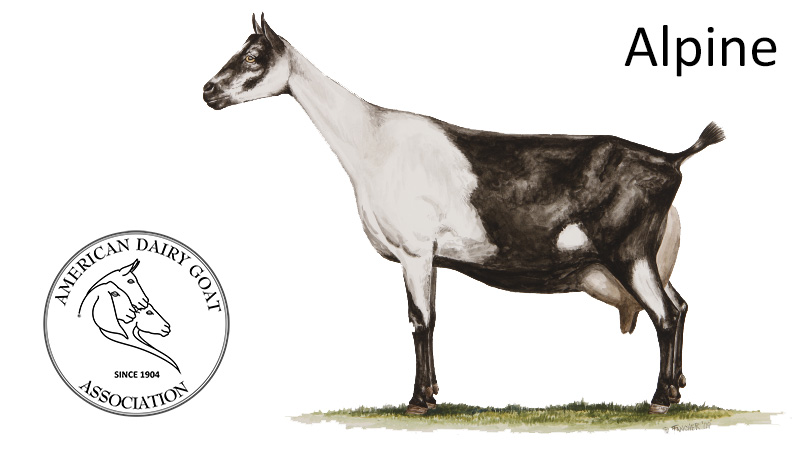
Alpine

Average Milk Production per Lactation: 2,715 lbs (339.375 gallons)

Lactation Range: 750 – 5,720 lbs

Milk Fat: 3.3%

Milk Protein: 2.9%

First up on the list: Alpines!

Alpines are large, very hardy, and known to be good homestead milkers. They’re one of the larger dairy breeds with adult does typically ranging in size between 135-170 lbs. However, they may be larger, depending on the breeder.

Out of all of the dairy breeds, Alpines are known to produce the most milk by volume, reaching an incredible average of 2,715 lbs (339.375 gallons) of milk in a single lactation. Higher-producing Alpines can even reach a potential 5,720lbs (715 gallons)!

However, while they’re the queens of milk production, they are often beaten by other goat breeds in milk fat percentage, such as the Nubian and Lamancha, so they’re typically not the top choice for making other dairy products, like cheese and butter.

Breed Characteristics: Alpines originate from the French Alps, with all goats with papers or other traceable lineage referred to as “French Alpines”. They’re known to be extremely hardy and adaptable to a wide variety of climates, making them the ultimate dairy goat for even the most unsavory weather conditions.

Color: Alpines come in a wide variety of colors and markings, some of the recognized ones being: Cou Blanc, Cou Clair, Cou Noir, Sundgau, Pied, Chamoisée, Two-Tone Chamoisée, and Broken Chamoisée.

Best for people who:

  • Regularly need extremely large amounts of milk
  • Live in climate that may be undesirable for other breeds
  • Have a small or medium interest in making other dairy products, such as cream and cheese
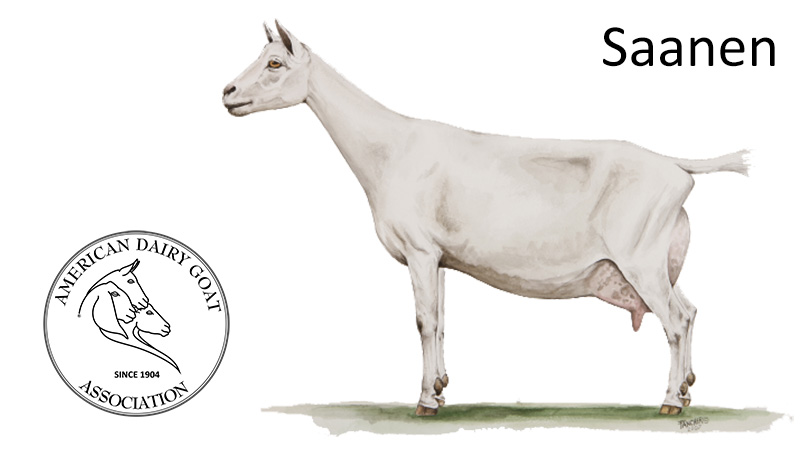
Saanen

Average Milk Production per Lactation: 2,702 lbs (337.75 gallons)

Lactation Range: 920 – 4,870 lbs

Milk Fat: 3.3%

Milk Protein: 2.9%

Next on the list is Saanens!

Like Alpines, Saanens are a larger breed, with adult does typically weighing in between 135-170 lbs. However, they can also be larger, depending on the breeder.

Saanens produce the second-most milk by volume – just shy of the average Alpine – with an average of 2,702 lbs (337.75 gallons) of milk per lactation. Due to this heavy production, their success as dairy animals is widely known, with many commercial dairies favoring Saanens over other breeds.

However, like Alpines, their milk fat percentage is only 3.3%. Because of this, they’re often not the top choice for anyone with a strong interest in making other dairy products, like cream and cheese.

Breed Characteristics: Saanens come from the Swiss Alps, so they’re much less adaptable to hot, humid climates. This may impact their milk production during the summer months. For peak productivity, it’s recommended to raise them in cool, dry environments and avoid large amounts of harsh sunlight that may burn their pale skin.

Color: Saanens only come in shades of white to light cream.

Best for people who:

  • Regularly need extremely large amounts of milk
  • Have a small or medium interest in making other dairy products, such as cream and cheese
  • Live in a cooler, dry climate
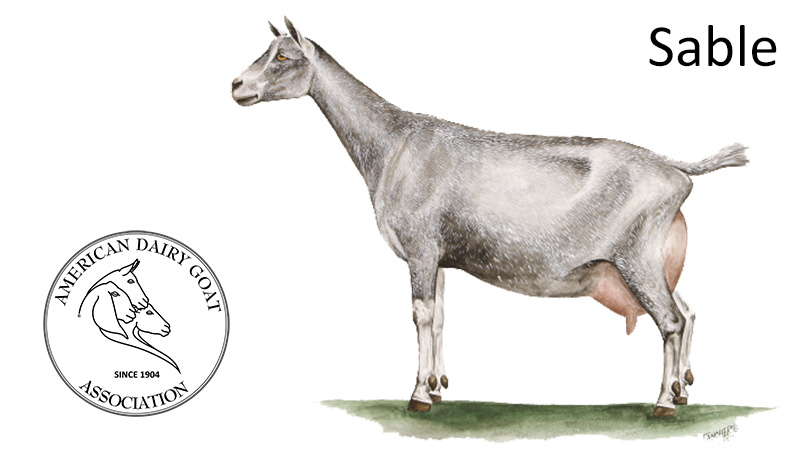
Sable

Average Milk Production per Lactation: 2,385 lbs (298.125 gallons)

Lactation Range: 1,540 – 3,120 lbs

Milk Fat: 3.3%

Milk Protein: 2.9%

Sables are essentially the “outcasts” of the Saanen breed.

Virtually the same in body type and appearance, the only differences between the Saanen and Sable are their lineage and color pattern. While Saanens must be white or cream, Sables may be any other color, solid or patterned, except white and cream. This means they can be brown, black, buckskin, pied, or literally any other color that isn’t allowed in the Saanen breed registry.

In addition, all Sables, whether purebred or American, must be an offspring of purebred or American Saanens or Sables. This includes “experimental” lines from Saanen or Sable foundations. Overall, Sables often have a larger genetic pool for potential breedings, but lack the overall characteristics needed to qualify as a Saanen.

Because of this, their average milk production is slightly lower than that of a Saanen, at 2,385 lbs (298.125 gallons) of milk. However, all other production characteristics are generally the same.

Breed Characteristics: Sables derive from Saanens – which come from the Swiss Alps – so they’re much less adaptable to hot, humid climates. This may impact their milk production during the summer months. For peak productivity, it’s recommended to raise them in cool, dry environments.

Color: Sables can be any color, solid or patterned, except white and cream.

Best for people who:

  • Regularly need large amounts of milk
  • Have a small or medium interest in making other dairy products, such as cream and cheese
  • Live in a cooler, dry climate
La Mancha

Average Milk Production per Lactation: 2,298 lbs (287.25 gallons)

Lactation Range: 830 – 4,120 lbs

Milk Fat: 3.7%

Milk Protein: 3.2%

La Manchas, easily recognized by their unique appearance, are typically considered to be moderate on the milk production scale.

Does are relatively large, weighing in around 130-165 lbs, and produce an average of 2,298 lbs (287.25 gallons) of milk in a single lactation. This falls below the previous breeds on this list, but that’s not where these goats truly shine.

La Manchas are most popular for their dual purpose qualities, being one of the only moderate-producing breeds to have higher milk fat and protein percentages (besides the Nubian, but we haven’t gotten to that section yet!). This means that, while they wouldn’t be the best breed available for someone looking to make other dairy products, they certainly wouldn’t be a bad choice either.

However, this breed definitely faces a bit of criticism where the others don’t – in appearance. They have no ears! (I’m kidding! Well, sort of. I just had to make sure you were still paying attention.) La Manchas have extremely short ears that come in two very distinct shapes: the “gopher” ear and the “elf” ear. Gopher ears are 0-1 inches in length with little to no cartilage, making them appear almost nonexistent. Elf ears are 1-2 inches in length with some amount of cartilage shaping the ear. This unique trait really doesn’t have anything to do with their productiveness, but it does scare some goat owners away from considering them for their herd.

Breed Characteristics: The La Mancha is one of the only popular dairy goats to be developed in the United States, by combining genetics from Nubians, French Alpines, Toggenburgs, Oberhaslis, and an imported Spanish breed: the Murcian. It’s considered a sturdy breed that can withstand a good deal of hardship, while still managing to produce. However, their unique ears make using ID tags nearly impossible and greatly increase the risk of ear infections, so they may require additional maintenance to stay healthy. It’s also said that their smaller ears affect heat dissipation and make them more prone to heat stress, but research on this topic varies.

Color: La Manchas can be any color, solid or patterned.

Best for people who:

  • Regularly need moderate amounts of milk
  • Have a medium or large interest in making other dairy products, such as cream and cheese
  • Live in a climate that may be undesirable for other breeds
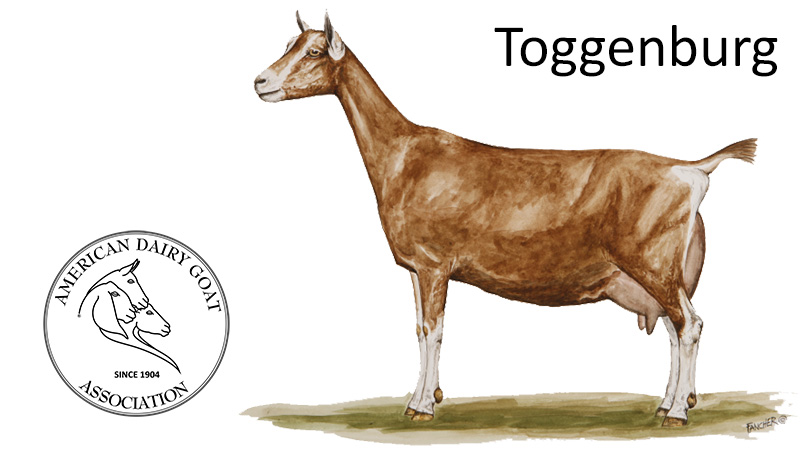
Toggenburg

Average Milk Production per Lactation: 2,237 lbs (279.625 gallons)

Lactation Range: 1,090 – 3,840 lbs

Milk Fat: 3.1%

Milk Protein: 2.9%

Toggenburgs are widely considered the oldest-known dairy breed.

They’re medium in size, with does typically weighing in at around 120-150lbs, and produce an average of 2,237 lbs (279.625 gallons) of milk in a single lactation. In terms of milk volume, they fall in the middle of the productivity scale.

While their milk production is still fairly high, they’re beaten by most other dairy breeds in milk fat percentage, at a mere 3.1%. However, they’re often more desirable to farmers for another reason: their overall thriftiness and body strength.

Well-bred Toggenburgs typically have strong, sturdy legs on a very solid frame, with well-attached udders. They have an aptitude for living in outdoor settings and do well on open pasture where they can graze on large, grassy areas. Because of this, they’re considered to be very thrifty and able to be raised in a variety of sub-optimal conditions.

Breed Characteristics: Toggenburgs, originating from the Swiss Alps, are a very adaptable breed. They can be long or short-haired – with short hair being more common in the US – and can be horned or naturally polled. Wattles are common, but not required. They can be raised in a multitude of climates, but prefer colder weather.

Color: Toggenburgs come in shades from light fawn to dark chocolate brown, with cream or white markings on their legs, tail-base, and face.

Best for people who:

  • Regularly need moderate amounts of milk
  • Have a small interest in making other dairy products, such as cream and cheese
  • Live in a climate that may be undesirable for other breeds
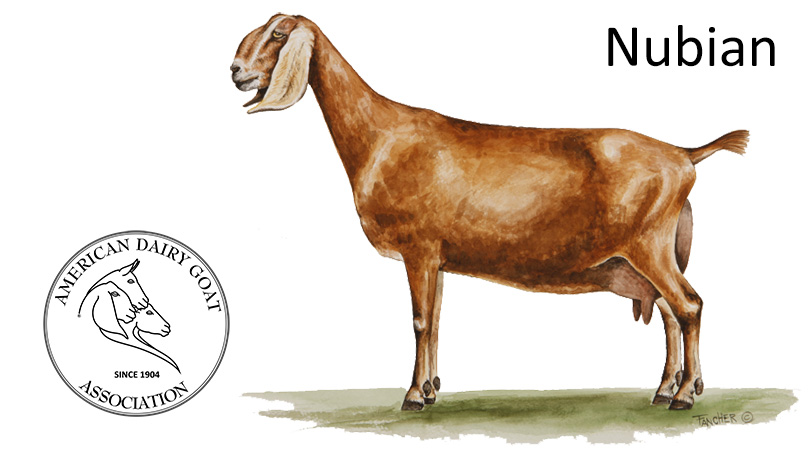
Nubian

Average Milk Production per Lactation: 2,018 lbs (252.25 gallons)

Lactation Range: 510 – 3,840 lbs

Milk Fat: 4.9%

Milk Protein: 3.8%

Nubians are one of the most popular dairy breeds, farm-favorites for homesteaders and large farms alike.

They’re medium to large in size, with does weighing in from 135-170 lbs, and produce an average of 2,018 lbs (252.25 gallons) of milk in a single lactation. This is below the average production of many of the Swiss breeds, however, their strength lies in their milk components.

Nubians are one of the top dairy breeds for milk fat and protein percentage, second only to the Nigerian Dwarf. With a milk fat of 4.9% and protein of 3.8%, they’re the top choice for serious cheesemakers who need large volumes of milk to make substantial quantities of dairy products.

However, a potential drawback for many homesteaders is their “vocalness”. Nubians are often coined the “drama queens” of the goat world, due to their readiness to yell and vocalise in any situation, at any time – and any volume. This makes raising them in smaller areas difficult, especially when neighboring houses are not distant.

Breed Characteristics: Nubians originated in Britain, where they were cross-bred with imported goats from India, North Africa, and the Eastern Mediterranean (initially referred to as Anglo-Nubians) to make the Nubians we know and love today. They have roman noses, large, drooping ears, tall frames, and short-haired coats that make them best-suited for hot climates.

Color: Nubians come in a variety of colors and patterns, with tan, black, and chestnut being most common.

Best for people who:

  • Regularly need moderate amounts of milk
  • Have a high interest in making other dairy products, such and cream and cheese
  • Live in a warm or hot climate
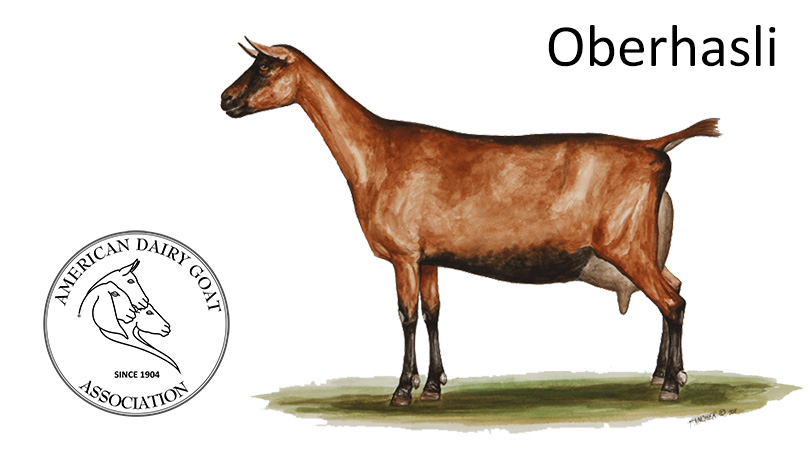
Oberhasli

Average Milk Production per Lactation: 1,995 lbs (249.375 gallons)

Lactation Range: 1,120 – 3,050 lbs

Milk Fat: 3.7%

Milk Protein: 3.0%

The Oberhasli, previously scarce in numbers, is quickly becoming another popular dairy breed for many homesteaders.

Does are medium in size, weighing between 120-150 lbs, and produce an average of 1,995 lbs (249.375 gallons) of milk in a single lactation. In terms of productivity, Oberhaslis typically fall behind the other Swiss breeds – and most of the other breeds on this list as well.

However, what they lack in milk volume, they make up for in milk fat: with an average percentage of 3.7%. Their milk generally contains a higher percentage of fat than the higher-producing breeds, only beaten by the Nubian and Nigerian Dwarf and tying with the La Mancha.

Breed Characteristics: Oberhaslis, another breed of Swiss origin, are more susceptible to parasites brought on by wet, humid climates and better-suited for places with dry weather. While their thriftiness continues to improve as they gain popularity in the United States, they are still notably susceptible to illness brought on by damp conditions. They have strong bodies, sturdy legs, erect ears, and short, wide faces. Depending on the lineage, some Oberhasli goats have horns, while others may be naturally polled. Wattles are also possible, but not required.

Color: Oberhaslis have a very short list of acceptable colors. Does must be either Chamoisée (tan to deep red/bay with black markings on the forehead, stomach, legs, and dorsal stripes) or solid black. Bucks must be Chamoisée with a black beard, black face, and black markings on their shoulders, chest, and back.

Best for people who:

  • Regularly need low-moderate amounts of milk
  • Have a medium or high interest in making other dairy products, such as cream and cheese
  • Live in a dry, arid climate
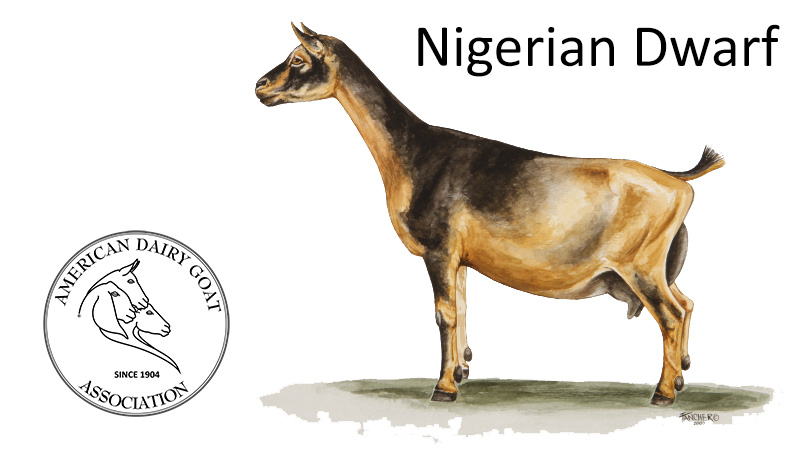
Nigerian Dwarf

Average Milk Production per Lactation: 795 lbs (99.375 gallons)

Lactation Range: 220 – 2,110 lbs

Milk Fat: 6.4%

Milk Protein: 4.4%

Lastly, we have Nigerian Dwarfs!

Nigerian Dwarfs are the smallest of the dairy breeds, their maximum adult weight being just 40-60lbs! Their petite size makes them easier to handle than larger breeds and, since they consume less food overall, increases the number of goats that can be easily sustained in a pen/pasture.

One of the most popular perks of raising Nigerian Dwarfs is their high milk fat percentage. At just about double the milk fat of the other dairy breeds, their milk is known to be more rich and creamy when compared to milk from any of the larger breeds. This makes them an ideal choice for producing other dairy products, such as cream and cheese.

However, this also comes with a few drawbacks. Since Nigerian Dwarfs are so much smaller than other breeds, they also produce much less milk. The average doe only produces 795lbs (99.375 gallons) of milk per lactation, which is less than 1/3 of the amount of milk produced by the average Alpine or Saanen. Because of this, you would need three Nigerian Dwarf does to produce the same amount of milk as one large breed doe.

Breed Characteristics: Nigerian Dwarfs originated from West African Dwarf goats in West Africa, but the breed was officially developed in the United States. They have short, fine hair and resemble the larger dairy breeds in body shape, albeit having a much smaller stature. Nigerian Dwarf goats are frequently confused with Pygmies, so a little extra caution must be taken when purchasing to ensure each goat is the correct breed.

Color: Nigerian Dwarfs come in a wide variety of colors and markings, including: Black, Brown, Gold, White, Buckskin, Chamoisée, Schwartzal, Roan, and Pinto. Common markings include: Moonspots, Frosted Ears and Nose, and Facial and Dorsal Stripes.

Best for people who:

  • Prefer smaller goats that are easier to handle
  • Have less land/smaller pastures
  • Don’t go through much milk on a regular basis
  • Have a high interest in making other dairy products, such as cream and cheese

As you can see, each dairy breed varies widely in the type of production they’re most suitable for. Breeds like the Alpine and Saanen are known to put the most milk in the pail, whereas breeds like the Nubian and Nigerian Dwarf will help you turn more of that milk into butter.

This is why it’s crucial to choose a breed that will set you up for success!

By starting your dairy goat journey off on the right foot, you can ensure you’re working with the best goats to meet your goals, rather than spending your time and hard-earned money just to find out they’d be better suited elsewhere.

I spent a lot of time gathering these statistics, so I hope this dairy goat guide makes your planning a breeze! Please note that, while these are the average production traits and values for each breed, the quality of the goats themselves will determine how well they perform and how true they adhere to those amazing qualities.

*All data regarding the average volume per lactation, milk fat, and milk protein comes from data collected by Penn State College of Agricultural Sciences and the American Dairy Goat Association (ADGA)

**1 gallon of milk is approximately equal to 8 lbs

Cost Disparities Between Local & Commercial Farms

Photo Courtesy of Travis Brooks Photography

“Fresh chicken… for THAT price?”

Each time I scroll through social media, I’m faced with a cacophony of people demanding to know why local produce and products are always so much more expensive than those from commercial producers. Some even raise concerns that we may be hiking the prices for more of a profit.

Instead of waving it off with the ol’ “love costs extra” line that most small farmers tend to use, I figured – why not just break it down with logistics? I mean, nobody wants to feel like they’re being overcharged and small farmers are dying to be understood. It would be in everyone’s best interest to see how exactly costs differ between the two very opposite ends of the agricultural industry.

So, here I am – doing the work so you don’t have to!

Important Details

Firstly, when I’m talking about “large-scale/commercial farms”, I mean the big players in the game. If you can get it frozen at a Walmart, or Meijers, or Target, or any other large grocery store chain – then that’s probably a brand or company that this applies to.

Secondly, we’re going to be talking a lot about “units” and “unit cost”. “Units” are any one product in its complete form. For example, this could mean one dozen eggs, one whole chicken, one package of drumsticks, one gallon of milk, and so on. A “unit” is a completed product and its cost (“unit cost”) is the amount it costs the farmer to grow, produce, or raise it.

Bulk Discounts

From the start, small farmers are charged way more for feed, bedding, and other animal and farm supplies than large commercial farms. In general, the more you buy in bulk, the better deals you can get. This is where local farms get priced out, because most of us can’t afford nor store the sheer amount of resources that commercial farms buy in bulk.

For example, our local feed store has corn for $12.29 for 50lbs, but if you buy it in bulk from a farmer or mill, the current price per bushel (about 54lbs) at the time of writing this article – comes down to $4.56. 

The small farmer buying 50lb bags of corn and storing it in their feed shed is paying $0.245 per lb, while the commercial producer is filling their silos for $0.084 per lb. That’s already a 291.67% difference!

Now imagine that on a giant scale for feed, bedding, supplies, etc.

We’re essentially paying almost triple what commercial farms do per “unit”, right off the bat, and making less from it. 

Flexible Unit Price

Because of the significant cost difference that comes with buying in such bulk, increasing a farm’s production drastically increases the flexibility of its unit price.

“What does that mean?”

Let’s pretend that it costs a commercial producer $1 to produce a dozen eggs. Using the previous corn prices as a baseline (for simplicity’s sake), it would cost a small farmer about $3 to produce a dozen eggs from their hens. This leaves the commercial farmer with three options:

  1. Price their eggs just above production cost ($1) to make a small profit.
    • This price is lower than what the small farmer can offer without losing money. Selling (as the small farmer) at this point would be basically paying people to take their eggs.
  2. Price their eggs equal to the cost of the small farmer ($3) to make a much larger profit.
    • This price is equal to what the small farmer would need to simply break even. Selling (as the small farmer) at this point would be doing all of the work to produce the eggs for other people for free, with zero income.
  3. Price their eggs at the profitable price of the small farmer (>$3) to compete with them and make the most profit.
    • This price is higher than the break even point of the small farmer, but only enough for them to make a small profit. Selling (as the small farmer) at this point is the only option which generates any income for their work whatsoever.

In this scenario, the small farmer must sell their eggs for almost three times the price of the commercial producer in order to simply break even. However, the commercial producer has the flexibility of three different pricing margins, each one making them some level of profit.

Basically, when you scale up production, your costs per “unit” go down, so you’re able to offer products for cheaper, while still coming out with a higher profit percentage. 

Certainty of Sales vs. Overproduction

In fact, the more a commercial farm increases production, the cheaper their overall “unit cost” and – when they have a solid path to consumers through grocery store displays and contracts – they don’t have to wonder if it’ll sell. It is highly competitive in price (more-so than the local farm products are able to be), along with being easily available and conveniently purchased. Therefore, there’s a good chance it will be the choice product for anyone with a lower grocery budget or those who don’t want to frequent multiple different places for their shopping.

With a store contract, the product is instantly exposed to everyone who walks through that store. At that point, very little marketing is needed. The commercial producers are almost guaranteed some level of sales.

Unfortunately, smaller producers don’t have that luxury. Most of us have to struggle on the fine line between producing enough to cover our “unit cost” while keeping prices down, while also avoiding overproducing and having excess that’ll go bad (because we’re talking food, after all!).

If we produce too little, our “unit” costs are high and our prices have to reflect it. 

If we produce too much, our “unit” costs are lower, but the excess isn’t selling so we’re still taking a loss on those “units”, effectively causing us to have to raise prices anyways. 

And, if we don’t get enough customers or advertising? Nothing sells. Total loss. We either have to raise prices next time to make up for it, or suffer the loss long-term.

Other Expenses

A big misconception about commercial farming is the belief that the cost of their infrastructure, staffing, and other large expenses levels the playing field.

That would be true… if small farmers didn’t have the same expenses.

It’s no secret that barns aren’t cheap. However, the cost disparity between feed and supplies also applies to what the farmer can afford to build/hire. That same 291.67% difference in feed costs (using our corn example) gives the commercial producer a spending budget almost three times more than that of a small farmer. So, if a small producer has a $100,000 budget for a new barn (they’re ridiculously expensive, trust me!), a proportional budget for a commercial producer would be $300,000. While that may seem like a lot more money comparatively, it would be directly proportional to their difference in business costs.

Now obviously those are just numbers for the sake of this example, but you get the idea.

Commercial producers are able to pay less money, to produce more product, while selling for higher profits and using the money to build bigger facilities.

Does it suck? Of course! But, it’s just the way it is.

While commercial farms may be paying more than we do for the infrastructure to house, store, and process their animals, resources, and products, they’re also saving a truck-load of money doing it that way, and (quite frankly) leaving us in the dust.


These are just a few of the reasons why local produce and products are almost always going to cost more than commercially-produced ones. There are many more factors that play into it, but I don’t think they’d ever fit into just one article.

I think you get the picture.

Just know that local farmers aren’t trying to overcharge you for a quick buck. We price our products high enough to make a measly profit, while still taking the best care of our animals that we can. It’s not much, but our passion lies in producing humanely-raised food… not in competing with large corporations (although unfortunately it’s still a part of our job).

Those of you who know me, know that I absolutely will not price-gouge anyone. Life is expensive enough. However, what I will do is charge enough to keep my animals happy, healthy, and well-fed. 

To me? That’s non-negotiable.

That being said, I seriously appreciate each and every one of you who’s supported us and our “local farm prices” without complaint over the years! You mean more to us than you’ll ever know.

Urinary Calculi in Goats: Fact vs Myth

If you raise goats, especially wethers or bucks, chances are you’ve heard of urinary calculi.

Urinary calculi is a devastating condition that goat owners absolutely dread. It can bring down a perfectly healthy goat in a matter of 24 hours and, if left untreated, will always be fatal. Goats affected by urinary calculi can go from completely asymptomatic to having a full blown emergency in one feeding to the next.

If you’re sitting here biting your nails, you’re not alone. Many goat owners have never heard of the condition, let alone have the ability to become an expert in the mere 24 hour window they have to save their beloved animals.

You, however, are here – reading this article – which means you’re about to become a full blown expert, capable of preventing, recognizing, and treating urinary calculi. Right? Right!

What is Urinary Calculi?

Urinary calculi is a condition where excess minerals (mainly phosphorous) turn into stones in the urinary tract. These stones block the urethra, which is the part of the urinary system between the bladder and the outside of the animal. With a partial blockage, the goat may still be able to urinate a small amount. However, a full blockage means that the urine can’t exit the body at all. 

At this point, time is of the essence. 

A mere 24-48 hours is all that separates the goat from a bladder rupture and subsequently, death.

Urinary calculi, left untreated, will always be fatal. 

Goats suspected to have urinary calculi must be caught and treated immediately to have any hope of being saved.

Symptoms of Urinary Calculi

Goats that are experiencing urinary calculi will appear to be in medium to substantial amounts of pain. They will be visibly restless, anxious, react negatively to any pressure placed on their abdomen, and will frequently forcefully strain to attempt to urinate with little to no urine coming out, often very vocally. Other signs may include rectal prolapse from abdominal pressure, drops of bloody urine, or visible crystals attached to the preputial hairs, but these are not always consistent or visible in every case.

As a whole, the goat will look extremely uncomfortable and miserable and struggle forcefully to pass urine, to no avail.

If a goat is displaying many of these symptoms, and you do not see it successfully urinate within a reasonable amount of time, chances are very high that it has a blockage.

Who is at Risk?

Of all goats, wethers (castrated males) are the most at risk of experiencing urinary calculi.

Why, you ask?

The difference lies in hormones.

While both wethers and bucks have a longer urethra with sharper curvature when compared to does, wethers have stopped producing testosterone since their castration. Testosterone helps grow the urethra and without it, the urethra will end up being smaller in diameter. 

Think about it this way. If you have a hula hoop, you’re going to be able to pass a lot more solid objects through it than if you’re holding a hoop meant for ring toss. It’s the same idea with goats. Bucks with a far larger urethra (hula hoop) will be more likely to pass stones than wethers with a smaller urethra (ring toss hoop).

On the other hand, cases in does are a lot more rare. Does have a shorter urethra with far less curvature, which makes passing stones a lot easier. A lot of stones that would cause a blockage in a buck or wether may pass through a doe with ease, never showing any symptoms at all.

Preventing Urinary Calculi

You know what they say: “an ounce of prevention is worth a pound of cure” – and dealing with urinary calculi is no exception.

Delayed Castration

Since most of a goat’s urinary tract growth typically occurs within the first 6 months of life, waiting until 6-7 months of age to castrate can dramatically reduce the risk of urinary calculi later in life. This gives a healthy amount of time for the urethra to mature to a larger diameter before cutting off its testosterone supply.

Wethers that were banded after 6-7 months are far less likely to experience urinary calculi than wethers that were banded at the traditional 8 weeks.

However, this isn’t always doable.

Mindful Early Castration

It’s not secret that bucklings can be fertile at a shockingly young age. Some have even been reported to have bred their dam and sisters as early as 4 weeks old! That being said, many farmers don’t have the time nor facilities to keep intact bucklings without risking accidental breedings to the rest of the herd, especially if supervised feedings don’t fit their schedule.

So what can they do?

If you must castrate earlier than 6-7 months, it’s essential to wait until the urethral process has separated before using your method of choice.

The urethral process is the appendage at the tip of the penis that allows the buck to direct the stream of his urine. It looks like a little worm and is folded upwards and adhered to the penis at birth, only separating under the influence of testosterone.

Castrating a buckling before the urethral process separates from the penis leaves a dangerously curved, narrow section at the end of the urethra and dramatically increases their risk of urinary calculi. In fact, it’s so prominent that it’s often not “if” these goats will have a blockage, but “when”.

To ensure your buckling’s urethral process has actually separated, take a few minutes to monitor him each day. Watch for him to extend his penis (they all do!) and make sure his urethral process is able to dangle independently. Spare your wether from a painful blockage later in life and make sure that you do not castrate until you see this separation!

Supply Plenty of Water

Bucks and wethers, on average, need to drink far more water than does to ensure urinary health.

Not only do bucks use their urine to remove waste from their body, but they also use it for reproductive purposes. During breeding season, bucks will urinate on their front legs and faces to attract the does and signal himself as a capable herdsire to produce the next generation of kids. This frequent urination, while unpleasant, is extremely helpful in preventing cases of urinary calculi. Increased urine production increases the hydration the buck needs in order to sustain it. When the buck drinks more water and does so very frequently, any potential urinary stones and excess minerals are diluted and excreted from the body before they can grow large enough to cause a problem.

Wethers, on the other hand, no longer have most of the “bucky” instincts of their non-castrated herdmates and only use their urine to excrete waste from the body (providing they weren’t castrated after picking up the habit, of course). Because of this, they urinate less often and therefore don’t drink as much water. By combining their already high anatomical risk status with a lack of excess water overall, dehydration can allow stones to form much more easily and cause their chances of experiencing urinary calculi to skyrocket!

While it’s essential to supply your does with plentiful amounts of clean, palatable water at all times, it’s even more important for your bucks and absolutely crucial for your wethers!

Feed a Proper Diet

If you take just one thing away from this article, let it be this section.

Feeding a proper diet is the absolute best and most effective way to reduce and nearly eliminate your goat’s risk of experiencing urinary calculi.

The vast majority of cases involving urinary calculi are caused by feeding grains, minerals, and forages with an improper balance of calcium to phosphorous. The ratio should be 2:1, with twice as much calcium being consumed as phosphorous.

Buckle up, because we’re about to get pretty scientific.

A Healthy 2:1 Balance

Phosphorous naturally binds with calcium.

In a healthy 2:1 ratio, when you have twice as much calcium than phosphorous, all of the phosphorous binds with calcium to form calcium phosphate – which is what strengthens bones and teeth – leaving no phosphorous left over. There is some calcium left in the body, but this is normal and considered a healthy level.

Too Much Phosphorous

In any situation where you have too much phosphorous (1:1.5, 1:2, 1:3, etc.), you’re going to have some left over after forming calcium phosphate.

Let’s use a ratio of 1:2, for example. When you have double the amount of phosphorous than calcium, only half of the phosphorous particles are binding with calcium particles. The other half remains in the body with the potential to form stones. This risk greatly increases with the more phosphorous that’s left over, as each particle has the potential to cause phosphorous-based stones, leading to urinary calculi.

However, the reverse can also be problematic.

Too Much Calcium

If the body has too much calcium in relation to phosphorous (such as a ratio of 5:1, 6:1, 7:1, etc.), this also leaves the goat at risk of developing stones.

For example, in a ratio of 6:1, you have triple the proper amount of calcium that you should have with that amount of phosphorous. Since only a third binds with the phosphorous, that leaves two-thirds of the calcium unbound in the body, capable of forming calcium-based stones at any given time.

Overall, the more unbalanced this ratio becomes in the goat’s diet, the more excess particles are left in the body, and the higher chance they will become problematic and cause urinary stones later on.

Foods to Avoid (…Or Not!)

As a result of this strict food ratio, it’s no wonder that many people have polarizing opinions over which foods to avoid to protect the urinary health of their herd.

Should you avoid corn? Alfalfa? How about grain? Don’t they all cause urinary calculi?

The answer is: Nope! All of these foods can be safely fed when done correctly.

I know! I know! *cue the angry goat owners*

But it’s true!

When you take a look the calcium to phosphorous ratio in your goat’s diet, you want to look at the WHOLE diet, not just a part of it. Many people see the individual mineral amounts of specific foods and automatically assume that they’re a problem, without taking into account the other parts of the diet that could be counteracting it.

For example, if you’re thinking about feeding alfalfa, you might initially decide against the idea based on its extremely high calcium content. However, if the grain or minerals you’re feeding have a lower calcium content and the goat is also being supplemented with low-calcium or high-phosphorous foods, the high calcium of the alfalfa likely won’t be an issue. In fact, it might even make your 2:1 ratio a little more balanced (depending on the other dietary components, that is).

And the same goes for corn and grain!

It’s not the individual parts of the diet that make the biggest difference, but the total balanced nutrition of the diet overall.

However, what if one of your goats still happens to experience it?

Treating Urinary Calculi

Urinary calculi is a tough condition to treat, but it’s certainly not impossible.

Partial Blockage

If your goat can still urinate to a small extent and is only partially blocked, luck is on your side! You have more options in this situation than any other outcome.

Because your goat can still expel fluids, it’s not at a very high risk of bladder rupture (yet). This means that you can give small amounts of water mixed with ammonium chloride to try to dissolve the stone from inside. Ammonium chloride can be purchased at a wide variety of feed and livestock stores, available in powder form. Follow the directions on the package and dose accordingly.

However, if your goat doesn’t improve or – even worse – blocks completely, stop giving liquids immediately. You must resort to more serious options, usually meant for full blockages.

Full Blockage

Full blockages are a lot more dangerous. Since the urine cannot escape the body, it continues to fill up in the bladder as time goes on, which can quickly cause a rupture. With any serious blockage, this is the first thing you’re going to want to do:

Remember that “wormy” appendage we talked about earlier, the urethral process? Yeah, so you’re going to cut it off.

*insert shocked city folk here*

The urethral process is the smallest section of a goat’s penis and, since it has the most curvature, it’s the most prevalent place for urinary stones to get stuck. By cutting it off, you might unblock your goat’s urethra in time to prevent his bladder from bursting.

Yes, it probably does hurt, but urinary calculi is a life or death situation and, if a little discomfort is what it takes to save the goat’s life… you’ll surely have no problem doing it. However, PLEASE look up a diagram of what the urethral process looks like! In fact, I’ll link it here. This article is about rams, but the anatomy is the same. If you cut off your goat’s entire penis, you’re going to give yourself a whole new set of problems.

If this works and your goat can urinate freely again, great! You’ve solved the problem and that should be the end of it for now. However, if removing the urethral process still hasn’t resolved the issue, you’re looking at a more serious case on your hands.

The most extreme cases will require a vet. These are cases where the urethra is completely blocked off and no urine is able to dribble out, even after removing the urethral process. If this is the case, there is nothing left you can do on your own and the only option to remove the stones is usually surgical. Call an emergency vet ASAP!


Okay, wipe the sweat from your forehead. You’ve got this.

You now know how to prevent urinary calculi, identify any potential problem areas in your management practices, and accurately identify the goats in your herd that may be more at-risk for the condition. And if one of them do happen to experience it? You also know the symptoms, what it looks like, and what to do about it. (And you can always save this article as a refresher, duh!)

Urinary calculi is a very serious condition, but, with quick thinking, it’s not always a death sentence. Stay calm, make a plan, and try to minimize risks where you can. If you do ever have to face it, you’re now more prepared than you were yesterday!