How to Handle Horses in the Public as a Non-Horse Person

One of the most important topics I think I’ll ever be able to cover is how to safely deal with horses in public spaces as a non-horse person. I always see various headlines of equine related accidents that could have been avoided if well meaning people knew how their actions could quickly turn into disaster.

If you’re reading this, thank you for being an informed member of your community!

Now, check out this list of important things you should and should never do if you see a horse out in public.

What Not To Do (While Driving) ❌

  • Absolutely NEVER honk your horn or rev your engine!
    • Even the most bombproof horses might spook at a car that thinks it’s being helpful by announcing its presence to the rider. Horns are not as common as other traffic sounds and most horses don’t hear them often. It would be like watching a movie with jumpscares. You know they exist and that they’re not dangerous, but not every movie has them and you may be startled when one happens. 
    • Chances are, we already know you’re near us. Most cars are pretty loud. The rider will hear you and, if in the way, move to a place where the car can pass. If the rider isn’t in your way, pass them wide and slow. 
  • NEVER ignore the rider’s hand motions!
    • The rider is the only one who knows their horse’s tolerance and capabilities, which means they’re the only ones who can direct the situation into a peaceful outcome.
      • If a rider is telling you to slow down, their horse may be getting anxious due to your speed.
      • If a rider tells you to stop, this is important. The horse might be getting out of its comfort zone and need a split second to calm down. Any pressure during this point could cause the horse to buck or bolt into traffic.
      • If they’re telling you to go ahead, green light! But do so slowly and safely to ensure the situation stays that way.
  • NEVER be impatient with a nervous horse!
    • A jittery horse one minute could be a bolting horse the next, so if they’re getting anxious, it’s safer for everyone if you don’t make the situation worse. No amount of road rage or impatience is worth a totaled car and injured rider, should the horse decide to run into oncoming traffic.
    • Remain at a safe distance from the back of the horse. Even the best horses have their moments and riders can’t always control when that happens. You can, however, help the situation and try to keep it contained in a safe manner, which works best if you give the rider some space to do what they need to do. When everything is controlled, the rider will most likely motion you forward to pass or try to move the horse to a different area if that can’t be done. 

What To Do (While Driving) ✅

  • Make your car as least threatening as possible.
    • Keep noises and speed to a minimum and give the horse extra space both while behind them and as the rider motions you to pass.
  • Pay close attention to the rider’s hand motions.
    • They know what’s best for the horse in each situation and are the key to a safe interaction.
  • Give horses extra patience.
    • Although we’d like to think our horses are well trained and bombproof, there are things that can still set them off. Whether its a little bit of sensory overload or a bad day all around, horses are living creatures and should be treated as such.
  • Pass wide and slow.
    • The best scenario is one that doesn’t involve an injured horse and a broken windshield. Don’t risk the safety of yourself and others by accidentally agitating a nervous animal. Keep a safe space between yourself and the rider to keep the situation as safe as possible.

What Not To Do (On Foot) ❌

  • NEVER go behind the horse!
    • No matter how well meaning you may be, any horse could be surprised at being approached from behind. The area behind the horse holds the most risk of being kicked, especially from a horse you don’t know. The safest places to stand are in the front and sides of the horse, but only if the rider allows you first.
  • NEVER feed a horse you don’t know!
    • Some horses can’t have certain ingredients so, even though you may have fed your cousin’s-friend’s-brother’s-grandma’s pasture pony a gingerbread cookie one time, that doesn’t mean all horses can have it. There are also a lot of foods that are extremely toxic to horses in general. Since horses can’t throw up, any toxic food either becomes a large vet bill or a death sentence.
  • NEVER allow misbehaving children near a horse!
    • If the children are acting crazy, chaotic, or seem like they may cause injury to the animal, the horse will likely be sent into a panic. Kids should never be allowed to scream, run around, or throw things at the horse and rider. While some horses may tolerate Karen and her tiny terrors, others will go into fight or flight mode and the outcome will not be pleasant.

What To Do (On Foot) ✅

  • Always ASK for permission!
    • No matter what your intentions are, you should always ask the rider for permission to approach their horse. If they say yes, then you can ask to pet it. If the rider says no, the horse may be either having a bay day or they’re in a rush, so it’s best to respect that.
    • The same goes for treats. Since horses have such sensitive stomachs, it’s best to ask the rider if they would be okay with you giving their horse a treat. The rider will either kindly hand you one, if they carry them during rides, or politely decline.
  • Ask for details.
    • If the rider allows you to approach and pet the horse, be sure to ask what areas you’re allowed to touch. Some horses are okay with being touched all over, while others dislike strangers’ hands on their more sensitive spots. It varies between horses and the way you interact with one might not be okay with another.
  • Keep children quiet and respectful.
    • If they’re well behaved and the rider is okay with it, instruct the children to carefully listen to the rider. They should approach the horse and, if allowed, say hello in a calm, kind manner. The rider knows how the horse may react to certain things and is the only person that knows the best way to keep the interaction positive, and any misbehavior on the kids’ part may interfere with that.

Why Should You Care?

If negligence of proper safety occurs around a horse:

  • The horse may get hurt
  • The rider may get hurt
  • You might get hurt
  • Your kids might get hurt
  • Your neighbor’s kids might get hurt
  • Your car might get hurt
  • You might feel bad about these other things getting hurt

And none of that is fun for anybody.

So next time you see a horse out and about, please remember to always approach safely, listen to the rider, and do your best to be courteous to other users of the road.

Horse Diets for Dummies

In my years of working with horses, I’ve noticed a few things about some of the people who don’t typically interact with them. While everyone recognizes the stereotypical horse treats, like apples and carrots, very few people that don’t work with horses regularly actually know the main parts of a horse’s diet.

Can they eat grass?

Do they eat hay?

Let’s take a look and dive into a general overview of the different food components and how they play into the horse’s health as a whole!

First comes first, when looking into the diet of any animal, it’s extremely important to know what category they fall into.

Categories of Herbivores

There are two main categories of herbivores: grazers and browsers.

  • Grazers, like horses, eat strictly pasture grasses and plants on the ground. They don’t eat bushes or leaves and generally avoid vegetation that’s higher up.
  • Browsers, like goats, eat forage that’s typically higher off the ground such as bushes and leaves. They tend to avoid short grasses and generally ignore vegetation that’s low to the ground.
  • There is a middle category called “brazers” that are typically are a combination of the two and eat both pasture grasses and leafy forage, but for some reason a lot of people leave that category out.

Forage

Because horses are grazers, they need food that fulfills that “grassy” requirement. This food is often a mix of pasture grasses that the horse can get while out in pasture and doesn’t include any weeds or thick brush. Each pasture mix is generally farm specific and can be tailored to the horse’s dietary needs. However, some horse owners don’t have the ability to provide enough pasture for their horses for a full diet. That could be due to the area not being particularly lush or even just not being a big enough space. Either way, this is where hay comes into play.

Hay

The purpose of hay is to make up what the pasture can’t. If a pasture isn’t producing well enough to completely sustain the amount of animals on it, hay is required to fill in the gaps. Many feed hay during the spring, summer, and fall seasons to compensate for unsuitable pasture conditions, but it’s also regularly used in the winter months when grass has stopped growing in the fields. This ensures horses get enough calories to maintain their body weight. Not only does it keep horses full and happy, but it also helps keep them warm in cold weather. That’s right! Horses that have hay constantly available in the winter tend to need less outside factors, such as blankets, to keep them warm than horses with limited hay. Overall, hay should be given on an as-needed basis with some horses requiring more than others.

Grain

Grain is used if the horse is still in need of more calories in the diet that hay and pasture can’t fulfill. For example, a trail horse that gets worked 8 hours over the course of a week might not need those extra calories and may be fine on just hay and pasture, whereas an endurance horse that gets 8 hours of exercise every single day might need the extra little bit to maintain their body condition. It’s comparable in people to how someone who exercises once a week wouldn’t necessarily need to change their diet, but a competitive runner would need the extra amount of calories to keep their weight up. There are about a billion different types of grain on the market, each tailored to horses of different needs. Some are designed to help foals grow, whereas others may be loaded with extra nutrients and calories for the senior horses that are prone to dropping weight. There are even some made to promote muscle growth in competition horses. The type of grain needed depends entirely on each individual horse’s health, age, and level of activity.

Minerals

The last and final component to a horse’s diet is minerals. Minerals are basically the last step of the diet that makes up for the faults in each of the other components. You could have a seemingly perfect diet for your horse, but if it’s lacking in magnesium or iron, your horse won’t be performing at its best. Minerals are added to a near-perfect diet to give it the proper balance that it needs to allow the horse the thrive. There are a million different mineral blocks and supplement packs to choose from, but the most important aspect is that it actively compliments the horse’s main diet.

Overall, understanding the components needed to create a healthy horse diet allows a better insight into how horse owners care for their beloved companions. Not only does it spotlight how each component works in relation to the others, but it also gives a clear depiction of why horses on different farms or with different workloads may be fed differently. With the right balance of forage, hay, grain, and minerals, any horse has the ability to thrive.

Things Nobody Told Me About Owning Goats

“”
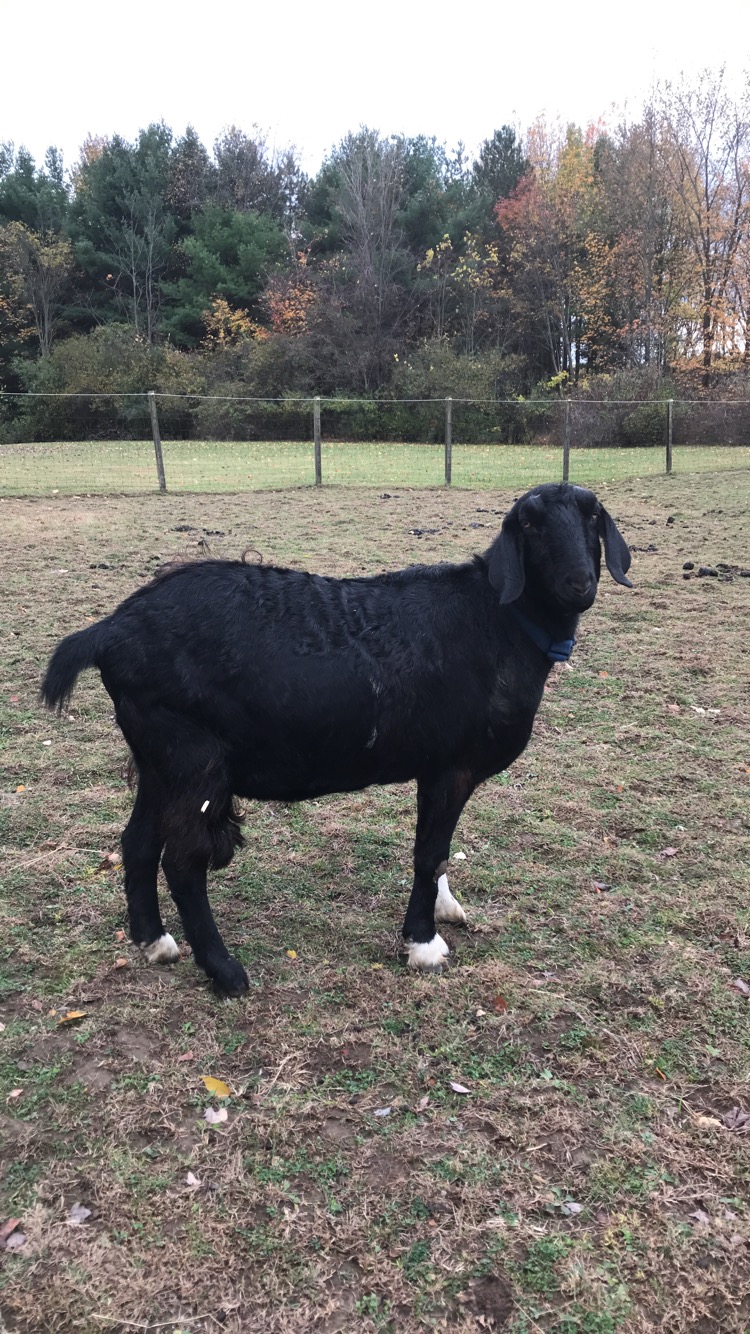
Photo of Donozio (Boer Wether)

Goats… where do I even begin?

Goats are a fun livestock to have. They’re energetic, playful, and most definitely the social butterflies of the farm. However, there are some things you can’t learn about them from the internet.

Here’s a list of things nobody told me about owning goats:

  • They eat EVERYTHING
    • Sure, you may be able to find this little bit of information to be pretty common knowledge. However, you will never know exactly how true it is until you bring back your first goats, peer out the window, and see them eating the siding off of your barn. Everyone always talks about how they will eat any food they can get ahold of, but metal and plastic? It seems like a stereotype for kids’ books! Alas, it’s real life, and now you need to fix your barn.
  • …Except what you want them to
    • Goats are the most temperamental animals you can have on your farm. No matter what you want them to do, chances are good they’ll do the exact opposite. They’ll ignore the patches of weeds and forage in their pasture for days in favor of escaping to eat your vegetable garden. And when the growing season is over and you give them the leftovers? Conveniently they don’t want it anymore. They’re allowed to eat it, and that’s no fun. They’ll try to escape for months to get to the bushes outside their pasture, but the day you fence them in for them to eat, suddenly they’re unappetizing. Not only do they ignore the plants you want them to eat, but they also destroy the ones you don’t. The flowers that have been growing alongside their pen undisturbed for a year? Kiss them goodbye the day you decide to move them to a pot. The goats will telepathically know your plan and eat them to the ground within an hour. No matter what you do, they will always find a way to win your mind games, so plan accordingly (if that’s even possible).
  • They poop. A LOT!
    • Goats are the eating machines of the animal world, and what goes in has to come back out eventually. This means rabbit pellet sized poops all over the place. The barn? Most definitely. The pasture? Good luck trying to clean it up. Your back porch? Probably there too. They seem to be inescapable. Every time you clean your barn and think you’ve gotten them all out, you find another pile hiding in the corner, scattered pellets in the water bucket, and, surprise, they pooped in the hay too.
  • No fence is good enough.
    • You might go into owning goats with confidence, but when I tell you thirty minutes in you’re going to doubt yourself, believe me. It will take a goat thirty minutes at most to survey your entire setup and find its weak points. Those thirty minutes are a false security for you because “look, Billy the goat is still in his pen” will surely turn into “let me just go inside really quick and grab a snack,” and that’s when he’ll strike. You’ll come back outside to your new goat eating your neighbor’s petunias, and they are not happy. In addition to buying your neighbor a new garden, you’ll also be off to the feed store to find new fencing, which surely won’t work either because your goat will just end up escaping that one too. You’ll go through way too many different fences and setups until your goat randomly decides that setup number 11 will keep them contained for a while. However, don’t get too comfortable. Every other full moon they’ll suddenly develop the ability to walk through walls and you’ll be chasing them in your underwear… again.
  • Some of them have a height sensor.
    • For some reason, certain goats have the ability to tell a person’s exact height just by looking at them. These goats will be completely normal and friendly when people of a decent height are in the pasture, however the second a much shorter person or a child walks in they turn into bulldozers. Chances are you won’t know if your goat has a height sensor either. You’ll assume all is well until your boss wants to take her niece to visit the farm, or your insurance agent is especially short. Oops.
  • They’re bulletproof… except for when they’re not.
    • Goats have this weird ability to be largely unaffected by things that would kill any other animal. Hit in the head by another goat? They’re fine. Got into an entire bag of the wrong feed? They’ll just be a little chubby later. Decided to taste some quickcrete? No worries, they’re still okay. However, this superpower also has the side effect of being extremely affected by very minor things. Buck eats too much grain? Better call the vet, you’ve got uroliths. Wrong plant in the pasture? Have fun cleaning up after scours. With big situations causing minor problems and minor situations causing drastic issues, sometimes goats seem like they couldn’t make any less sense.

Overall, goats are a very interesting animal to have. They’re silly, energetic, and have more personality in their left hoof than most other livestock do in their entire bodies. Of course, with great personality, comes great potential for troublemaking. This is just a short list of the things nobody told me before buying my first goat, but I’m sure there will be more to come. They like to keep me on my toes.

It’s best to be prepared when taking on the ownership of one of these crazy creatures, but there are just some things you’ll never learn from the internet.

Chicken’s Story

⚠️ Warning: Mentions of animal cruelty and neglect ⚠️ 

September 14th, 2016

I was 15 years old when I started actively looking for a horse. I’d volunteered at a rescue barn and had been riding for about a year, so in my mind I was ready to continue my horse experience with one of my own.

I’ll be the first to say that I really didn’t have much idea what being the full caretaker of a horse would be like. I only really helped out with whatever the barn manager told me to do, which ended up mainly being cleaning stalls, throwing hay, and changing leg wraps. I’ll admit, I was a bit naive, but what kid isn’t? Regardless, I researched absolutely everything that was needed to proactively and efficiently care for one, and, given the okay from my parents, had begun my search. 

I went and visited a few horses, but they were either out of budget, already sold, or the sellers had lied about them, so none of them panned out. However, a few months later, I saw that there was a horse auction in Sugarcreek coming up so I decided I’d skip school that Friday and go.

My father and I showed up to the auction building early in the morning so we could look around before it started. Never having been to a livestock auction before, we wandered aimlessly before finding out that we could see the animals before they went up for bidding. We went around back to see a wide variety of pens, some holding single horses and pairs and others holding what looked like nearly twenty horses. All of the neighing and squealing from the horses bumping into each other deafened the barn. Not only was it extremely noisy, but it was also constant motion. If you stood in one place too long, you ran the risk of being run over by Amish men who were constantly moving gates and running the animals around. It was absolute chaos.

Not too long into my time there, I met a nice lady who claimed to be a frequenter of the auction and warned me not to touch any horses that looked sick or had green snot coming out of their nose, as they potentially had serious transmittable diseases that could infect the other animals (of course, they were just thrown in with other animals so some were in contact with them anyways). She also pointed out how some horses had halters on and some didn’t. She told me the ones without halters were horses that had most likely been abandoned at the auction and were doomed for dog food. Any horses with halters on generally meant they had some form of training and automatically had a better chance of being sold into a home. As I looked around, I noticed that most of the horses were halter-less, some looking like they could’ve been dumped there for being old and no longer useful and others just looking skinny and ill. 

In that sad moment in the conversation, she started telling me stories of the other times she’d been there when horses were trampled to death in the pens from overcrowding. I was horrified. Starting out working in a rescue barn for neglected horses, this came as a culture shock that a facility could hold so much tragedy. Finally, the woman warned me that most horses that wind up in auctions like this one are sick or have something wrong with them, but wished me luck finding a good one regardless. 

Immediately after talking with her, I walked around a corner to the outside and witnessed a few Amish men take a horse out of one of the pens, shoot it in the head, and drag its body across the pavement to be hidden behind the auction barn. I assumed it was sick, but I didn’t know for sure. I chose to think it was suffering and they put it out of its misery, because I didn’t want to believe any alternative. I couldn’t.

Sometime after that, Chicken and her pen mate caught my eye. I waited a while, keeping my eye on them, until the perfect moment popped up when two men who were friends of their owner took them out to the parking lot. I’ll admit, I was kind of stalking them a little bit. I followed behind and began asking questions. “How old are they? Are they trained? Do they pick up all four feet?” I asked tentatively, trying to remember all of the questions the internet told me were important during my research (pro-tip: don’t trust all of the horse advice you see online). To my surprise, they answered each of my questions honestly and even let me test some of the things they were telling me. They actually urged me to get on Chicken and try riding her around the pavement, which was not something that usually happens at auctions. It might’ve been stupid on my part to get on a random auction horse by the side of the road, but hey, it worked out in the end. I thanked them and, since the auction was starting, made my way back inside the building to the auction ring.

As it began, you knew immediately who the kill buyers were. They were the first to bid on each horse, especially those that you could tell wouldn’t sell as a riding horse. Skinnier? Unhandled? Scared and bolting around the ring? They had no competition for those horses, knowing full well nobody else wanted to take the gamble to purchase them. They bought them up for pocket change like kids in a candy shop.

Chicken and her pen mate came through and, having been sent to voicemail by all of the haulers we tried to contact and not being able to get either of them home, I watched as kill buyers fought to bid her up. I thought that was it, there goes this horse that I’d already become emotionally invested in. They were too beautiful to become dog food. I almost didn’t want to watch. However, out of nowhere the men who brought her “No Sale’d” her. Not really thinking much of it, I figured they just wanted more money. I was partially relieved that she wouldn’t be going to the kill buyers, but the other part of me was a little bit disappointed. If only I’d been able to find a way to transport her home, I’d have been able to take her.

What I didn’t know was that they were making their way over to me in the seats.

They approached me, apologizing for taking her out of the sale and asking if I’d bid on her. I told them I couldn’t find a way to get her home, but that I’d have bid on her if I could’ve. To my surprise, I ended up making an outside deal with the two men, who offered not only to haul her for me, but also offered me her saddle and some other equipment for her for free. In the horse world, that is big. They did me the ultimate favor and I had nothing but a small amount of money to repay them for it. I will never forget that.

All in all, it was literally only because of the pure kindness of two men that day that Chicken is around bringing smiles to people all over the world. This is why I use my animals and platform to bring positivity to everyone I can, because I especially know just how much that ripple of kindness can change someone’s life for the better.

“Never believe that a few caring people can’t change the world. For, indeed, that’s all who ever have.”

Margaret Mead

Why I Started HayyyFarms


Sitting in my bedroom after a long day of work, I would often scroll through social media to get inspiration for tomorrow’s chores. Maybe someone came up with a more efficient way to feed the chickens, or maybe there’s a new recipe out for a product that swears to rid me of my fly problems. Sometimes there was useful information, but other times? Pure negativity.

More often than not, I would see people asking genuine questions to better the health and wellbeing of their animals get torn down and humiliated because they didn’t know the answer. I would see “activists” against the agricultural industry spread blatantly false information and wish death upon the farmers who spend their lives providing them with the ability to eat their “special diets”. I would see dangerous advice given on a regular basis, with any attempt to defy it resulting in arguments and hostility. But most of all? I saw people who didn’t know any better.

They didn’t know why their information was wrong. They didn’t know they’d been force fed such negativity to the point of thinking that it was normal, that it had to be that way. They didn’t know there’s more to agriculture than what’s posted online.

No more.

I’ve decided, with inspiration from many other farmers across the globe, to use my platform to share the tried and true knowledge that I’ve learned over the years. After all, who better to explain how the industry works than someone who’s been in it? I’ve learned a lot and still have a long way to go, but I believe with the knowledge I do have that I can make the fight against misinformation just a little bit easier.