
Having an animal come down with an illness is a farmer’s worst nightmare. The vet bills, special care needs, and the mere thought of knowing that one of our animals is under the weather really puts a damper on an otherwise productive day. We try our best to take care of our animals, but some problems just aren’t under our control. That being said, there is one disease that can be controlled, and farmers are begging for your help.
YOU can help prevent Hardware Disease.
What is Hardware Disease?
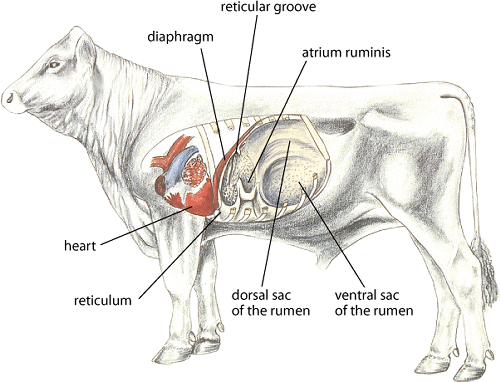
Hardware Disease is a common term for Bovine Traumatic Reticulitis, Bovine Traumatic Reticuloperitonitis, and Bovine Traumatic Gastritis. It’s not so much a disease, but major damage to the stomach wall in cattle caused by the ingestion of metal debris.
It begins when a piece of metal is accidentally eaten by the cow. The metal is collected in the reticulum of the stomach, which catches all of the heavy/dense materials that get consumed. Because the metal cannot be digested, it sits in the reticulum until muscle contractions accidentally force it through the stomach wall, diaphragm, and potentially the heart sac. This obviously causes major damage to the animal, as the sharp metal fragment has now perforated multiple organs.
Cattle affected by Hardware Disease may initially present with bleeding of the oral cavity and throat due to the metal’s sharp edges. Over time, they may experience symptoms of depression, lethargy, weight loss, painful bowel movements, poor appetite, and indigestion. If the heart has been perforated, they may accumulate fluid in the heart due to infection, have fluid in the brisket, and become bloated.
This is a serious diagnosis, but, if caught early, 60-75% of cases can be treated and the animals returned to normal function (according to the University of Missouri). Treatment options consist of constant elevation of the forelimbs for 10-20 days, a surgical incision in the ruminal wall, use of a rumen magnet, or, if its injuries are too extensive, the animal may be euthanized.
Where Does This Metal Come From?
These metal fragments can come from multiple places. They used to be primarily found to come from farm equipment or pastures when cows would unintentionally ingest things like nails or pieces of metal wire. However, once farmers began to practice more careful standards and improve their equipment to lessen the risks, these fragments have found a new avenue.
Now, many of these metal fragments come from… you guessed it: Littering.
Littering has been a worldwide problem for more reasons than I could even detail in one post. When it comes to disposing of trash, many people are not exactly considerate. Where I get passionate about this topic is the fact that not only are these people putting the environment and wildlife at risk, they’re now also endangering other people’s livestock, pets, and livelihoods.
Picture this:
You’re on back country roads, drinking some Coca-Cola, and jamming out to your favorite tunes. Savoring that last sip, you rid yourself of the can and toss it out the window. Out of sight, out of mind. Right?
While it may take you 30 seconds to forget about that can, the farmer who’s hay field it ended up in certainly did not. If they didn’t see your can during baling season and accidentally mixed it into the hay, they’re going to have an injured cow, a hefty vet bill, and possibly have to euthanize it, depending on the severity of the case. Is someone else’s beloved animal worth as little as a five minute trip to the nearest trash can? Is a little bit of short-lived convenience worth so much that it’s reasonable to detriment others to maintain it?
Aren’t Farmers Trying to Prevent It?
This is not a rare occurence. You can tell by the name: Hardware Disease. It’s happened so many times and is so common that they’ve literally given it it’s own name. That’s messed up.
Farmers know how inconsiderate some people can be and have made great strides to prevent this from happening to any more cattle. From magnets on large equipment, to field inspections, and even monitoring and sorting through feed, they are doing the best they can to prevent this horrible outcome. However, they can’t catch everything and some cans and metal debris still get past their best efforts.
But, in reality, why should they have to? They’re not the ones being irresponsible and they certainly shouldn’t be the ones on cleanup duty. That would be like buying cereal for your kids and having to personally sort through it every morning to make sure someone didn’t put something harmful in it. Wouldn’t you rather someone just not put anything harmful in it to begin with?
Nevertheless, farmers are doing their best to prevent it, but they need your help.
How Can I Help?
The best and most helpful thing you can do to prevent the heartache and stress associated with Hardware Disease is to stop littering. You don’t know where your garbage will end up and it’s not fair to the people who have to clean up your mess. Avoid leaving trash behind and throw it out at the nearest trash can, like a responsible adult.
The second best thing you can do is spread the word. Sure, everyone knows that littering is bad, but a lot of people won’t fully understand until they hear the reasons why. They won’t think about the consequences until they know what it does to innocent animals. It’s up to us to educate the public as best we can and try to lessen the prevalence of these situations occurring. No animal deserves this.
Farmers are begging for your help. We need to end littering, not only for the environment, but for the thousands of farm animals who didn’t deserve what happened to them at the expense of a can of Coke. Support local farmers and dispose of your trash properly. The environment, the animals, and the farmers will thank you.
 Hayyy Farms
If only humans would heed the advice. Well doe Hayley
Sent from my iPad
>
LikeLike
Hardware disease was more prevalent in the old days when hay bales were bundled using wire instead of twine and net wrap but certainly is still a concern today. A fencing staple fallen out of the fence can be fatal, good reason to check fence often and keep them in good shape and pound in loose staples. A similar problematic “disease” is plastics and strings injested can cause death in cattle as the plastic does not digest but stays in the stomach. We have noticed an increase in this disease when we used a bale processor(hay buster) as some of the net wrap or twine on bales inevitably gets chopped up into the hay. Great article.
LikeLike